Down From the Pedestal: A Brief History of What We Do With Disgraced Heroes
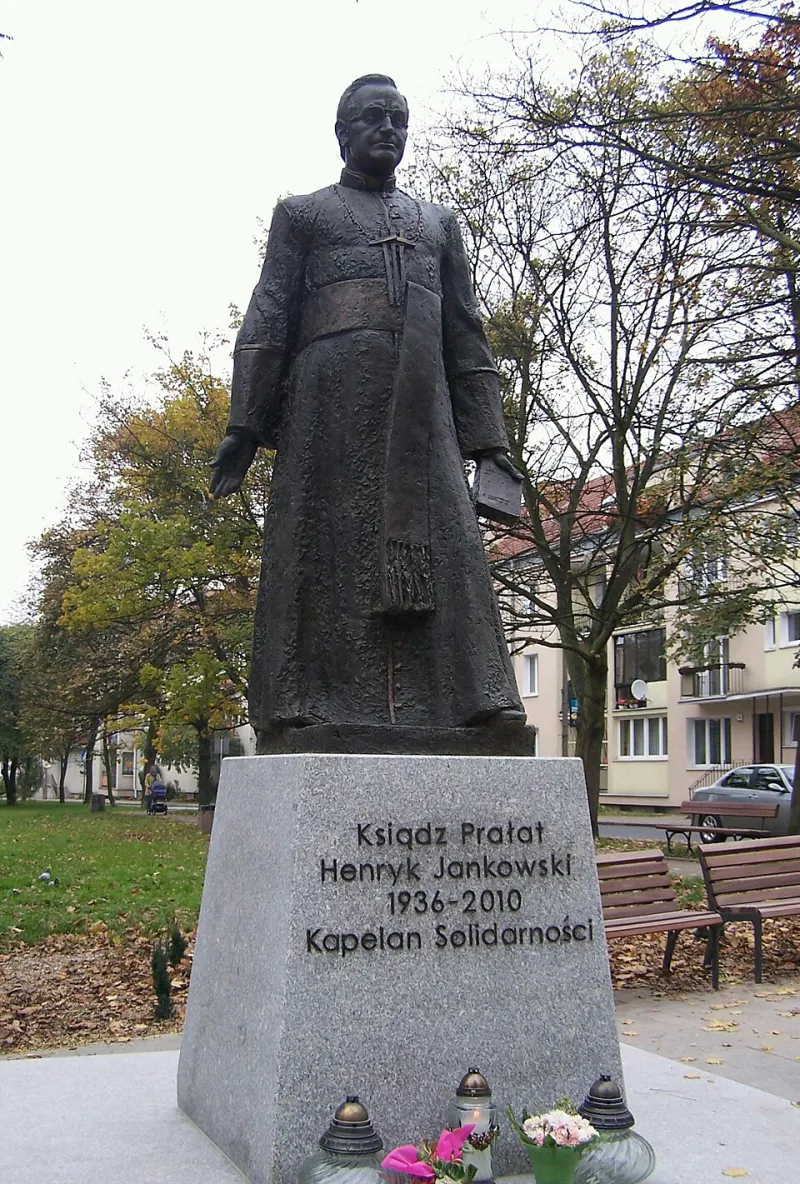
Photo: Galeriafart, CC BY-SA 3.0, via Wikimedia Commons
When the crowd pulled down the statue of Saddam Hussein in Baghdad's Firdos Square in 2003, the images circled the globe within hours. It felt spontaneous, cathartic, final. It was none of those things — or rather, it was all of them in a way that history has repeated so many times that the gesture deserves its own taxonomy.
Societies have been managing the monuments of their disgraced heroes for as long as there have been monuments. And the methods they choose turn out to be remarkably consistent, which means the American argument over statues is less a novel crisis than the latest installment of a very old negotiation.
The Roman Habit of Recycling
The Romans, unsurprisingly, industrialized the problem. When an emperor fell — damnatio memoriae, the formal condemnation of memory — his statues were not destroyed wholesale. They were often recut. The head of a disgraced emperor might be chiseled off and replaced with the head of the new emperor, the body remaining conveniently heroic on its horse or in its toga. Archaeologists have identified dozens of these re-carved figures; the statue of a condemned emperor in the Roman forum could be celebrating his successor within months.
The Romans understood something we sometimes miss: the stone matters less than the inscription. Erasing the memory of a disgraced ruler was less about the bronze than about controlling the story the bronze told.
The French Warehouse
The French Revolution took a different approach — the systematic one. Royal statues came down across the country with bureaucratic thoroughness, and many were hauled to Paris, where a number of the Kings of Judah from Notre-Dame's facade, beheaded by revolutionaries who mistook them for French kings, were dumped in a mass grave. (They were rediscovered in 1977 and now sit, heads restored, in the Cluny Museum — a reminder that memory has a way of resurfacing.)
Meanwhile, Paris built something new: a museum in the former convent of the Petits-Augustins, where salvaged royal monuments and medieval fragments were arranged as objects of national heritage rather than veneration. The revolutionary logic was strikingly modern — the past was not to be erased but museumified, converted from an object of loyalty into an object of study. France essentially invented the statue graveyard as an institution.
The American Version
The Confederate monument debate in the United States follows this pattern with unusual fidelity. Most of the statues at the center of the controversy were not erected in the immediate aftermath of the Civil War. They went up between the 1890s and the 1920s — the era of Jim Crow's consolidation — and again in the 1950s and 1960s, during the resistance to desegregation. Like the Roman re-carvings, the stone is less about the past than about the present in which it was placed.
That is why the argument over removal is so heated: both sides grasp, correctly, that a monument is a statement, not a memorial. Removing it does not erase history; it revises a claim that the monument was making about the present. Defenders sense the claim is being challenged; critics sense the claim was never about history in the first place.
The American settlements have varied by city and circumstance. Some statues have been removed to cemeteries and battlefields, where they read as historical artifacts rather than civic endorsements — the French museum solution, in effect. Others have gone into storage. A few have been toppled by crowds, the Roman street solution, with all the chaos that implies.
The Question Underneath
What is actually being argued about is whether a society can edit its own memory or only misplace it.
The cliodynamic record suggests the honest answer is: memory cannot be deleted, only recontextualized. The beheaded kings of Notre-Dame came back. The Roman re-carved emperors are now studied precisely because their erasure failed. Saddam's statue, pulled down in an afternoon, did not end the argument about his era; it opened a decade of it.
This does not mean removal is futile. It means removal is never the whole transaction. Societies that handle their fallen heroes well tend to do three things: they remove monuments from positions of civic honor, they preserve the objects themselves as evidence, and they build new markers that explain the whole arc — the rise, the disgrace, and the removal. The failure mode is not removal; it is pretending the argument never happened, which guarantees it will be relitigated by the next generation with less context and more anger.
The pedestal, it turns out, was never the point. The point is the conversation the pedestal forces. Every civilization that has faced its fallen heroes has had to decide, publicly, what its values are — and the statue graveyard, whether it is a Roman quarry, a Paris convent, or a city storage lot, is where that decision gets worked out in stone.