The Eight-Person Rule: Why History's Most Effective Teams Were Never the Biggest Ones
The Eight-Person Rule: Why History's Most Effective Teams Were Never the Biggest Ones
Somewhere in your organization, there is a meeting happening right now that involves too many people. Some of them are checking their phones. Several of them were not strictly necessary. At least one of them is not entirely certain why they were invited. This is not a technology problem, a management problem, or a culture problem. It is, in the most literal sense, an ancient problem — one that has been generating the same failure mode across five thousand years of military campaigns, scientific projects, and commercial enterprises, and one that the historical record addresses with unusual clarity.
The finding is simple enough to state and difficult enough to act on: small, cohesive, high-trust teams consistently outperform larger ones when the objective is complex, the stakes are high, and the environment is uncertain. This is not a management consulting hypothesis. It is one of the most durable patterns in the cliodynamic record, visible from the plains of Macedonia to the desert facilities of New Mexico to the early product teams of Silicon Valley. The question is not whether the pattern exists. The question is why organizations that could study this record continue to build structures that contradict it.
1. Alexander's Edge Wasn't the Phalanx — It Was the Unit Inside It
The Macedonian phalanx is the image most people carry from their college survey course: a wall of sarissa pikes, sixteen men deep, nearly impenetrable from the front. What receives less attention is the organizational layer underneath the spectacle. Macedonian armies were structured around the dekas — a unit of eight to sixteen men who ate together, camped together, and shared a single tent. Tactical command radiated outward from these cells, not downward from the top.
The practical consequence was a military force that could adapt at the unit level without waiting for orders to cascade from the top of the hierarchy. When Alexander's cavalry created a gap at Gaugamela, the infantry units that exploited it did not do so because a general told them to. They did so because the men in each dekas trusted each other's judgment well enough to act without instruction. That trust was not an accident. It was a structural feature of how the army was organized and how long those small groups had operated together.
This is the first recurring element in the historical pattern: trust is a function of group size, and trust is the mechanism through which small teams outperform large ones.
2. Viking Raiding Parties and the Coordination Tax
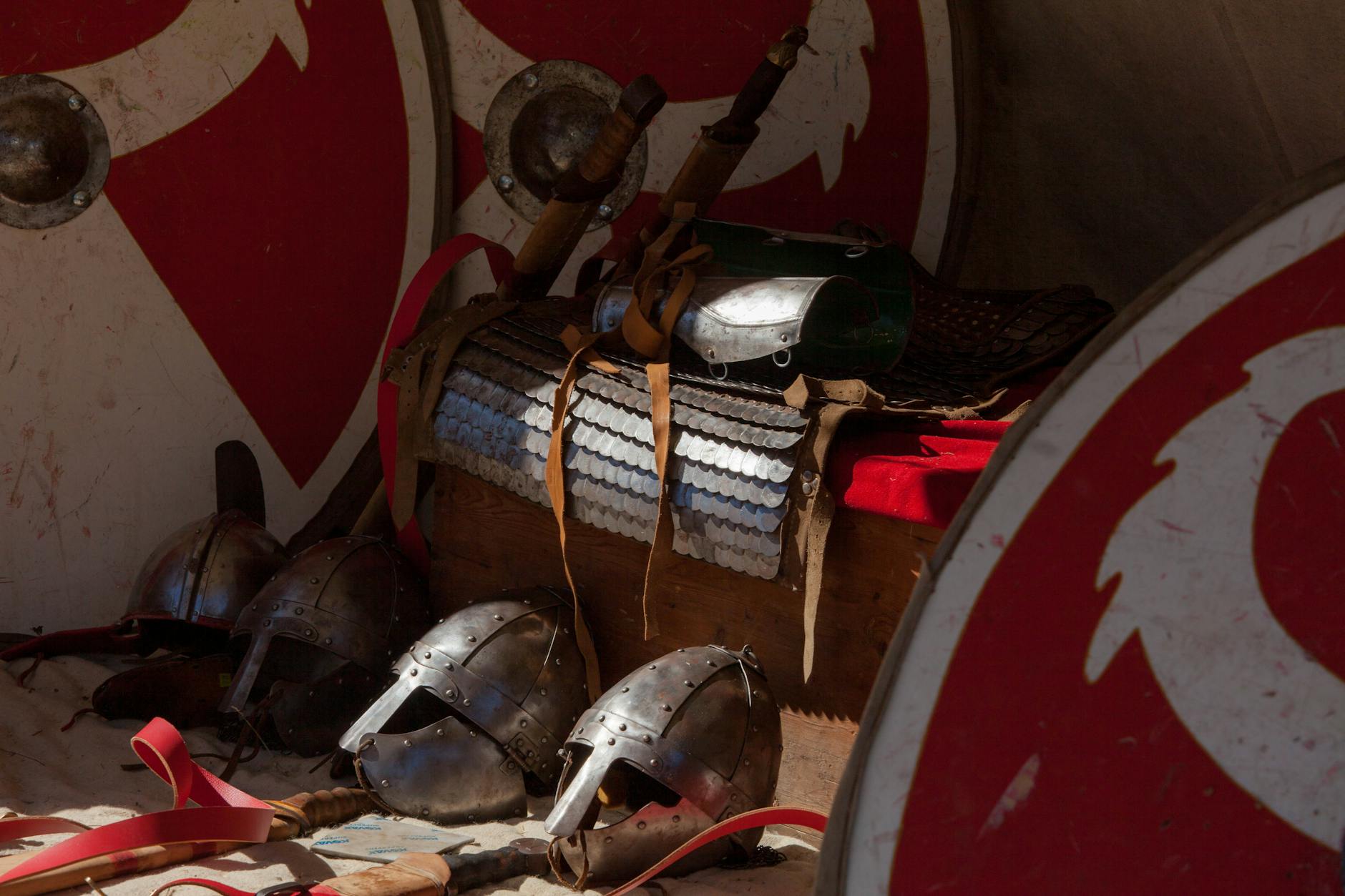
Viking raiding operations — at their most effective in the eighth and ninth centuries — were typically conducted by crews of twenty to sixty men. This was not a resource constraint. Scandinavian chieftains could, and occasionally did, muster forces of several hundred. The smaller scale of most raids was a deliberate operational choice, and the archaeological and textual record suggests it was made on grounds that any modern project manager would recognize: larger groups moved slower, required more logistical support, generated more internal disagreement, and were harder to conceal.
The Viking longship itself encoded this preference. A standard vessel carried between twenty-five and forty rowers, which meant that the crew size was architecturally constrained — not by accident, but because experience had established that this was the range within which a group of armed men could function with genuine cohesion under pressure. Every man on a longship could see every other man. Status, capability, and reliability were visible and legible to everyone. Free-riding was structurally difficult. Accountability was ambient rather than managed.
This is the second element: visibility and mutual accountability are prerequisites for high performance, and both degrade rapidly as group size increases.
3. The Manhattan Project's Inner Architecture
The Manhattan Project employed, at its peak, roughly 130,000 people across multiple sites. It is frequently cited as evidence that large-scale coordinated effort can achieve the extraordinary. This reading is accurate but incomplete. The actual scientific breakthroughs — the theoretical work, the critical design decisions, the solutions to problems that had never been solved before — emerged from a remarkably small group of physicists working in close proximity at Los Alamos.
J. Robert Oppenheimer's core scientific team numbered in the dozens, not the thousands. The Tuesday colloquia he ran — open sessions where the most difficult problems were aired before the full scientific staff — rarely involved more than a hundred participants, and the productive arguments that followed typically involved far fewer. The 130,000-person organization was the delivery mechanism. The small group was the engine.
This distinction matters enormously for how we think about organizational scale. The Manhattan Project does not demonstrate that large organizations produce breakthrough results. It demonstrates that large organizations can support small groups that produce breakthrough results — provided the large organization is structured to protect and resource the small group rather than absorb and bureaucratize it.
4. Dunbar's Number Is Not a Suggestion
In the early 1990s, British anthropologist Robin Dunbar proposed, based on the relationship between primate neocortex size and social group size, that human beings have a cognitive upper limit of approximately 150 meaningful social relationships. Below that ceiling, he identified a series of nested layers: roughly 5 for the innermost circle of trust, 15 for close relationships, 50 for active social contacts.
Dunbar's research did not emerge from a vacuum. It was, in part, an attempt to explain a pattern that anthropologists had already observed in the historical and ethnographic record: that hunter-gatherer bands, military companies, functional village units, and effective organizational teams tend to cluster around these same numbers across cultures and centuries. The Roman contubernium of eight men. The Dunbar-scale company of 150 that appears repeatedly in military organization across different armies and eras. The 12-person jury. The apostles.
The implication for modern organizations is not subtle. When a team exceeds the 15-person threshold, the social infrastructure that enables high-trust collaboration — the direct knowledge of each member's capabilities, the informal accountability, the shared context that makes explicit communication partly redundant — begins to degrade. This is not a cultural failure. It is a neurological one. Human brains were not built to maintain genuine trust relationships at scale, and no amount of team-building retreats or collaboration software changes the underlying architecture.
5. What Google's Project Aristotle Actually Found
In 2012, Google launched an internal research initiative — Project Aristotle — to identify the characteristics of its highest-performing teams. The researchers expected to find that the best teams were composed of the most individually talented people, or that they shared particular demographic profiles, or that they were led by the most experienced managers.
They found something more interesting and considerably more ancient: the single strongest predictor of team performance was psychological safety — the degree to which team members felt confident that they could take risks, raise concerns, and be vulnerable without social penalty. This is, in the language of modern organizational psychology, a restatement of what Alexander's dekas commanders and Viking longship captains had already operationalized. Trust, visibility, and mutual accountability are the mechanism. Small group size is the condition that makes them possible at scale.
Google's researchers were not studying history. They were, without knowing it, rediscovering it.
The Org Chart as Historical Artifact
The modern corporate organizational chart — hierarchical, departmentalized, scaled for headcount rather than cohesion — is itself a historical artifact, derived from the military command structures of nineteenth-century European armies and the industrial management theories of the early twentieth century. It was designed for coordination at scale in environments where tasks were repetitive, outputs were measurable, and the primary challenge was logistics rather than innovation.
For those environments, it remains adequate. For environments characterized by complexity, uncertainty, and the need for genuine creative problem-solving — which describes most of what the contemporary economy rewards most highly — it is a structure optimized for the wrong objectives. Five thousand years of evidence suggest that when the stakes are highest, the winning unit is almost never the largest one. It is the smallest one that can maintain trust, visibility, and genuine accountability among its members.
Your next reorg might benefit from fewer slides and more Thucydides.