The Persistence of the Lettered Elite
In 1793, the French revolutionaries dragged priests to the guillotine and burned church records in public squares, declaring war on the old clerical order that had dominated European intellectual life for a millennium. Within a decade, Napoleon was rebuilding a state bureaucracy staffed by—former priests, seminary graduates, and university-trained lawyers who had simply transferred their allegiance to the new regime. The faces changed, but the fundamental relationship between literacy, institutional knowledge, and political power remained unchanged.
 Photo: Napoleon, via static.vecteezy.com
This pattern repeats across every major historical transition with startling consistency. The Egyptian scribal class survived the conquest of the pharaohs by Persians, Greeks, and Romans by making themselves indispensable to successive imperial administrations. Chinese mandarins weathered the Mongol invasion, the Ming restoration, and the Qing takeover by demonstrating that no conqueror could govern their vast territories without the bureaucratic apparatus that only the educated class could operate.
The modern American professional-managerial class represents the latest iteration of this ancient survival strategy. Despite facing populist challenges from both left and right, despite economic upheavals and technological disruptions, the credentialed information workers who staff universities, media companies, government agencies, and corporate bureaucracies have maintained their grip on cultural and political influence through every supposed paradigm shift of the past half-century.
The Complexity Trap
Why do information gatekeepers prove so resilient when other elite classes—aristocrats, military officers, industrialists—can be swept away by historical forces? The answer lies in what we might call the complexity trap: as societies grow more sophisticated, they become increasingly dependent on specialized knowledge that only a littered class can provide.
Consider the Bolshevik Revolution, which explicitly aimed to destroy the old Russian intelligentsia and replace it with a worker-peasant government. Lenin's early decrees abolished university degrees, stripped credentials from doctors and lawyers, and promised to put factory workers in charge of economic planning. Within five years, the Soviet state was desperately recruiting former Tsarist bureaucrats, offering amnesty to "bourgeois specialists," and rebuilding a credentialed administrative class that looked remarkably similar to what it had replaced.
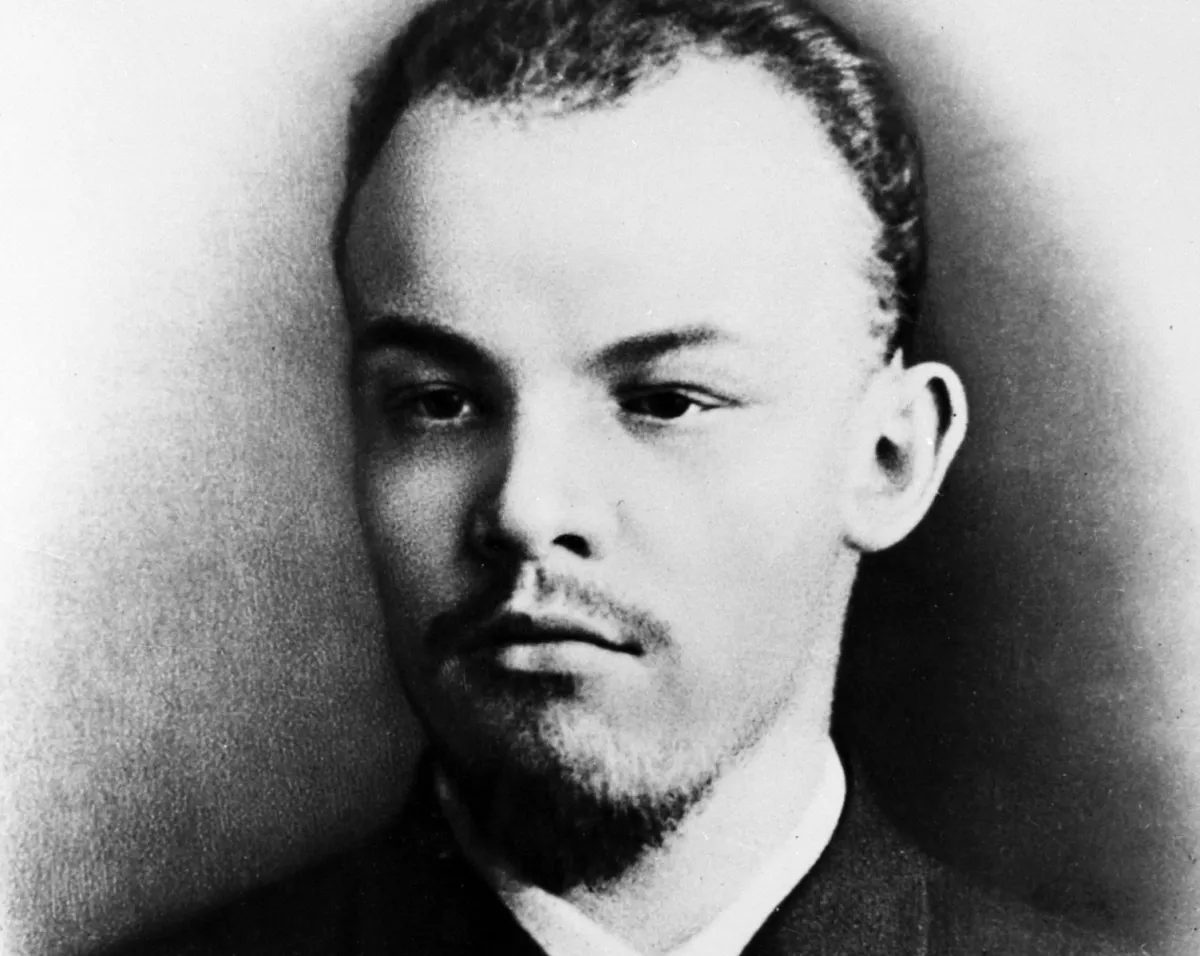 Photo: Lenin, via es.sott.net
The revolutionaries discovered what every conquering force learns: modern states generate enormous quantities of information that must be processed, analyzed, and acted upon by people with specialized training. Tax collection requires accountants. Legal systems need lawyers. Military logistics demands engineers. Foreign policy depends on people who can read maps and speak other languages. The skills required for revolution—charisma, courage, ideological commitment—prove useless for the mundane work of governance.
The Knowledge Monopoly
The scribal class maintains power through what economists would recognize as a classic monopoly position: exclusive control over essential skills that cannot be quickly replicated. Unlike land (which can be redistributed) or factories (which can be seized), knowledge exists primarily in human minds and institutional practices that take years or decades to develop.
This monopoly becomes self-reinforcing through what Pierre Bourdieu called cultural capital—the accumulated knowledge, skills, and credentials that signal membership in the educated class. Even when revolutionary regimes attempt to bypass traditional gatekeepers, they inevitably find themselves recreating similar hierarchies based on different but functionally equivalent markers of intellectual authority.
The Chinese Cultural Revolution offers the most dramatic example of this dynamic. Mao's Red Guards attacked professors, burned libraries, and sent intellectuals to labor camps, explicitly attempting to destroy the educated class that had dominated Chinese society for millennia. Yet within a decade of Mao's death, China was rebuilding its university system, restoring academic credentials, and staffing its government with the same type of technocratic administrators who had managed imperial and republican China.
Digital Age Gatekeeping
The internet was supposed to democratize information and eliminate traditional gatekeepers. Instead, it has created new forms of informational hierarchy that mirror ancient patterns. Silicon Valley's content moderators, algorithm designers, and platform managers exercise the same kind of cultural authority that medieval monks wielded over manuscript copying or that 20th-century newspaper editors held over public discourse.
Consider how quickly social media platforms developed their own version of the old clerical class: fact-checkers, community guidelines specialists, and trust and safety teams who determine what information reaches the public. These new gatekeepers may lack traditional academic credentials, but they perform the same essential function—filtering and organizing information flow according to institutional priorities.
The rise of "misinformation" as a political category reveals how thoroughly the digital age has recreated pre-modern patterns of information control. Just as medieval church authorities distinguished between orthodox and heretical texts, contemporary platform moderators sort content into "reliable" and "unreliable" sources based on criteria that often have more to do with institutional affiliation than factual accuracy.
The Credentialing Arms Race
American higher education represents perhaps the most sophisticated credentialing system in human history, creating multiple overlapping hierarchies of educational achievement that serve to legitimate the information class's continued dominance. The explosion of graduate degrees, professional certifications, and specialized training programs over the past fifty years has made it increasingly difficult for outsiders to challenge expert authority in any field.
This system proves remarkably resistant to populist challenges because it operates through seemingly meritocratic principles. Unlike aristocratic titles or inherited wealth, educational credentials appear to be earned through individual effort and intelligence. The reality is more complex—access to elite education correlates strongly with family background, geographic location, and cultural capital—but the meritocratic mythology provides powerful legitimation for continued rule by the lettered class.
Adaptation and Survival
The most successful members of the information class master the art of ideological flexibility while maintaining institutional continuity. They learn to speak the language of whatever political movement gains power while preserving their essential role as information processors and policy implementers.
This adaptability explains how the same universities that trained Cold War national security officials seamlessly transitioned to producing diversity administrators and climate policy experts. The specific content of elite education changes with political fashions, but the underlying structure—credentialed experts managing complex systems—remains constant.
The lesson for contemporary political movements is sobering: attempting to bypass or destroy the information class typically results in its reconstitution under new management. The more promising strategy may be to focus on democratizing access to the tools and skills that the lettered elite has traditionally monopolized, rather than trying to eliminate the functional role that such a class serves in complex societies.
History suggests that information gatekeepers will outlast both their critics and their defenders, adapting to new technologies and political arrangements with the same flexibility that has carried them through five millennia of civilizational change.