The Oldest Mistake in the Book: What Five Millennia of Monetary Collapse Tell Us About Modern Central Banking
The Oldest Mistake in the Book: What Five Millennia of Monetary Collapse Tell Us About Modern Central Banking
There is a particular kind of institutional confidence that precedes every monetary catastrophe. It is not the confidence of recklessness. It is, more dangerously, the confidence of people who believe that their circumstances are genuinely novel — that the pressures they face, the tools they wield, and the populations they serve are sufficiently different from anything that came before as to render historical comparison quaint. Central bankers are not unique in holding this belief. Roman emperors held it. Ming dynasty finance ministers held it. The Weimar Republic's monetary authorities held it with particular conviction, right up until wheelbarrows became a more practical vessel for currency than wallets.
The historical record is unambiguous, even when its custodians are not. Monetary debasement — the practice of expanding the supply of a currency beyond the productive capacity of the economy it represents — is among the most thoroughly documented phenomena in the five-thousand-year archive of human civilization. What makes it remarkable is not its frequency, though that is striking enough. What makes it remarkable is the consistency of the psychological sequence that accompanies it every single time.
The Roman Rehearsal
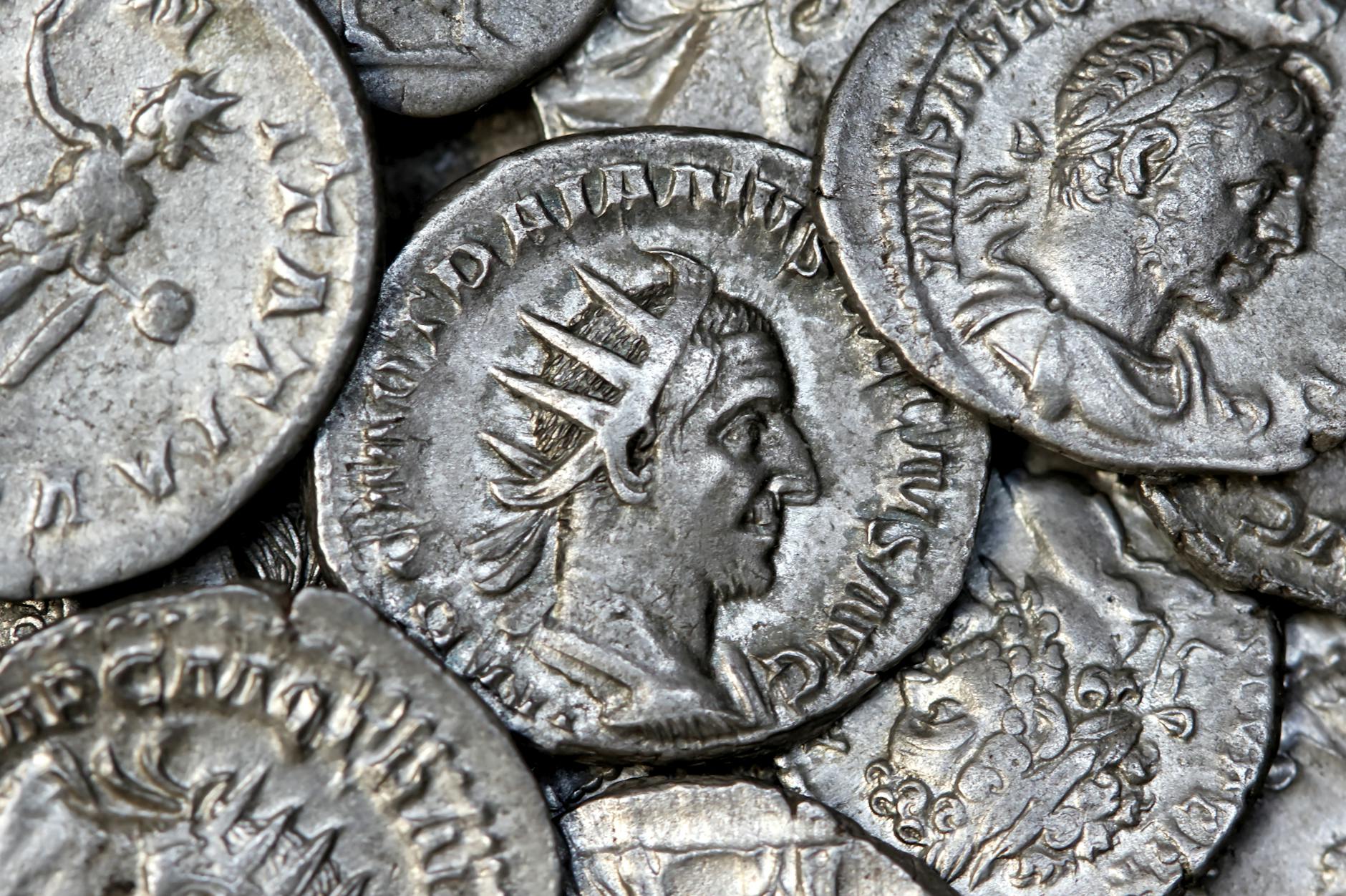
Begin with Rome, because Rome is where the documentation is richest and the parallels are most uncomfortable. The denarius, Rome's workhorse silver coin, contained approximately 90 percent silver during the reign of Augustus. By the reign of Gallienus in the third century A.D., that figure had dropped to somewhere between 2 and 5 percent. The intervening two and a half centuries were not characterized by a single dramatic decision to destroy the currency. They were characterized by a long sequence of individually defensible choices — military emergencies, frontier pressures, the need to pay legions that would otherwise march on Rome itself — each of which seemed reasonable in isolation and catastrophic in aggregate.
The psychological architecture of this collapse is what should arrest the attention of anyone studying the Federal Reserve's balance sheet. Roman monetary authorities did not announce debasement. They managed perception. Silver content declined in increments small enough to be deniable, and when the market responded — as markets always do, because human beings are exquisitely sensitive to the purchasing power of their savings — the official response was a combination of price controls, public reassurance, and genuine bewilderment that the population refused to behave as theory predicted.
Denial, short-term political pressure, erosion of public trust. Write those three phrases down. You will need them again.
Paper Tigers: The Ming Dynasty's Experiment
China arrived at paper money roughly eight centuries before Europe, which means China also arrived at paper money inflation roughly eight centuries before Europe. The Ming dynasty's Da Ming Baochao — the Great Ming Treasure Note — was introduced in 1375 and was, by the early fifteenth century, trading at a fraction of its nominal value. The government's response was to issue more of it, restrict the use of alternative currencies, and express official displeasure at merchants who priced goods in silver rather than in state-issued paper.
What is instructive here is not merely the mechanical failure of an inconvertible currency. It is the public trust dynamic that preceded and accelerated the collapse. The Ming population did not rebel against paper money in the abstract. They simply, quietly, and with the practiced pragmatism of people who have seen governments come and go, began routing around it. Silver and grain re-emerged as transactional media. The state found itself issuing currency that its own subjects refused to use for anything beyond paying taxes — and sometimes not even that.
The erosion of monetary trust does not announce itself. It accumulates in the gap between official exchange rates and the prices people actually charge each other when no inspector is watching.
Weimar and the Velocity Problem
The Weimar hyperinflation of 1921 to 1923 is the case study most Americans encounter first, which is both useful and limiting. It is useful because the numbers are visceral — postage stamps priced in the billions, workers collecting wages in laundry baskets — and limiting because the scale can make it feel like an aberration rather than an archetype. It was neither. It was the same sequence, accelerated by the particular vulnerabilities of a post-war state carrying reparations obligations it could not meet through taxation alone.
What distinguished Weimar was not the decision to print. Plenty of governments have printed. What distinguished it was the velocity feedback loop: as citizens came to expect further debasement, they spent currency faster, which increased velocity, which increased effective money supply, which validated the expectation, which increased velocity further. The Reichsbank was not simply printing money. It was printing money into a population that had already, psychologically, abandoned the currency as a store of value. Trust, once broken at scale, does not respond to incremental policy correction.
Quantitative Easing and the Familiar Script
To be precise: the Federal Reserve's post-2008 quantitative easing programs are not the same as Roman debasement, Ming paper money collapse, or Weimar hyperinflation. The institutional architecture is different, the global reserve currency status of the dollar creates buffers that no prior monetary system enjoyed, and the Fed operates with a transparency and analytical sophistication that Augustus's treasury did not possess.
None of that makes the psychological parallels less instructive. The post-2008 and post-2020 expansions of the Fed's balance sheet were each accompanied by the same three-phase narrative structure visible in every prior case: a genuine emergency justifying extraordinary action, official assurances that the action was temporary and controllable, and a subsequent reckoning with the difficulty of unwinding what was wound. The inflation surge of 2021 and 2022 — which the Fed's own models initially characterized as transitory — fits comfortably within the historical pattern of monetary authorities underestimating the lag between supply expansion and price response.
This is not an argument that the Fed is incompetent or that its interventions were unjustified. It is an argument that the cognitive biases shaping institutional responses to monetary stress — the preference for short-term stability over long-term discipline, the political impossibility of contraction during crisis, the tendency to mistake the absence of immediate consequences for the absence of consequences — are not policy failures. They are features of human psychology operating under institutional pressure. They were features of human psychology in 250 A.D. and in 1400 and in 1922. The experimental record on bored college students tells us something about these biases. The five-thousand-year archive of civilizations that tried and failed to spend their way out of structural problems tells us considerably more.
The Lesson That Never Gets Learned
The reason monetary debasement recurs across cultures separated by oceans and millennia is not that each new generation of policymakers is uniquely ignorant. It is that the incentive structure facing monetary authorities in a crisis is genuinely, structurally hostile to the correct long-term response. Contraction is painful now. Expansion defers pain. Human beings — whether they are Roman emperors, Ming finance ministers, or Federal Reserve governors — are not well-equipped by evolution to accept certain present pain in exchange for avoided future pain. That is not a criticism. It is a description.
The value of the historical record is not that it provides a formula for avoiding these cycles. It is that it strips away the exceptionalism. Every civilization that debased its currency believed it was operating under circumstances too unique for prior experience to apply. The archive suggests, with considerable patience, that they were wrong. The question worth asking is not whether modern monetary institutions are smarter than their predecessors. It is whether they are different enough — in their incentive structures, their political constraints, and the basic cognitive architecture of the humans running them — to produce a different outcome.
Five thousand years of data. Draw your own conclusions.