The Founders' Nightmare: Why 1787's Fears Were Ancient Wisdom, Not Prophetic Vision
Americans today read the Federalist Papers as prophetic warnings about contemporary political dysfunction. James Madison's concerns about faction, Alexander Hamilton's fears of demagogues, and George Washington's farewell address warnings about partisan spirit seem to anticipate twenty-first-century polarization with uncanny precision.
This interpretation misunderstands both the founders and their actual achievement. The men who gathered in Philadelphia were not visionary prophets but careful students of a historical pattern that had already played out repeatedly. Their genius lay not in predicting the future but in recognizing that human nature makes certain political dynamics inevitable.
The Polybius Connection: Rome's Lessons for America
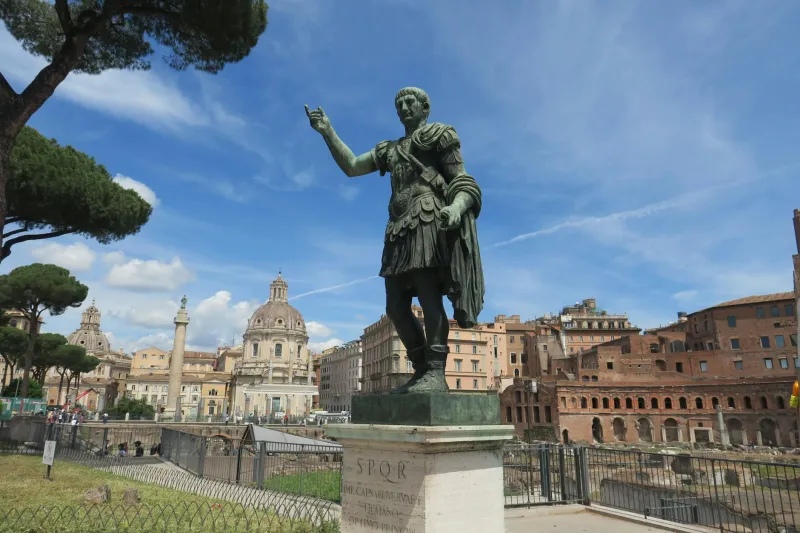
When Madison warned about the "violence of faction" in Federalist 10, he was channeling arguments made by Polybius nearly two thousand years earlier. The Greek historian, writing in the second century BCE, had observed Rome's transformation from republic to empire and identified the precise sequence of institutional decay that would eventually destroy representative government.
Polybius described what he called anacyclosis—the cyclical transformation of governments from monarchy to aristocracy to democracy and back to tyranny. He warned that republics inevitably succumb to what he termed "ochlocracy"—mob rule driven by demagogues who promise immediate gratification at the expense of long-term stability.
The founders read Polybius obsessively. John Adams quoted him extensively in his "Defence of the Constitutions of Government," and Madison's notes from the Constitutional Convention reveal direct engagement with Polybian analysis. They understood that Rome's collapse was not unique but rather the latest iteration of a pattern as old as organized government.
The Athenian Precedent: Democracy's First Death
The founders' education included even older warnings. Thucydides had documented how Athenian democracy devolved into imperial overreach, factional violence, and eventual collapse. Plato's Republic explicitly argued that democracy was inherently unstable because it prioritized equality over virtue and freedom over order.
Aristotle's Politics provided the theoretical framework that shaped American constitutional thinking. His analysis of different government forms, the concept of mixed constitution, and warnings about the relationship between economic inequality and political instability appear throughout the Convention debates.
When Hamilton warned in Federalist 1 that Americans would need to decide "whether societies of men are really capable or not of establishing good government from reflection and choice," he was referencing a debate that began in ancient Athens. The question was not whether democracy could work—history suggested it could not—but whether Americans could design institutions strong enough to resist democracy's natural tendencies.
The Roman Mirror: Prosperity as Political Poison
The founders' deepest fear was not poverty but prosperity. They had read how Roman wealth from imperial conquest corrupted civic virtue and transformed citizen-soldiers into a dependent urban mob. Gibbon's "Decline and Fall of the Roman Empire," published just as the founders were coming of age, provided a detailed case study of how commercial success could destroy republican institutions.
This concern appears throughout the founding documents. Jefferson's preference for an agricultural republic reflected his belief that independent farmers were less susceptible to corruption than urban merchants or manufacturers. Hamilton's financial system was designed to harness commercial energy while preventing the concentration of wealth that had destroyed previous republics.
The founders understood that prosperity creates political challenges that poverty does not. Wealthy societies develop complex interests that compete for government favor. Citizens who enjoy material comfort become less willing to sacrifice for abstract civic ideals. The very success that should strengthen a republic instead weakens the civic bonds that hold it together.
Faction: The Eternal Enemy of Republican Government
Madison's analysis of faction in Federalist 10 reads like contemporary political commentary because the underlying human psychology has not changed. People naturally form groups based on shared interests, and those groups inevitably seek to use government power to advantage themselves at others' expense.
This insight was not original to Madison. Polybius had identified faction as the primary cause of republican decay. Cicero's speeches against Mark Antony documented how personal ambition could destroy institutional norms. The English Civil War provided a more recent example of how religious and political faction could tear apart established government.
The founders' solution—extending the sphere of government to encompass so many factions that none could dominate—was brilliant but not unprecedented. The Roman Republic had used similar strategies, creating complex institutional arrangements designed to prevent any single interest from capturing the state. The founders' innovation was designing these arrangements more systematically and with better understanding of the psychological forces involved.
The Commercial Republic Experiment
What made the American experiment genuinely novel was not its diagnosis of republican weakness but its proposed cure. Previous republics had tried to maintain civic virtue through sumptuary laws, military service requirements, or religious observance. The founders instead attempted to harness human selfishness for public benefit.
This approach reflected their reading of David Hume and Adam Smith, who argued that commercial societies could channel private vice into public virtue through market mechanisms. The Constitution's Commerce Clause and prohibitions on state interference with contracts were designed to create a continental market that would make faction less dangerous by making interests more diverse.
Yet even this innovation had ancient precedents. The Phoenicians had created commercial networks that sustained political stability across centuries. The Hanseatic League demonstrated how trade could create cooperative arrangements among otherwise competitive political units. The founders were adapting old wisdom to new circumstances rather than inventing entirely new principles.
Why History Rhymes
The founders' fears seem prophetic because human nature produces predictable political patterns. Citizens in prosperous societies consistently prioritize immediate benefits over long-term sustainability. Politicians reliably promise more than they can deliver. Interest groups systematically seek to capture regulatory mechanisms for private advantage.
These patterns appear in every complex society because they reflect unchanging aspects of human psychology. The specific issues change—ancient Romans worried about grain subsidies while Americans debate social security—but the underlying dynamics remain constant.
Recognizing this continuity is more useful than treating the founders as prophets. Their achievement was not predicting the future but designing institutions robust enough to channel predictable human behavior toward sustainable outcomes. The Constitution works not because it prevents faction but because it prevents any single faction from dominating permanently.
The Lesson for Contemporary Americans
Understanding the founders as students of history rather than visionary prophets offers more practical guidance for contemporary challenges. Their warnings about partisan spirit, demagogic appeals, and the corruption of prosperity should be read as descriptions of permanent features of political life rather than temporary problems that can be solved through better policies or reformed institutions.
This perspective suggests that constitutional government requires constant vigilance not because the founders failed to anticipate current problems but because they understood that such problems are inevitable. The question is not whether American democracy will face the challenges that destroyed previous republics but whether American institutions can channel those challenges in sustainable directions.
Five thousand years of political history suggest that no institutional arrangement can permanently solve the problems of human government. The founders' genius was recognizing this limitation and designing a system that could function despite it. Their nightmare was not that America would face unprecedented challenges but that Americans would forget the historical lessons that made their republic possible in the first place.