Opinion: The Republic Has Survived Worse Than Your Twitter Feed
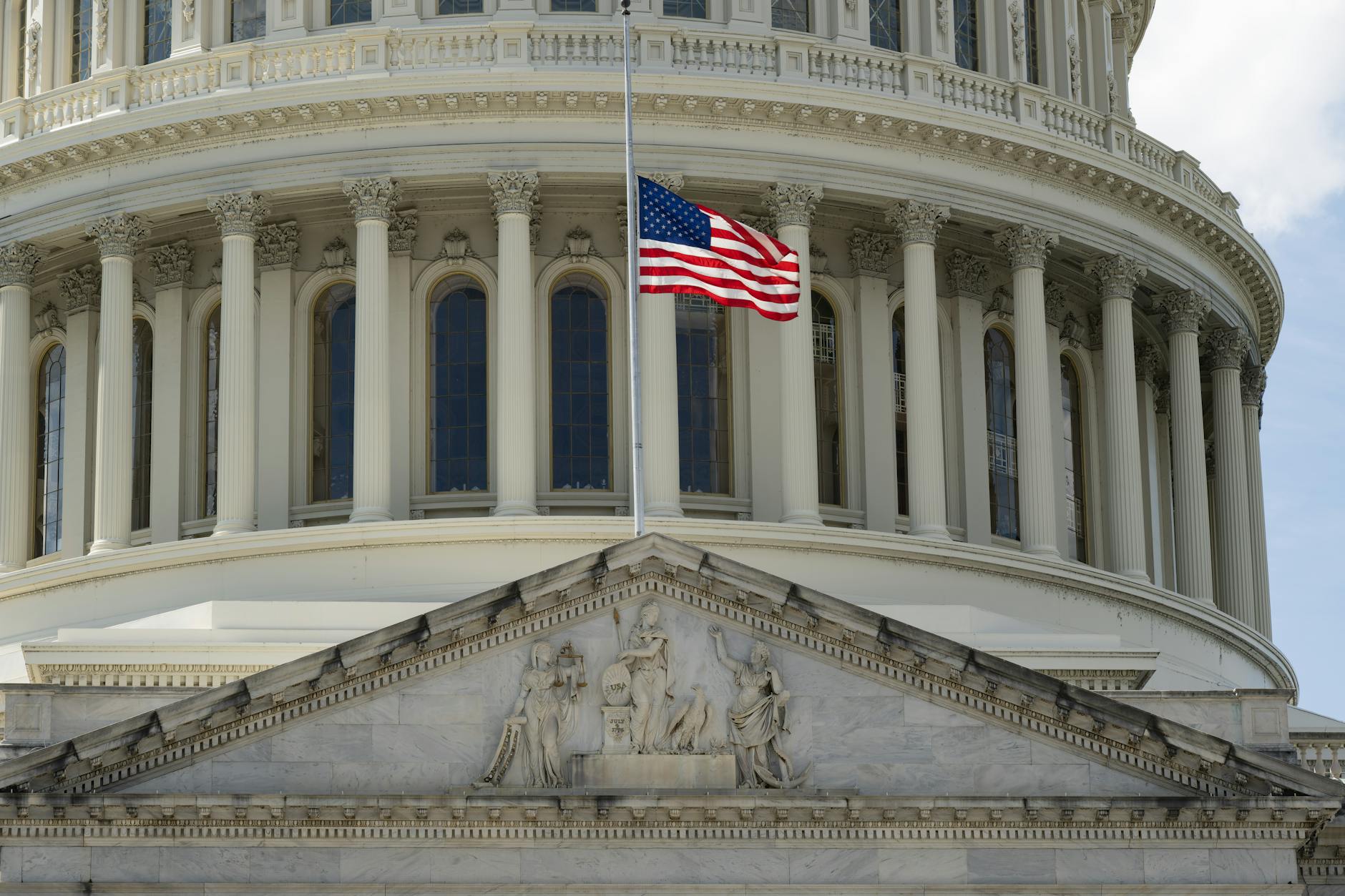
Opinion: The Republic Has Survived Worse Than Your Twitter Feed
The views expressed in this column are those of the author and are presented as one analytical perspective among several the historical record supports.
Let me be careful about what I am and am not arguing here, because this is the kind of piece that is easy to misread in both directions.
I am not arguing that contemporary American political polarization is trivial, that the concerns animating it are manufactured, or that the correct response to institutional stress is complacency. The cliodynamic record does not support complacency. Civilizations do collapse. Republics do fail. The Roman one did, eventually, though it took considerably longer than the people living through its most turbulent decades expected.
What I am arguing is narrower and, I think, more useful: that Americans in 2024 dramatically overestimate the historical novelty of their current political climate, and that this overestimation is itself a problem — not because it makes people too worried, but because it makes them worried about the wrong things, in ways that obscure rather than illuminate the genuine risks.
The 1790s Were Not a Polite Disagreement
The standard American civics narrative positions the Founding Fathers as a group of enlightened men who disagreed productively and in good faith, establishing durable institutions before retiring to their estates with mutual respect intact. This narrative is, to put it gently, a significant editorial intervention on the historical record.
The political culture of the 1790s was, by any measurable standard, more viscerally hostile than anything visible in contemporary American public life. Alexander Hamilton and Thomas Jefferson — both serving in the same Cabinet, under the same president — ran coordinated press operations designed to destroy each other's reputations and, more specifically, to destroy the legitimacy of each other's political vision for the country. The newspapers of the era, which functioned as the social media of their time, published accusations that would be considered extreme even by the standards of contemporary political commentary: charges of monarchism, charges of Jacobin radicalism, charges of treason, financial corruption, and personal depravity.
John Adams signed the Alien and Sedition Acts — federal legislation that criminalized criticism of the government — in 1798. His vice president, Thomas Jefferson, secretly authored state-level resolutions arguing that states had the right to nullify federal law. The two men who had together signed the Declaration of Independence spent the better part of a decade in a political relationship that was, functionally, a cold civil war conducted through proxies and pamphlets.
They were not uniquely villainous. They were human beings operating under the cognitive and emotional architecture that all human beings share, in a political environment characterized by genuine uncertainty about whether the republic would survive at all. The historical distance that makes their conflict look manageable is the same distance that future historians will apply to ours.
The Late Roman Republic and the Danger of Normalization
Here is where the comparison becomes less comforting, and where intellectual honesty requires acknowledging what the record actually shows.
The late Roman Republic — roughly the century between the Gracchi and the assassination of Julius Caesar — was a society that experienced escalating political polarization across multiple generations. Each escalation was normalized by comparison to the last. Tiberius Gracchus was killed by a mob in 133 B.C., which was shocking. Sulla marched an army on Rome in 88 B.C., which was more shocking. By the time Caesar crossed the Rubicon in 49 B.C., the republic's institutional guardrails had been eroded not by a single catastrophic event but by a long sequence of individually survivable ones, each of which slightly expanded the range of what was considered politically permissible.
The cliodynamic research of Peter Turchin and colleagues — which attempts to model the structural drivers of political instability using quantitative historical data — identifies this pattern as a recurring feature of pre-crisis periods in complex societies. Elite overproduction, declining real wages, and the erosion of institutional trust tend to co-occur and to reinforce each other in ways that can remain subcritical for decades before tipping into genuine instability. By Turchin's modeling, the United States entered a period of elevated structural stress in the early twenty-first century that has meaningful parallels to the pre-crisis signatures visible in the Roman and other historical cases.
This is not a prediction of collapse. It is a description of a risk profile. The Roman Republic's risk profile was elevated for roughly a century before it actually failed. During most of that century, people living through it had reasonable grounds for believing the institutions would hold. Some of those people were right, for a while. Eventually they were not.
The Pre-Civil War Decade and the Limits of the Comparison
The most instructive American comparison to the present moment is not the 1790s, which ended relatively well, but the 1850s, which did not.
The decade preceding the Civil War was characterized by the complete collapse of one major political party (the Whigs), the rapid rise of a regional party (the Republicans) that the opposing side viewed as an existential threat, the failure of legislative compromise mechanisms that had functioned for decades, and a media environment — again, the newspapers — that was systematically optimized for outrage and regional identity reinforcement rather than shared factual grounding.
There are surface similarities to the present that are genuine and worth noting. There are also structural differences that are equally genuine. The specific geography of the 1850s conflict — a literal territorial boundary between two economic systems that were becoming increasingly incompatible — does not map cleanly onto contemporary polarization, which is more cultural and less economically structural in its primary drivers. The presence of nuclear weapons changes the calculus of any scenario involving military confrontation between factions. Federal institutional capacity, for all its current stress, is substantially more developed than it was in 1850.
The point is not that the comparison is perfect. The point is that it is more instructive than the implicit comparison most Americans are making, which is to some idealized version of the mid-twentieth century that was itself a historically anomalous period of relative political consensus, sustained in part by external threat and in part by the exclusion of large portions of the population from full political participation.
Tribalism Is the Baseline, Not the Exception
The deepest lesson the historical record offers on political polarization is not about any specific crisis or resolution. It is about the baseline condition of the species.
Human beings are tribal. This is not a metaphor. It is a description of cognitive architecture shaped by hundreds of thousands of years of evolution in small groups where in-group loyalty and out-group wariness were survival-relevant traits. The expectation that modern democratic institutions would reliably override this architecture — that the right constitutional design or the right civic education curriculum would produce a population that evaluated political questions primarily on their merits rather than on their tribal valence — was always an optimistic hypothesis. The historical record treats it as a hypothesis that requires active, continuous, institutional maintenance to even partially sustain.
Every era of relative political comity in American history has been the product of specific structural conditions: shared external threat, economic growth broadly distributed enough to reduce zero-sum competition, institutional figures with sufficient cross-partisan legitimacy to model norms of productive disagreement. When those conditions erode, the tribal baseline reasserts itself. It has done so in the 1790s, the 1850s, the 1890s, the 1930s, and it is doing so now.
This is not cause for despair. It is cause for clear-eyed analysis of which structural conditions are eroding and which might be reconstructed. The republic has navigated elevated polarization before. The navigation was never automatic, never comfortable, and never guaranteed. It required specific choices by specific people operating under the same psychological constraints that make the problem difficult in the first place.
What the Record Actually Recommends
The cliodynamic perspective does not offer a political program. It offers a frame. Within that frame, a few observations seem defensible.
First: the current moment is serious but not unprecedented. Treating it as unprecedented produces a kind of paralysis — the sense that the normal tools of political repair cannot possibly work because nothing like this has ever happened before. The record says otherwise.
Second: the Roman example suggests that the most dangerous dynamic is not high polarization per se, but the gradual expansion of what is considered permissible. The relevant question is not how angry people are, but whether the institutional boundaries that constrain how that anger is expressed are holding, eroding, or being actively dismantled.
Third: the species has always been loud, tribal, and convinced that its particular moment of conflict was uniquely dire. It has occasionally, through a combination of structural luck and deliberate institutional choice, found a way through. The historical record does not guarantee that outcome. It does establish that it is possible.
Five thousand years of data. Draw your own conclusions.