The Porous Southern Frontier: A Civilizational Engineering Problem With No Good Solutions
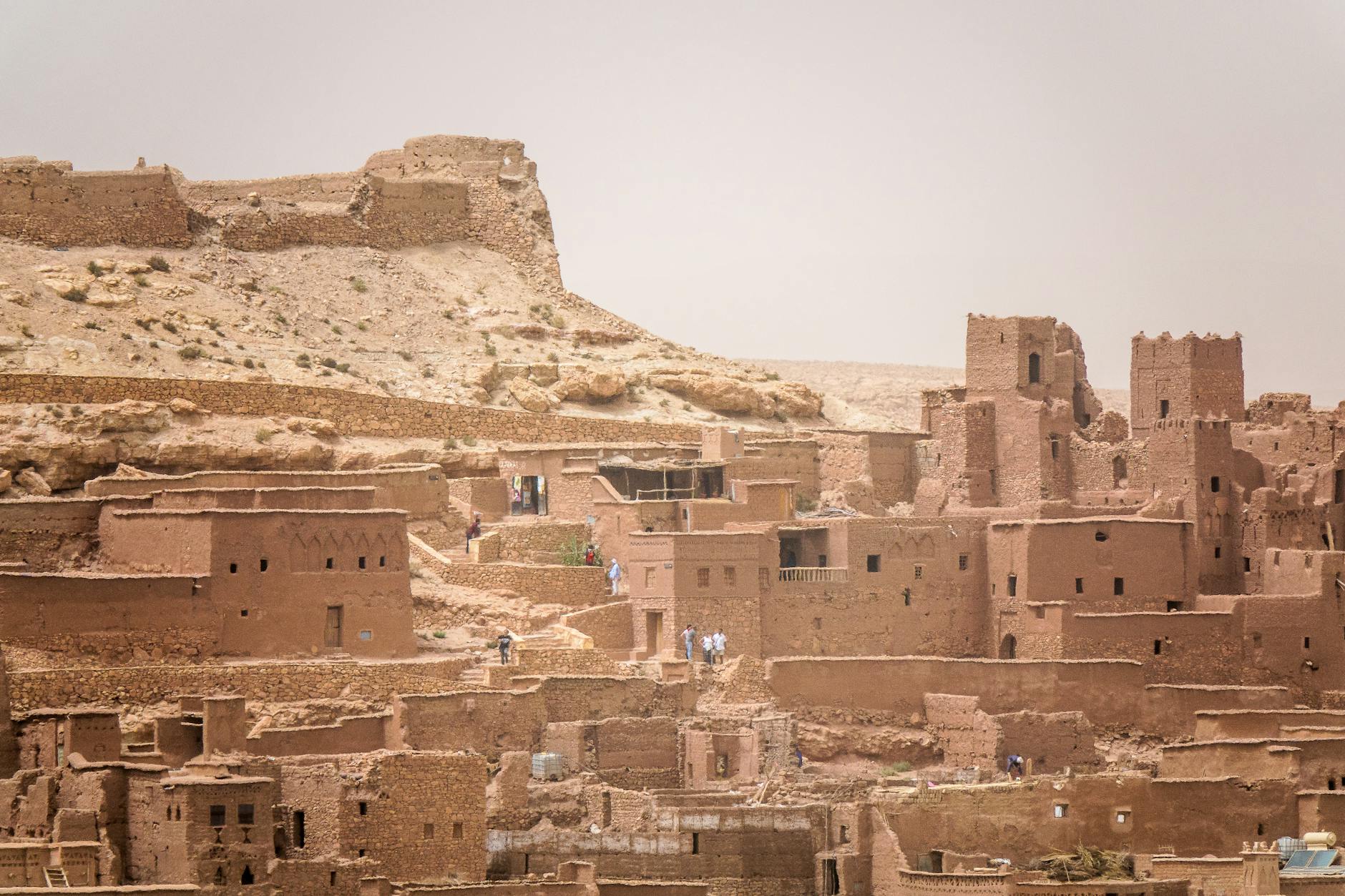
The Porous Southern Frontier: A Civilizational Engineering Problem With No Good Solutions
Empires are, among other things, border management enterprises. They exist in part to define and enforce the line between inside and outside, between the administered and the unadministered, between the taxable and the untaxable. And across five thousand years of recorded imperial history, one specific type of border has proven consistently, almost universally, resistant to that management: the warm, economically productive southern frontier.
This is not a polemic. It is an engineering problem — or more precisely, a recurring class of engineering problems that different civilizations have attempted to solve with different tools and arrived at surprisingly similar outcomes. The analytical question is not whether borders should be controlled. Every major polity in human history has attempted to control its borders. The analytical question is why this particular type of border produces such consistent failure modes regardless of the culture, the technology, or the political will attempting the control.
What Makes a Southern Frontier Different
Before surveying the cases, it is worth establishing why southern frontiers — as a category — present a structurally distinct challenge from northern, eastern, or western ones.
Northern frontiers, historically, are cold. Cold climates reduce agricultural productivity, which reduces population density, which reduces the volume of human movement across the border. The people who live near northern frontiers tend to be fewer in number and more easily monitored. The Roman limes along the Rhine and upper Danube were formidable engineering projects, but they were defending against relatively sparse populations moving across terrain that provided natural chokepoints.
Southern frontiers are warm. Warm climates support dense agriculture, dense populations, and dense trade networks. The economic gradient between a prosperous imperial core and a productive southern periphery tends to pull people northward — toward wages, toward markets, toward opportunity. This gradient is not a policy failure. It is a thermodynamic reality of economic geography. And it has been generating the same political pressures for as long as empires have existed.
Rome's Saharan Problem
Rome's southern frontier was not the Rhine. It was the Sahara — and the semi-arid belt of North Africa and the Near East that fringed it. This frontier was not primarily a military problem. It was an administrative one. The populations of Roman North Africa — Berbers, Garamantes, and the various tribal confederations of the Libyan interior — were not invaders in any meaningful sense. They were economic participants in the Roman system, trading, migrating seasonally, and increasingly settling in Roman provincial towns.
Rome's response evolved through several distinct phases that will look familiar to students of later imperial history. First, military enforcement: the construction of the fossatum Africae, a system of ditches, walls, and watchtowers across North Africa that Hadrian and his successors built and expanded. Second, administrative accommodation: the formal recognition of tribal leaders as Roman clients, essentially co-opting the border population into the management system. Third, economic integration: the deliberate settlement of frontier populations in agricultural colonies that tied them to the Roman tax system.
None of these phases produced a stable solution. The fossatum was expensive to maintain and permeable in practice. Client relationships required constant renegotiation and were vulnerable to succession crises on both sides. Economic integration worked — arguably too well, in the sense that it accelerated demographic change in the frontier provinces faster than Roman administrative categories could absorb.
The Qing and the Southwestern Question
The Qing Dynasty, which ruled China from 1644 to 1912, faced a structurally analogous problem in its southwestern borderlands — the region encompassing modern Yunnan, Guizhou, and the frontier with mainland Southeast Asia. This was warm, productive territory populated by non-Han ethnic groups whom the Qing classified under the administrative category of tusi — indigenous leaders granted hereditary authority in exchange for nominal submission to the imperial system.
The tusi system was, in essence, the same client-relationship approach Rome had tried in North Africa. It worked well enough as long as the economic gradient between the core and the frontier remained manageable. As Qing commercial networks expanded into the southwest during the eighteenth century, the gradient steepened. Han Chinese merchants, farmers, and laborers moved into tusi territories in increasing numbers. The indigenous administrative system was not designed to manage this volume of demographic change.
The Qing response — the gaitu guiliu reforms that replaced hereditary tusi with appointed imperial officials — produced exactly the kind of resistance that students of border management might predict. The Miao Rebellions of the eighteenth century, which killed hundreds of thousands of people and required decades to suppress, were substantially a reaction to the administrative disruption caused by the reform itself. The Qing had solved one problem by creating a larger one.
The Mughals and the Deccan
The Mughal Empire's relationship with the Deccan plateau — the vast, semi-arid tableland of southern India — represents perhaps the most extensively documented case of southern frontier exhaustion in pre-modern history. Aurangzeb's twenty-seven-year campaign to bring the Deccan under direct Mughal control, which consumed the last decades of his reign and ended with his death in the field in 1707, is a case study in the resource costs of attempting hard administrative control over a warm, economically complex, and politically fragmented southern frontier.
The Deccan was not empty. It was populated by the Maratha confederacy — a distributed, mobile, and economically sophisticated network of warriors, traders, and farmers who understood their terrain in ways that the Mughal army, optimized for the plains of northern India, did not. Aurangzeb could win battles. He could not win the territory, because the territory's value was inseparable from the population that worked it, and that population was unwilling to be administered on Mughal terms.
The Mughal treasury, which had been the largest single concentration of wealth in the world at the empire's peak, was effectively exhausted by the Deccan campaigns. The empire fractured within a generation of Aurangzeb's death, and the fracture lines ran almost exactly along the boundary between the northern plains that Mughal administration could manage and the southern territories it could not.
The Ottoman Southern Exposure
The Ottomans faced their version of this problem across multiple frontiers simultaneously — in Arabia, in Egypt, and along the long, economically productive arc of the Fertile Crescent. The Arabian frontier is perhaps the most instructive case. The Hejaz, containing Mecca and Medina, was simultaneously the most symbolically important territory in the empire and one of the most administratively resistant. The Ottoman solution — the appointment of the Hashemite Sharifs as client rulers, combined with the annual surre payment that effectively subsidized the frontier population — was a direct functional equivalent of Rome's client-king system and the Qing tusi arrangement.
Like its predecessors, it worked until it didn't. The collapse of the client relationship during World War One, when Sharif Hussein launched the Arab Revolt with British support, was not primarily an ideological event. It was a renegotiation of the economic and political terms of the client arrangement that had broken down under wartime stress.
The Consistent Failure Modes
Across these cases — and a longer survey would include the Achaemenid Persian frontier in Bactria, the Han Dynasty's relationship with the Yue peoples of southern China, and the Abbasid Caliphate's chronic difficulty administering its North African territories — several failure modes appear with enough regularity to constitute something like a pattern.
First: physical barriers are expensive to maintain and permeable in practice when the economic gradient on either side is steep enough. Second: client relationships reduce enforcement costs but create dependency on the client's continued cooperation and are structurally vulnerable to leadership transitions. Third: economic integration works as a long-term assimilation strategy but operates on generational timescales that exceed the planning horizons of most political systems. Fourth: hard administrative enforcement of the kind Aurangzeb attempted tends to be more expensive than the value of the territory it is protecting.
None of this means that border management is impossible or not worth attempting. Every empire in human history has attempted it, which suggests that the alternative — no management — produces outcomes that political systems find even less acceptable. What the historical record does suggest is that the specific combination of warmth, agricultural productivity, and dense population that characterizes southern frontiers creates a structural resistance to the kind of clean administrative control that makes border management feel solved.
Five thousand years of data. Draw your own conclusions.