The Seven Immutable Laws of Political Rebellion: Why Populist Movements Always Follow the Same Script
The Pattern That History Keeps Repeating
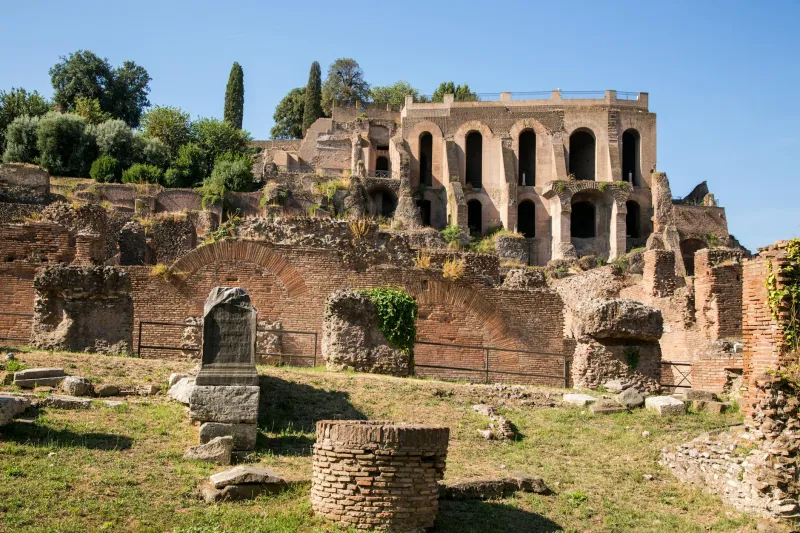
In 133 BCE, Tiberius Gracchus stood before the Roman Forum and declared that the wealthy had stolen the birthright of ordinary citizens. In 1935, Huey Long promised to "Share Our Wealth" and make "Every Man a King." In 2016, a reality television star claimed he alone could drain the swamp. The names change, the technology evolves, but the script remains identical.
Modern political scientists studying populist movements often treat them as novel phenomena born from contemporary conditions. This perspective misses the forest for the trees. Five millennia of recorded history reveal that populist uprisings follow a remarkably consistent tactical playbook—one that exploits unchanging features of human psychology with mathematical precision.
Law One: The Credentialed Elite Must Fall
Every successful populist movement begins by identifying and attacking the established intellectual class. The Gracchi brothers targeted the Roman Senate's legal scholars. Medieval peasant revolts invariably burned the records kept by educated clerks. The French Revolution sent academics to the guillotine alongside aristocrats.
This pattern persists because expertise itself triggers a predictable psychological response. Research by social psychologist Susan Fiske demonstrates that competence without warmth generates envy and resentment—the same emotional cocktail that has fueled anti-elite sentiment across cultures and centuries. The specific targets change (priests, professors, journalists, "deep state" bureaucrats), but the underlying mechanism remains constant.
Law Two: Paradise Was Yesterday
Successful populist leaders invariably promise a return to a golden age that existed just beyond living memory. Augustus Caesar invoked the virtues of the early Republic. Hitler mythologized a pure Germanic past. "Make America Great Again" follows this exact template, appealing to a nostalgic vision of mid-20th century prosperity.
Psychological research on rosy retrospection bias explains why this tactic works across all cultures and time periods. Humans systematically remember the past more positively than they experienced it, while simultaneously overestimating current problems. Populist leaders don't create this bias—they weaponize it.
Law Three: The Great Betrayal Narrative
Every populist movement requires a betrayal story: the pure people were stabbed in the back by corrupt insiders. The Germanic tribes blamed Rome. Medieval peasants blamed corrupt nobles. Modern populists blame globalists, establishment politicians, or shadowy elites.
This narrative structure activates what evolutionary psychologists call "coalition psychology"—the human tendency to form tight in-groups when threatened by perceived out-group betrayal. The specifics matter less than the emotional architecture: we were righteous, they deceived us, now we must reclaim what was stolen.
Law Four: Simplicity Conquers Complexity
Populist leaders consistently reduce complex problems to simple moral conflicts between good and evil. Catiline promised to cancel all debts. William Jennings Bryan blamed everything on the gold standard. Modern populists offer equally straightforward solutions: build a wall, break up big tech, abolish the Federal Reserve.
Cognitive research reveals why oversimplification works so effectively. When facing uncertainty and stress, human brains default to what psychologists call "system one thinking"—fast, emotional, intuitive responses that prefer clear narratives to nuanced analysis. The populist who offers simple answers will always defeat the expert who explains why problems are complicated.
Law Five: The Authentic Outsider Paradox
Successful populist leaders present themselves as authentic outsiders while often being consummate political insiders. Julius Caesar claimed to represent the people against the corrupt Senate—while being one of Rome's wealthiest patricians. Donald Trump ran as a Washington outsider despite decades of political connections.
This paradox exploits what social psychologists call the "authenticity heuristic"—people judge sincerity based on perceived similarity and emotional resonance rather than actual background or behavior. The leader who "tells it like it is" gains trust regardless of their actual relationship to power.
Law Six: Crisis as Opportunity
Populist movements require a sense of existential urgency. The Gracchi exploited economic inequality. Hitler leveraged hyperinflation and unemployment. Modern populists point to immigration, trade deficits, or cultural change as evidence that civilization hangs in the balance.
Threat psychology research explains why crisis rhetoric proves so effective. When people feel their survival or status is threatened, they become more willing to support radical solutions and authoritarian leaders. The crisis need not be objectively severe—only subjectively felt.
Law Seven: The Media Amplification Loop
Every successful populist movement has mastered the communication technology of its era. Roman populists used graffiti and public forums. Medieval rebels spread ballads and pamphlets. Modern populists exploit social media algorithms designed to maximize engagement through outrage.
The technology changes, but the underlying principle remains constant: populist messages spread because they trigger strong emotional responses. Whether carved in stone or shared on Twitter, content that makes people angry, afraid, or hopeful gets transmitted more effectively than nuanced policy discussions.
The Unchanging Human Element
These seven laws persist across cultures and centuries because they exploit fundamental features of human psychology that evolution hardwired into our species long before civilization emerged. We form tribal loyalties, prefer simple explanations, remember the past fondly, and respond to charismatic leaders during times of stress.
Understanding these patterns doesn't require moral judgment about populist movements themselves—some have fought genuine injustice while others have enabled catastrophic violence. But recognizing the script allows us to evaluate populist claims more rationally, understanding which psychological buttons are being pushed and why we might be inclined to respond.
The next time a charismatic leader promises to restore a golden past by defeating corrupt elites, remember: you've heard this story before. Humanity has been telling itself this same tale for five thousand years, and we keep believing it for reasons that have nothing to do with its truth value and everything to do with how our minds work.
History doesn't repeat, but human nature does.