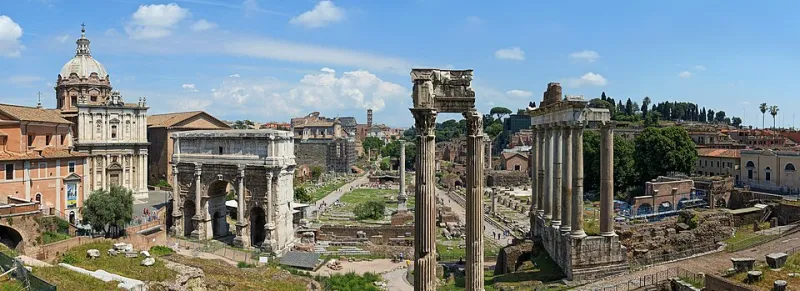
Capital Flight: The 5,000-Year Pattern of Power Following Geography
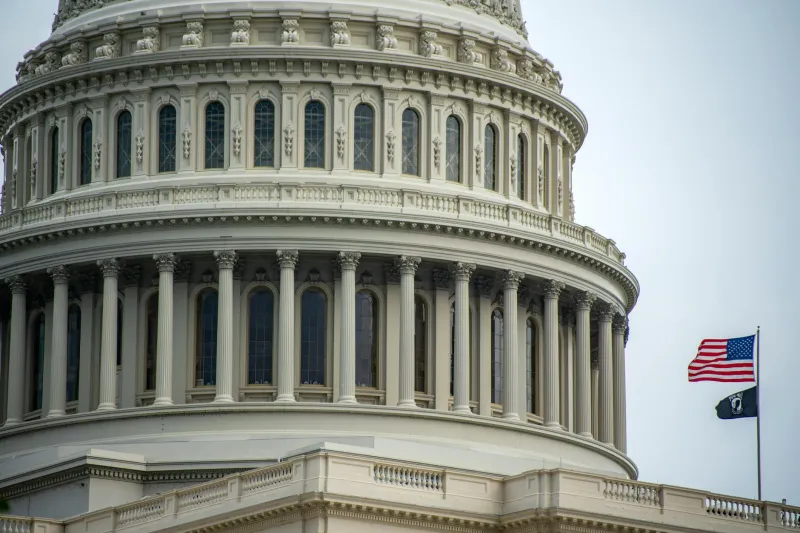
The Pharaoh Who Moved Too Soon
In 1346 BCE, Pharaoh Akhenaten abandoned Thebes—Egypt's traditional capital and center of priestly power—to build an entirely new city at Amarna. The move was intended to consolidate his revolutionary religious reforms and escape the influence of entrenched elites. Within two decades, Amarna lay abandoned, Akhenaten was dead, and his successors had restored the old order from Thebes. The pharaoh's capital relocation had revealed not his strength, but his fundamental weakness.
This pattern—the movement of capitals as both symptom and cause of political transformation—has repeated across every major civilization for five millennia. The decision to build, move, or abandon a seat of government invariably signals deeper shifts in the distribution of power, wealth, and legitimacy. Understanding this pattern offers crucial insights into America's own evolving political geography.
The Psychology of Political Geography
Human psychology creates an inevitable tension between political centers and the broader territories they govern. Capitals naturally become insular, developing their own cultures, interests, and worldviews that diverge from those of their hinterlands. This divergence accelerates when economic and political power concentrate in different locations, creating competing centers of gravity that eventually force a choice.
Constantine's decision to establish Constantinople in 330 CE exemplified this dynamic. Rome had become increasingly irrelevant to an empire whose economic and military focus had shifted eastward. Rather than fight this geographical reality, Constantine embraced it, creating a new capital that better reflected the empire's actual center of gravity. The move extended Roman imperial power by centuries.
Conversely, rulers who resist geographical realities often find themselves governing from splendid isolation. Louis XIV's construction of Versailles removed the French monarchy from Paris—the kingdom's economic and intellectual center—contributing to the fatal disconnect between crown and country that would explode a century later.
The American Experiment
The United States Constitution represented a conscious attempt to solve the capital problem through compromise. Washington, D.C., was deliberately positioned between North and South, designed to be accessible to all regions while belonging fully to none. The decision reflected the founders' understanding that capital location could make or break a federal system.
For two centuries, this arrangement largely succeeded. Washington remained small enough to avoid developing an independent economic base, while maintaining symbolic and practical centrality to the American experiment. The city's growth paralleled the expansion of federal power, creating a feedback loop that reinforced the capital's legitimacy.
Yet this equilibrium has become increasingly unstable. Washington's transformation into a major metropolitan area with its own economic interests has coincided with America's shift toward a knowledge-based economy concentrated in coastal cities. The result is a growing disconnect between the nation's political center and its economic engines.
The Digital Disruption
Technology has fundamentally altered the calculus of capital location. Where previous eras required physical proximity for effective governance, digital communication theoretically makes geography irrelevant. Yet human psychology hasn't evolved at the speed of fiber optic cables. Face-to-face interaction remains crucial for building trust, reading social cues, and maintaining the informal networks that make formal institutions function.
This creates a paradox: just as technology makes capital relocation theoretically unnecessary, it also makes the cultural isolation of political centers more pronounced. Washington's political class increasingly lives in a digital bubble that bears little resemblance to the experiences of most Americans, while Silicon Valley's tech elite wields enormous influence over information flows without formal political accountability.
Signs of Strain
Several indicators suggest America may be approaching its own capital crisis. The growing wealth gap between Washington and much of the country mirrors the economic disparities that have historically preceded capital relocations. The rise of remote work has demonstrated that many government functions don't require physical presence in the capital, while the increasing militarization of Washington reflects the kind of siege mentality that historically accompanies political center decline.
Most tellingly, real economic and cultural power has migrated to cities that have little formal political role. New York dominates finance, San Francisco controls technology, Los Angeles shapes entertainment, and Houston leads energy production. Washington's primary export is regulation—a function that creates resentment rather than wealth.
The Historical Precedent
Brazília offers the most relevant modern parallel. Constructed in the 1950s to relocate Brazil's capital from coastal Rio de Janeiro to the country's interior, the new city was intended to promote national integration and development. While Brazília succeeded in these goals to some degree, it also created a sterile political environment disconnected from Brazilian life. Real power often still flows through São Paulo and Rio, while Brazília serves primarily ceremonial functions.
This outcome suggests that capital relocation in the modern era may be less decisive than in previous centuries. Political power can fragment across multiple centers without necessarily triggering the kind of systemic collapse that historically accompanied such dispersal.
The Coming Reckoning
America faces a choice that echoes across five thousand years of political history. It can continue to concentrate formal political power in Washington while real economic and cultural influence migrates elsewhere, risking the kind of dangerous disconnect that has historically destabilized political systems. Alternatively, it can acknowledge geographical reality and develop new institutional arrangements that better reflect the country's actual distribution of power and wealth.
The founders understood that political institutions must adapt to geographical realities or eventually be broken by them. Their wisdom suggests that America's capital question is not whether change will come, but whether it will be managed consciously or forced by crisis. History offers no examples of societies that successfully ignored this choice indefinitely.