The Safety Valve Principle: How Functional Democracies Turn Revolutionaries Into Parliamentarians
The Pattern Hidden in Plain Sight
In 494 BCE, Rome's plebeians withdrew to the Sacred Mount and threatened to abandon the city entirely unless their grievances were addressed. Rather than crush this uprising, the patrician class made a revolutionary decision: they created the office of tribune, giving the people's representatives formal power to veto Senate decisions and protect citizens from arbitrary punishment. This moment crystallized a principle that would echo across millennia—stable societies don't eliminate opposition, they domesticate it.
The psychological insight underlying this decision remains as relevant today as it was 2,500 years ago. Human beings possess an innate drive to resist what they perceive as unjust authority. This drive can manifest as constructive criticism within established channels, or it can explode into revolutionary violence that tears institutions apart. The determining factor is whether the system provides legitimate avenues for dissent.
The Architecture of Legitimate Opposition
Every durable political system in recorded history has eventually developed formal mechanisms to channel opposition energy into productive outlets. The British Parliament's evolution from royal court to bicameral legislature created the world's most sophisticated machinery for this purpose. The "loyal opposition" concept—the idea that one can oppose the government while remaining loyal to the crown—represented a psychological breakthrough that allowed political competition to occur without existential threat to the system itself.
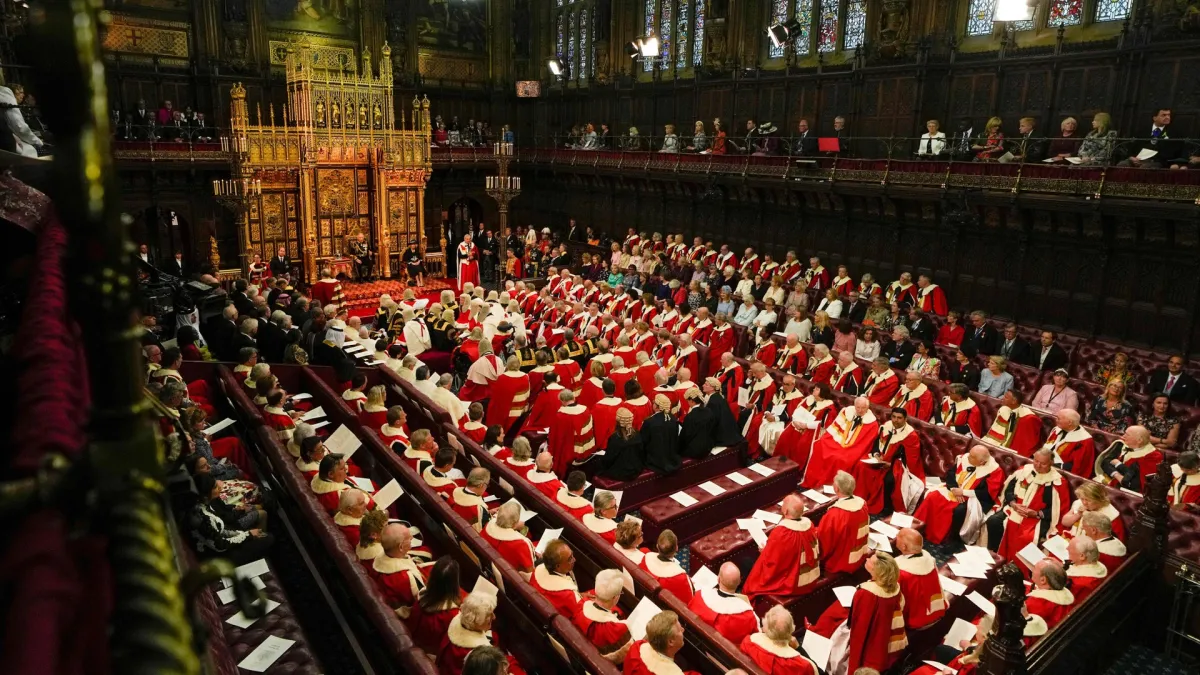 Photo: British Parliament, via assets.editorial.aetnd.com
The American founders, steeped in classical history and British precedent, embedded similar principles into the Constitution. The separation of powers, federalism, and the Bill of Rights all serve as institutional safety valves, providing multiple channels for dissatisfaction to express itself legally rather than violently.
Yet these mechanisms only function when all participants accept their legitimacy. The moment opposition groups conclude that the system itself is rigged against them, the safety valve transforms into a pressure cooker.
When Safety Valves Fail
The French Revolution offers history's most instructive example of what happens when institutions fail to absorb legitimate grievances. The Estates-General hadn't convened since 1614, leaving no formal mechanism for the Third Estate to address economic and social grievances that had been building for generations. When Louis XVI finally called the assembly in 1789, the accumulated pressure exploded with world-changing force.
Similarly, the collapse of the Weimar Republic demonstrates how democratic institutions can be undermined when opposition movements reject the legitimacy of the system itself. The Nazis and Communists both participated in parliamentary politics while simultaneously working to destroy the parliament from within—a contradiction that ultimately proved fatal to German democracy.
 Photo: Weimar Republic, via i.pinimg.com
The American Paradox
Contemporary American political discourse exhibits troubling parallels to these historical failures. Both major parties increasingly question not just their opponents' policies, but their opponents' right to govern at all. When political competition transforms into existential warfare, the institutional safety valves that have preserved American democracy for two and a half centuries begin to malfunction.
The irony is that America's current polarization may stem not from too much opposition, but from too little structured opposition. The decline of local political organizations, the nationalization of previously local issues, and the replacement of institutional mediators with social media algorithms have all contributed to a situation where political energy has fewer legitimate outlets than it once did.
Lessons from the Long View
Historical analysis suggests that the solution to dangerous polarization is not the elimination of opposition, but the strengthening of institutions that can channel it productively. This requires both sides to accept a fundamental bargain: today's minority must be guaranteed the opportunity to become tomorrow's majority, and today's majority must accept that its power is temporary and conditional.
The Romans understood this when they created the tribunate. The British learned it through centuries of constitutional evolution. The American founders encoded it into the Constitution. The question facing contemporary America is whether its citizens still possess the psychological maturity to honor this ancient wisdom, or whether they will join the long list of societies that forgot how to disagree without destroying themselves in the process.
The stakes could not be higher. As five thousand years of political history demonstrate with depressing consistency, societies that fail to provide legitimate homes for opposition inevitably face something far more dangerous than parliamentary debate: the kind of revolutionary upheaval that sweeps away not just governments, but entire civilizations.