Opinion: The Founding Fathers Didn't Invent Gridlock—They Inherited History's Most Predictable Disease

The Familiar Sound of Collapse
Anyone who has watched C-SPAN during a debt ceiling debate would recognize the atmosphere in the Roman Senate during its final century. The same procedural warfare, the same appeals to ancient precedent, the same transformation of governing mechanisms into weapons of partisan destruction. The details change across millennia—filibusters instead of tribunician vetoes, cable news instead of forum speeches—but the underlying pathology remains identical.
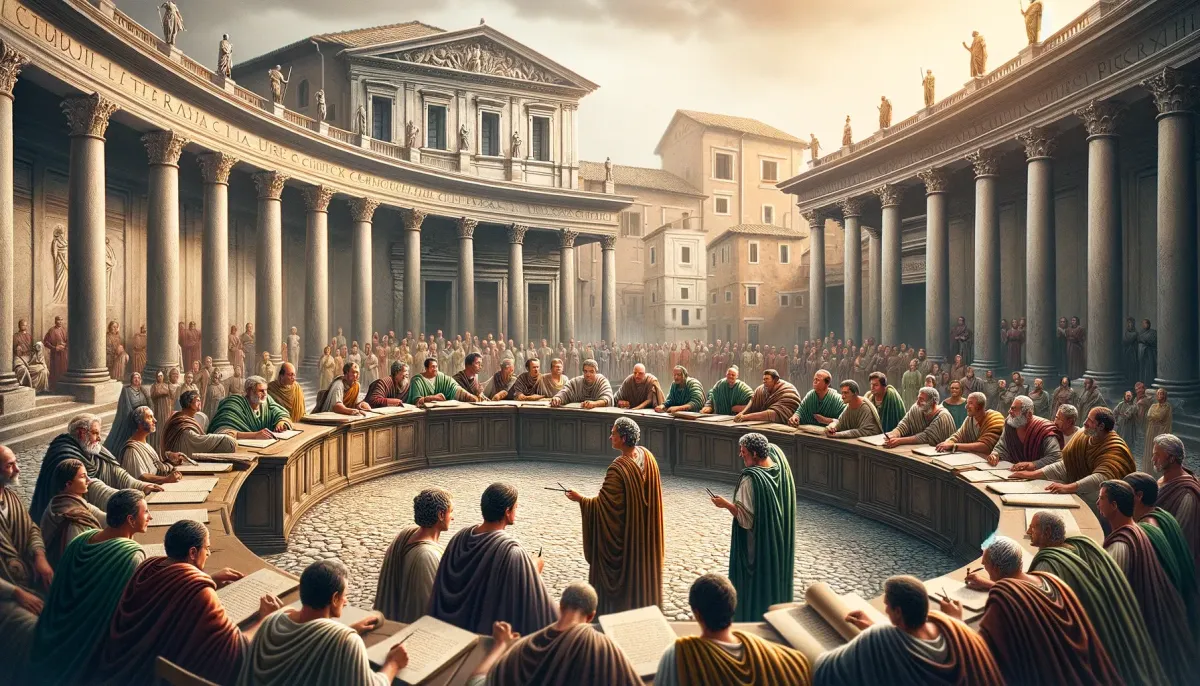 Photo: Roman Senate, via romanempiretimes.com
This isn't coincidence. Legislative paralysis represents a predictable stage in republican decline, as reliable as the seasons and just as resistant to wishful thinking. The American political system hasn't invented new forms of dysfunction; it has simply inherited very old ones.
The Polish Precedent
The most instructive historical parallel comes from the Polish-Lithuanian Commonwealth, whose Sejm (parliament) developed the ultimate gridlock mechanism: the liberum veto. Any single member could halt all proceedings by shouting "I do not allow!" This seemingly absurd rule reflected the same philosophical commitment to minority rights that Americans celebrate in their Senate.
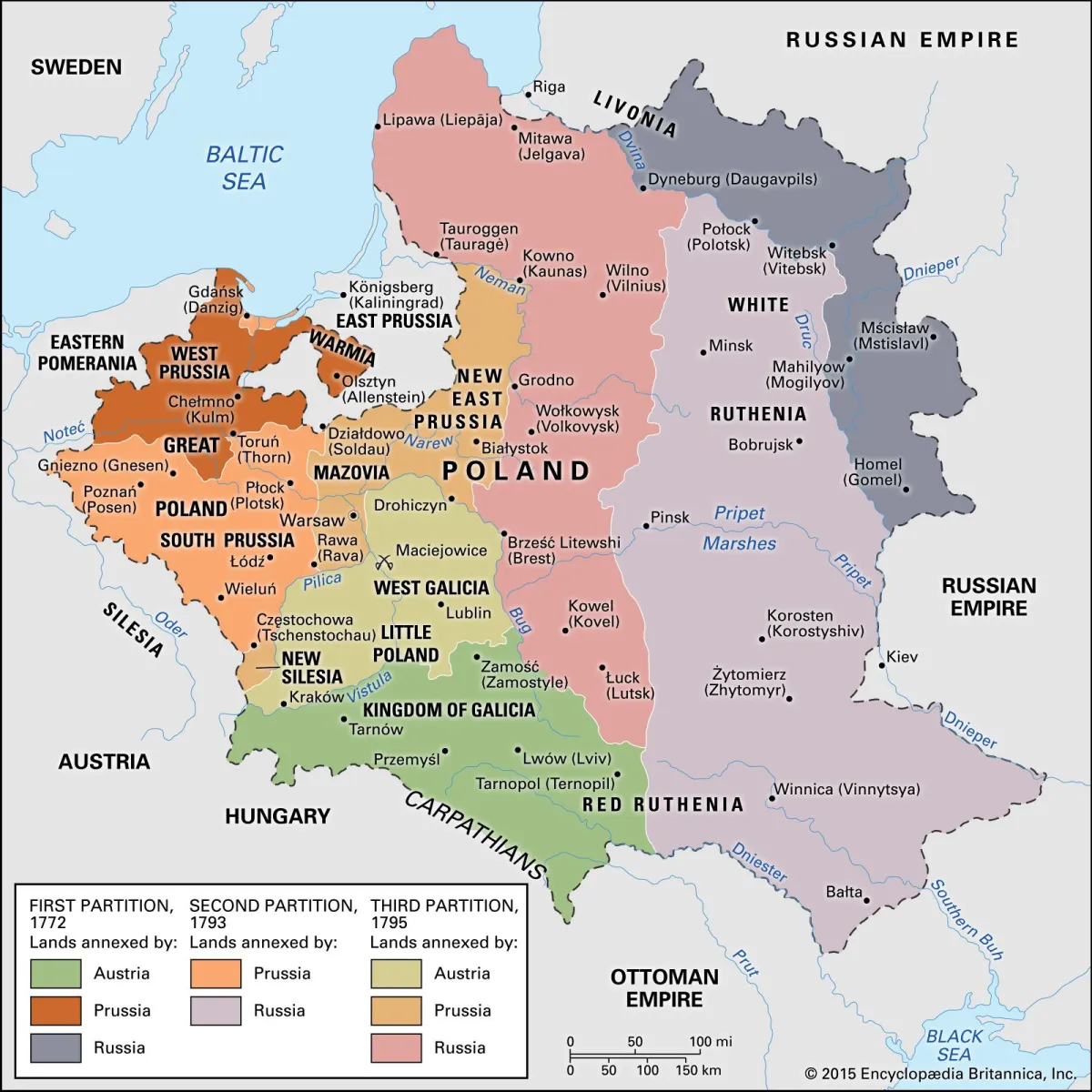 Photo: Polish-Lithuanian Commonwealth, via cdn.britannica.com
The liberum veto emerged from admirable principles. Polish nobles believed that unanimous consent protected individual liberty better than majority rule. They feared that factional dominance would destroy the delicate balance between royal authority and aristocratic freedom. These concerns weren't paranoid fantasies—they reflected hard-won wisdom about how republics die.
Yet the mechanism designed to preserve Polish liberty ultimately destroyed it. By the eighteenth century, foreign powers routinely bribed individual Sejm members to paralyze the government. The Commonwealth became ungovernable, then disappeared entirely, carved up by neighbors who had learned to exploit its institutional weaknesses. The liberum veto, created to protect freedom, became the mechanism of its destruction.
The Roman Playbook
Roman senators would have understood modern American legislative tactics instinctively. The late Republic featured the same escalating procedural warfare that characterizes contemporary Congress. Tribunes of the plebs used their veto powers to block legislation, senators filibustered through endless speeches, and factional leaders manipulated calendar scheduling to prevent votes on opposing priorities.
The Roman Senate's final decades featured familiar patterns: government by continuing resolution (annual magistrates simply extended existing policies), debt ceiling crises (regular battles over public treasury access), and investigative theater (senators launching inquiries designed more for political damage than fact-finding). The institutional mechanisms that had enabled Roman expansion gradually transformed into weapons of internal destruction.
Most tellingly, Roman political leaders responded to gridlock exactly as their American successors do: by circumventing legislative processes entirely. Julius Caesar's consulship in 59 BCE established the template. Facing Senate obstruction, he simply ignored traditional procedures, passed legislation through popular assemblies, and dared opponents to stop him. The precedent, once established, proved irresistible to future leaders.
 Photo: Julius Caesar, via cdn.britannica.com
The Psychology of Institutional Warfare
Why do republics consistently evolve toward legislative paralysis? The answer lies in how human psychology interacts with institutional design. Republican governments require ongoing cooperation between competing factions. This cooperation depends on shared commitment to institutional legitimacy—the belief that the system itself matters more than any particular political outcome.
That commitment erodes through a predictable process. Initial disagreements about policy gradually expand into disputes about procedure. Procedural disputes escalate into questions about institutional legitimacy. Once legitimacy becomes contested, every rule becomes a weapon and every precedent becomes a target.
Modern neuroscience confirms what ancient observers intuited: humans process political opposition as personal threat. The amygdala—the brain's threat-detection center—activates when people encounter contradictory political information. This physiological response makes compromise feel like capitulation and negotiation feel like betrayal. Over time, the emotional stakes of political conflict overwhelm the rational incentives for institutional preservation.
The American Variation
Contemporary American gridlock follows this historical script with remarkable precision. The escalating use of procedural weapons—filibusters, holds, reconciliation, debt ceiling threats—represents the same institutional arms race that destroyed the Roman Republic. Each innovation in legislative warfare provokes counter-innovations that further degrade normal governing processes.
The transformation of Senate confirmation processes illustrates this dynamic perfectly. What began as occasional opposition to particularly controversial nominees has evolved into systematic obstruction of routine appointments. Both parties now treat confirmation battles as opportunities for political theater rather than genuine evaluation of candidate qualifications. The institutional norm of deference to presidential personnel choices has collapsed entirely.
Similarly, congressional oversight has transformed from episodic investigation of genuine scandals into permanent campaign warfare. Every administration now faces continuous investigation from the opposing party, regardless of actual wrongdoing. The oversight function, designed to ensure executive accountability, has become a mechanism for generating negative media coverage.
The Federalist Miscalculation
The Founding Fathers understood the historical precedents for republican collapse, but they fundamentally miscalculated human nature. James Madison's Federalist 10 anticipated that factional conflict would be constrained by institutional design and geographic diversity. He believed that the sheer size of the American republic would prevent any single faction from achieving dominance.
This analysis proved correct for over two centuries. American political parties remained geographically diverse coalitions that required internal compromise to function effectively. Southern Democrats needed to accommodate Northern labor interests; Western Republicans had to balance Eastern business priorities. The resulting ideological heterogeneity within each party created natural incentives for moderation.
That geographic constraint has largely disappeared. Contemporary American political parties represent increasingly homogeneous geographic and cultural coalitions. Democrats dominate urban areas; Republicans control rural regions. This sorting eliminates the internal diversity that historically forced intra-party compromise. Politicians now face stronger incentives to satisfy ideological base voters than to negotiate with political opponents.
The Structural Inevitability
Modern political scientists often attribute congressional dysfunction to recent developments: cable news, social media, campaign finance changes, or primary election reforms. This analysis misses the fundamental point. These factors may have accelerated existing trends, but they didn't create the underlying pathology.
Legislative gridlock represents a structural feature of republican government at a particular stage of institutional development. Young republics maintain high levels of external threat that force internal cooperation. Mature republics lose that external pressure and begin consuming themselves through factional warfare. The pattern has repeated across cultures and centuries because it reflects something fundamental about how human beings organize collective decision-making.
Poland's liberum veto wasn't caused by foreign media or campaign finance. Rome's Senate didn't collapse because of social media or partisan primaries. These institutional failures reflected the inherent tendency of republican systems to evolve toward paralysis as external threats diminish and internal factions solidify.
The Reform Delusion
Contemporary proposals for fixing congressional gridlock typically focus on procedural modifications: eliminating the filibuster, changing committee structures, or reforming primary elections. These suggestions miss the historical lesson. Procedural reforms cannot address the underlying psychological and structural factors that drive institutional decay.
The Roman Republic tried numerous constitutional modifications during its final century. The Sullan reforms, the Pompey settlements, the various tribunician law changes—all represented serious attempts to restore functional governance through institutional adjustment. None succeeded because they addressed symptoms rather than causes.
Similarly, the Polish Commonwealth attempted multiple Sejm reforms during the eighteenth century. The Great Sejm of 1788-1792 produced the May 3rd Constitution, which eliminated the liberum veto and strengthened executive authority. This reform came too late; the institutional damage was irreversible. Foreign powers had already learned to exploit Polish weakness, and internal factions had lost faith in parliamentary governance.
The Uncomfortable Truth
Five thousand years of republican government suggest an uncomfortable conclusion: legislative dysfunction isn't a problem to be solved but a terminal symptom to be managed. Republics that reach this stage of institutional development face limited options, none of them pleasant.
Some evolve toward executive dominance, trading legislative paralysis for autocratic efficiency. Others fragment into smaller, more homogeneous units that can sustain internal cooperation. A few discover external threats serious enough to restore internal unity temporarily. But none successfully return to the golden age of functional republican governance through procedural reform alone.
American exceptionalism provides little comfort here. The United States possesses no special immunity to the historical forces that have destroyed every other long-lived republic. The institutional mechanisms that enabled two centuries of American success—geographic diversity, external threats, economic growth—have weakened or disappeared entirely.
Recognizing this pattern doesn't require fatalistic acceptance of republican collapse. But it does demand realistic assessment of available options. Americans who wish to preserve democratic governance must understand that they face a historical crisis, not a contemporary policy dispute. The solutions, if they exist, will require acknowledging that the current system has entered a terminal phase of its institutional lifecycle.
History provides no examples of republics that successfully reformed their way out of systematic legislative dysfunction. It does provide examples of societies that managed institutional transitions without catastrophic violence or permanent autocracy. The choice facing contemporary Americans isn't between reform and status quo—it's between managed transition and uncontrolled collapse.