When Capitals Create Their Killers: The Geography of Civilizational Suicide
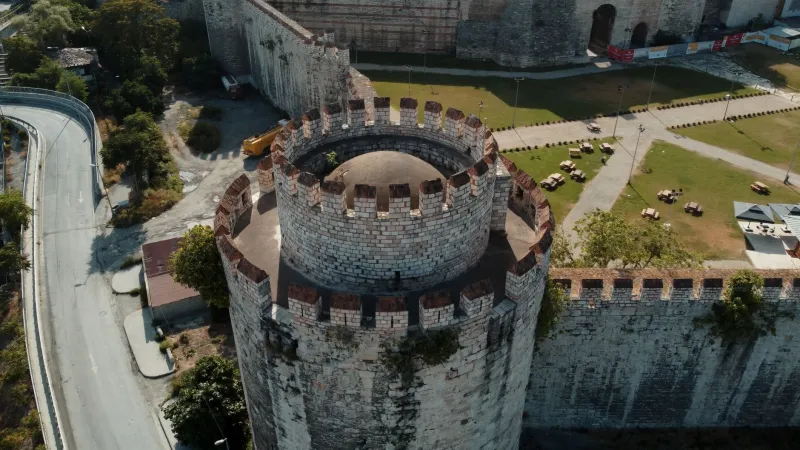
The Inevitable Geography of Power
Every great capital contains the seeds of its own replacement, not through internal decay but through the very mechanisms that made it dominant. The historical pattern operates with mechanical precision: successful cities attract talent, generate wealth, and create institutions that inevitably overflow their boundaries, establishing secondary centers that gradually accumulate the capabilities to challenge the original.
This isn't a modern phenomenon accelerated by technology—it's a fundamental dynamic of human organization that predates written history. Archaeological evidence suggests that Mesopotamian city-states followed identical patterns five thousand years ago, with successful centers spawning satellite communities that eventually competed for regional dominance.
The Roman Model
Rome's relationship with Constantinople provides the clearest historical template for understanding how capitals create their successors. When Constantine established his new capital in 330 CE, he wasn't plotting Rome's downfall—he was solving immediate administrative problems by creating an eastern center capable of managing the empire's growing complexity.
The new city succeeded precisely because it inherited Rome's institutional knowledge while avoiding Rome's accumulated constraints. Constantinople could implement updated versions of Roman legal systems, military organization, and administrative structures without the political resistance that prevented reform in the original capital.
Within two centuries, Constantinople had become not just Rome's equal but its superior in population, wealth, and political influence. The western empire's collapse in 476 CE marked not the end of Roman civilization but its geographical relocation to a center that had begun as Rome's administrative overflow.
The psychological dynamic proved equally important as the institutional one. Constantinople's elite saw themselves as the true inheritors of Roman greatness, while Rome's establishment dismissed the eastern capital as a provincial imitation. This mutual misunderstanding prevented effective coordination and ensured competition rather than cooperation.
The British-American Transition
London's creation of New York as a commercial rival follows the same pattern with striking precision. British colonial policy in the 18th century aimed to establish North American trading centers that could manage imperial commerce while remaining subordinate to London's financial institutions.
New York developed exactly as intended: it became a sophisticated commercial hub with advanced banking, shipping, and manufacturing capabilities. But these capabilities inevitably generated local expertise, capital accumulation, and institutional independence that made continued subordination unsustainable.
The crucial transition occurred not during the American Revolution—which was primarily political—but during the 19th century's industrial expansion, when New York's financial institutions began competing directly with London's for international business. By 1900, American banks were financing global trade independently of British capital, and by 1945, New York had replaced London as the world's financial center.
The pattern repeated the Roman template: the secondary city inherited the original's institutional knowledge while avoiding its accumulated constraints, ultimately becoming more effective at the very activities that had made the original dominant.
The Digital Acceleration
Contemporary technology networks may be compressing this historical cycle from centuries to decades. Silicon Valley's dominance in digital innovation has created secondary technology centers worldwide that initially served as overflow locations for talent and capital but increasingly operate as independent competitors.
Shenzhen, Bangalore, Tel Aviv, and other technology hubs began as cost-effective alternatives to Silicon Valley's expensive infrastructure. They attracted talent trained in American institutions, implemented business models developed in California, and initially focused on serving markets that Silicon Valley companies found unprofitable.
But digital networks allow these secondary centers to accumulate capabilities much faster than historical precedents. A software engineer in Bangalore can access the same information, use the same tools, and serve the same global markets as someone in San Francisco. Geographic distance no longer creates the time delays that historically protected dominant centers during transition periods.
The result is that secondary technology centers are developing independent innovation capabilities within single decades rather than multiple centuries. Chinese technology companies now compete directly with American firms in artificial intelligence, biotechnology, and advanced manufacturing—precisely the sectors that established Silicon Valley's original dominance.
The Psychology of Denial
Historical analysis reveals why established capitals consistently misread the threat from secondary centers until transition becomes irreversible. Elite populations in dominant cities develop what historians call "centrality bias"—the assumption that their city's current advantages are permanent rather than contingent.
Roman senators couldn't imagine that Constantinople would eventually surpass Rome because they conflated Rome's historical achievements with its future prospects. British financiers dismissed American competition because they confused London's accumulated wealth with its competitive position. Silicon Valley executives today make similar assumptions about their region's permanent technological leadership.
This psychological dynamic is reinforced by the fact that secondary centers typically begin by imitating rather than innovating, creating the illusion that they will remain subordinate. By the time secondary centers develop independent capabilities, they have already accumulated sufficient resources to compete effectively.
The transition typically becomes obvious only in retrospect, after the secondary center has achieved rough parity with the original. At that point, the accumulated advantages of the new center—lower costs, fewer constraints, more aggressive leadership—begin producing superior performance.
The Network Effect
Digital technology may be fundamentally altering this ancient pattern by enabling multiple secondary centers to develop simultaneously rather than sequentially. Instead of one challenger emerging to replace the dominant capital, networks allow dozens of specialized centers to compete for different aspects of the original's functions.
Financial services are fragmenting across multiple global cities, each specializing in particular markets or instruments. Technology innovation is distributing across numerous regional hubs, each focused on specific industries or capabilities. Media production is scattering across platforms and locations that didn't exist a decade ago.
This distribution pattern may prevent any single city from achieving the concentrated dominance that characterized historical capitals, but it also makes the decline of current dominant centers more difficult to reverse. Instead of competing against one challenger, established capitals now face simultaneous competition from multiple specialized rivals.
The Timing Question
The most important variable in this pattern is timing: how quickly can secondary centers accumulate the capabilities necessary to compete independently? Historical precedents suggest the process typically requires 100-200 years, but digital networks appear to be compressing this timeline dramatically.
If the acceleration continues, contemporary dominant centers may have decades rather than centuries to adapt to distributed competition. This creates unprecedented strategic challenges for cities, companies, and countries that have organized their planning around historical timelines.
The lesson from five millennia of data isn't that dominant centers inevitably collapse—it's that they inevitably create their own competition through the very processes that made them successful. Understanding this pattern doesn't prevent the cycle, but it might enable more intelligent responses to the geographic redistribution of power that appears to be accelerating around us.