When Victory Becomes Liability: The Historical Curse of Indispensable Generals

The Mathematics of Military Suspicion
In 62 BCE, Pompey the Great returned to Rome after conquering the eastern Mediterranean, expanding Roman territory by half, and filling the treasury with unprecedented wealth. His reward? A Senate so terrified of his influence that they spent the next decade systematically dismantling his political position. Pompey had committed the cardinal sin of military leadership: he had become too successful to trust.
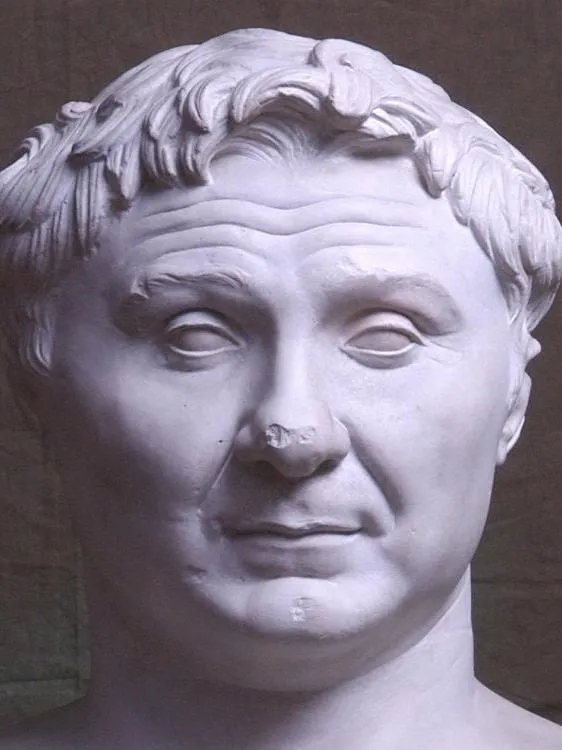 Photo: Pompey the Great, via images.deepai.org
This wasn't Roman paranoia—it was Roman pattern recognition. The Republic had already watched Marius and Sulla transform military victories into political weapons, and the Senate understood what modern political scientists have quantified: successful military commanders accumulate loyalty, resources, and prestige at rates that make civilian oversight mathematically impossible.
The same calculation appears with mechanical regularity across five millennia of recorded history. In Han Dynasty China, generals who expanded the empire westward found themselves recalled to the capital for "consultations" they rarely survived. Ottoman sultans developed elaborate protocols for rotating successful commanders before they could build regional power bases. Even George Washington faced whispered suggestions that his wartime popularity made him unsuitable for peacetime leadership.
The Loyalty Paradox
The cruel mathematics of military success create what historians call the loyalty paradox: the more effectively a commander serves their sovereign, the more dangerous they become to that same sovereign. This isn't ingratitude—it's institutional survival instinct refined by thousands of years of political evolution.
Consider the case of Belisarius, the Byzantine general who reconquered North Africa and Italy for Emperor Justinian. His victories were so complete that contemporary observers compared him to Alexander the Great. Justinian's response was to systematically strip Belisarius of command, recall him from every successful campaign, and eventually confiscate his wealth. Modern historians debate whether Justinian was paranoid or prescient, but the emperor was simply following a playbook written by every successful ruler who preceded him.
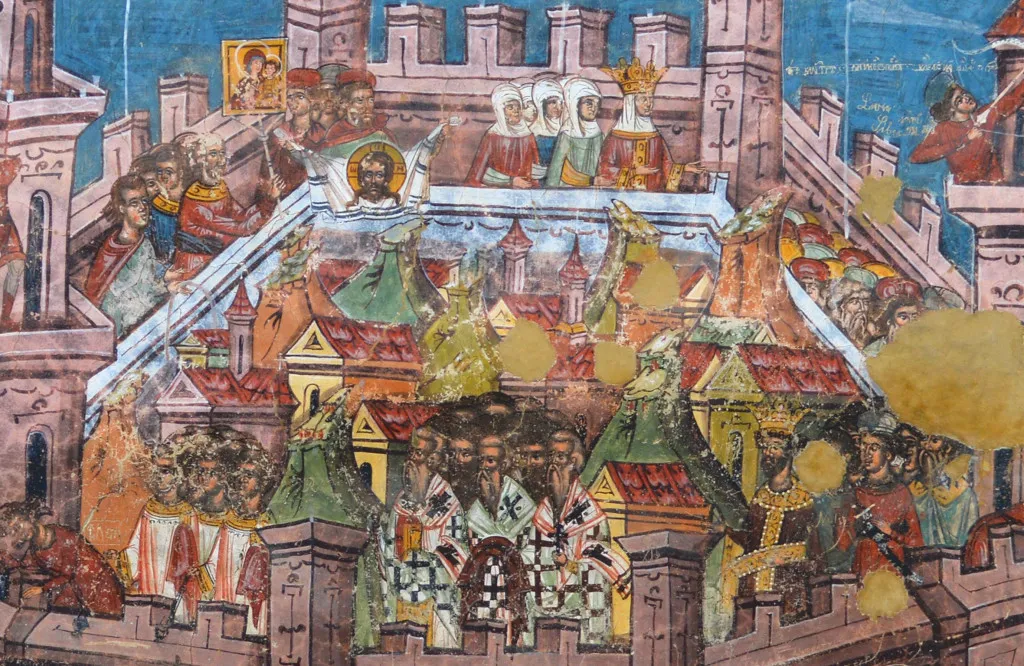 Photo: Belisarius, via www.factinate.com
The pattern transcends cultures and centuries because it addresses a fundamental problem of political organization: how do you maintain civilian control over the very people whose job requires them to be better at violence than you are? The historical answer has been remarkably consistent: you don't let them get too good at it.
The American Exception That Proves the Rule
The United States military presents what appears to be a historical anomaly: a professional officer corps that has remained subordinate to civilian authority for nearly 250 years without a single successful military coup. This apparent exception actually validates the historical pattern by demonstrating the extraordinary institutional measures required to prevent it.
The American system addresses the loyalty paradox through systematic rotation, congressional oversight, joint command structures, and a culture of civilian supremacy so deeply embedded that it has survived even the most popular military leaders. When Douglas MacArthur challenged civilian authority during the Korean War, President Truman's dismissal was supported not just by politicians but by the military establishment itself.
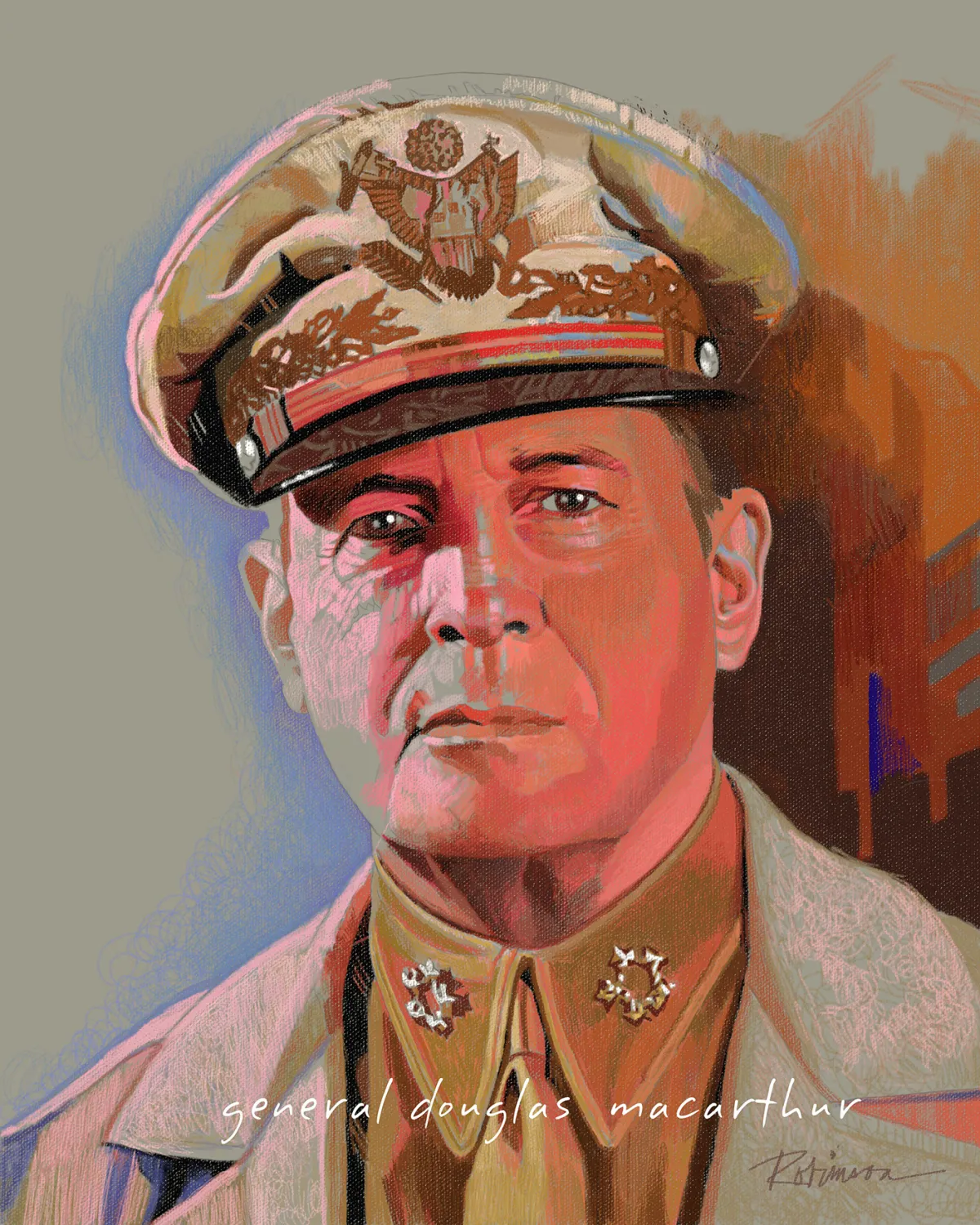 Photo: Douglas MacArthur, via posterspy.com
Yet even within this system, the ancient patterns persist. Military leaders who achieve too much public prominence find their careers carefully managed. Generals who develop independent political profiles are rotated to less visible positions. The Pentagon's promotion system explicitly rewards institutional loyalty over individual brilliance, recognizing that the latter has historically been incompatible with civilian control.
The Modern Manifestation
Contemporary examples of the loyalty paradox appear in contexts beyond traditional military command. Corporate executives who save failing companies often find themselves replaced once stability returns. Emergency managers who restore order to chaotic organizations are frequently moved aside when normal operations resume. The pattern reflects the same underlying psychology: competence in crisis creates power relationships that threaten established hierarchies.
The digital age has amplified these dynamics. Military contractors who develop critical technologies find their relationships with government carefully managed to prevent dependency. Intelligence officials who prove too effective at their jobs face rotation policies designed to prevent the accumulation of irreplaceable expertise. Even within the private sector, executives who make themselves indispensable often discover that indispensability is not the asset they imagined.
The Unchanging Calculation
Five thousand years of recorded history suggest that the loyalty paradox is not a bug in political systems—it's a feature. Societies that fail to manage successful military leaders tend not to survive as independent political entities. The Roman Republic's eventual transformation into an empire was facilitated by its inability to solve this fundamental problem.
The calculation facing every ruler is stark: reward military success too generously, and you create potential rivals; punish it too harshly, and you discourage the competence you need for survival. The historical solution has been to accept this paradox as the cost of maintaining political control, recognizing that some level of ingratitude toward military success is the price of institutional continuity.
This pattern will persist because it addresses an unchanging feature of human psychology: the relationship between gratitude and power. Successful military commanders don't just win battles—they demonstrate capabilities that make civilian leaders feel inadequate and vulnerable. The historical record suggests that this discomfort is not a character flaw but an survival instinct, and one that has served political stability remarkably well across cultures and centuries.
The loyal general's dilemma is not a historical curiosity but a window into the fundamental tensions that shape political organization. Understanding these patterns doesn't just illuminate the past—it provides a framework for recognizing when contemporary institutions are following scripts written by their predecessors thousands of years ago.