Opinion: The Culture War Is Ancient. So Is the Hand That Lights the Match.
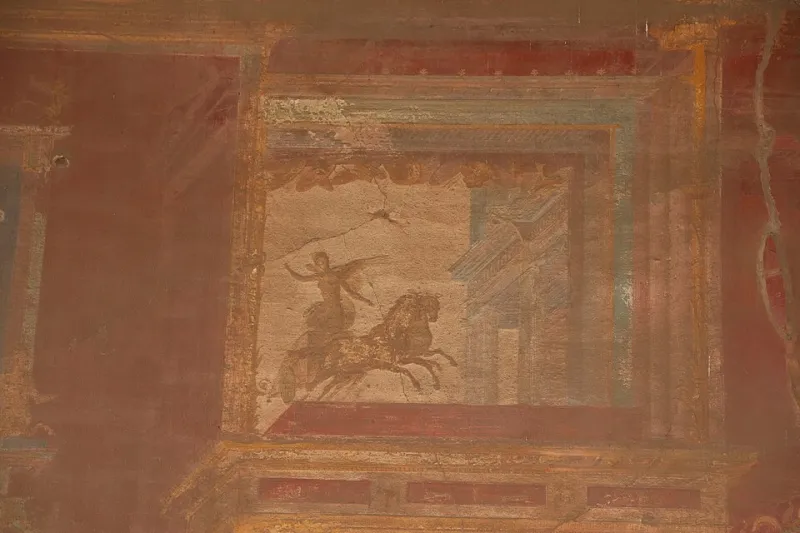
Photo: Gary Todd from Xinzheng, China, Public domain, via Wikimedia Commons
The views expressed in this piece are those of the author and represent one analytical perspective on the historical evidence.
Somewhere in America right now, two people who agree on nearly everything economically are having a furious argument about a school curriculum, a flag, a pronoun, or a statue. They are angry in the specific, energized way that people get angry when they believe something essential about their identity is under attack. They are not thinking about interest rates, supply chains, or the carried interest loophole. Neither are their elected representatives.
I want to be careful here not to be dismissive. Identity conflicts are real. The grievances that animate them are often genuine. The pain of cultural displacement is not manufactured pain. But the historical record invites a question that rarely gets asked in our current discourse: when these conflicts explode with particular intensity at particular moments, who benefits? And is the timing ever suspicious?
The Byzantine Warm-Up
Let us begin, as one does, with Constantinople.
The chariot-racing factions of the Byzantine Empire — the Blues and the Greens — were, on their surface, sports rivalries of the kind that any modern American sports fan would recognize. They wore their colors, they chanted for their teams, and they held their opponents in contempt. But by the fifth and sixth centuries, the Blues and Greens had become something more: parallel social organizations that provided welfare services, maintained neighborhood militias, and served as vectors for theological disputes that were, in Byzantine politics, also political disputes.
The emperors did not create the Blue-Green rivalry. But they learned to use it. Factions that were fighting each other were not organizing against the court. An emperor who could credibly align himself with one faction gained a street-level enforcement apparatus. An emperor who felt his position weakening could often restabilize it by inflaming factional tensions, which redirected popular energy away from imperial policy and toward the rival faction.
In 532 AD, the Blues and Greens did the unexpected: they temporarily united, in what became the Nika Revolt, and nearly burned Constantinople to the ground. The lesson the court drew from this was not that factional manipulation was dangerous. It was that the factions should never again be allowed to find common cause.
The management of division as a governing tool is very old.
The Wars of Religion, Reconsidered
The European wars of religion in the sixteenth and seventeenth centuries are typically taught as genuine theological conflicts — and they were, in the sense that the participants believed sincerely in the stakes. But the political elite's relationship to those conflicts was considerably more complicated than sincere belief.
The French Wars of Religion, which killed perhaps three million people over thirty-six years, were sustained in significant part by noble factions using confessional identity as a mobilization tool in what was fundamentally a contest over power and resources. The Guise family championed Catholic orthodoxy with a fervor that conveniently coincided with their political rivalry with the Bourbons. Henry of Navarre converted to Catholicism upon becoming king of France with a pragmatism — "Paris is worth a mass" — that suggested his theological commitments were somewhat flexible. The peasants and townspeople who died in those wars were considerably less flexible, because they had been successfully convinced that the conflict was about God rather than about which noble house would control the French crown.
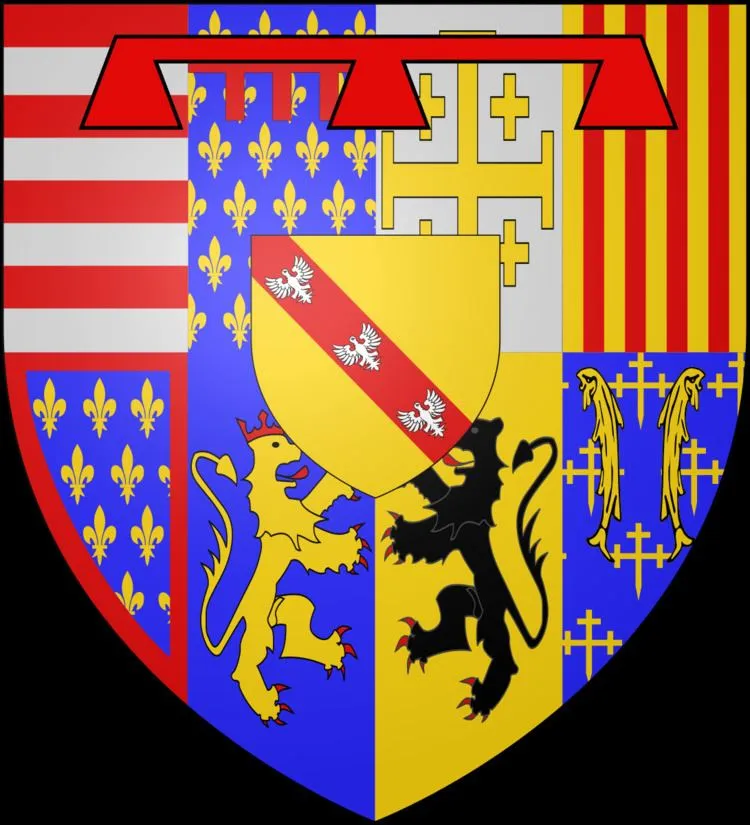 Photo: Guise family, via alchetron.com
This is not a cynical reading. It is what the primary sources, read carefully, actually show.
The American Tradition
American political history is not exempt from this pattern. The post-Reconstruction era's cultivation of white racial solidarity across class lines in the American South was not an organic cultural development. It was a deliberately engineered political project, documented in the speeches and correspondence of the era's political elites, designed to prevent poor white and poor Black Southerners from recognizing their shared economic interests and acting on them. It worked with remarkable effectiveness for nearly a century.
The nativist movements of the late nineteenth and early twentieth centuries — directed serially at Irish, Italian, Chinese, and Eastern European immigrants — tended to intensify during periods of economic stress and labor unrest. The historical coincidence is not perfect, but it is consistent enough to warrant attention. A workforce divided along ethnic and religious lines is a workforce that is harder to organize. This is not a conspiracy theory. It is a structural observation about who benefits from particular kinds of division.
None of this means that the cultural anxieties driving these movements were fake. They were real. The point is that real anxieties can be cultivated, amplified, and directed by actors with interests that have nothing to do with the anxieties themselves.
The Contemporary Version
I am not going to tell you which contemporary political actors are doing this, because that is not what The Cliodynamist does. We present the pattern and let you draw your own conclusions.
The pattern is this: in every documented case across three thousand years of recorded political history, manufactured or amplified cultural conflict has served the interests of elites who wished to prevent the formation of cross-cutting coalitions based on economic interest. The mechanism is consistent. The players change. The tactic is deployed by actors across the political spectrum, in democracies and autocracies alike, in ancient empires and modern nation-states.
The historical question worth asking about any particular culture war flashpoint is not "which side is right?" The historical question is: who benefits from the fact that we are fighting about this instead of something else? What policy debates are not happening because this debate is consuming all available attention? Which economic arrangements are stable precisely because the people most affected by them are busy fighting each other over symbols?
What the Record Actually Tells Us
The culture war is not a uniquely American pathology. It is not a symptom of social media, or of cable news, or of the particular failures of either political party. It is one of the oldest tools in the governing toolkit, documented from Mesopotamia to modern Washington, deployed reliably whenever a political class finds it advantageous to have its constituents angry at each other rather than at the political class.
Recognizing this does not require cynicism about every cultural conflict. Some of them represent genuine moral stakes. Recognizing the pattern simply means asking, with appropriate historical skepticism, who is amplifying this particular conflict, at this particular moment, and what they stand to gain from the amplification.
That question has been worth asking for at least three thousand years. The historical record suggests it has rarely been asked often enough.