The System Eaters: How Every Succession Mechanism Produces the Ruler It Was Built to Stop

Photo: Mashalti (for the background picture) & Dr. Suniti Kumar Chatterji (for the quoted speech), CC BY 3.0, via Wikimedia Commons
The political designers of history were not stupid people. The architects of the Roman imperial succession, the drafters of the Chinese civil examination system, the framers of the Electoral College, the constitutional engineers who invented term limits — these were, in most cases, individuals with direct personal experience of the failure modes they were trying to prevent. They had watched bad rulers inherit power through birth, watched competent administrators be bypassed by well-connected mediocrities, watched executives cling to office until their faculties failed and their entourages calcified into permanent interests.
They designed accordingly. They were wrong in the same way, every time.
The history of succession is not a history of inadequate designers. It is a history of a design problem that may not be solvable — at least not in the way its architects imagined.
What Succession Systems Are Actually Selecting For
Before examining specific failures, it is worth establishing what a succession mechanism actually does, as opposed to what its designers believed it was doing.
Every succession system is, at its core, a filter. It defines a set of qualifying criteria — birth order, examination scores, electoral votes, term lengths — and excludes from consideration candidates who do not meet those criteria. The assumption embedded in every such system is that the qualifying criteria reliably correlate with the qualities the designers actually want: competence, stability, legitimacy, restraint.
The historical record's consistent finding is that this assumption fails, and it fails in a specific direction. Succession systems do not merely fail to select for the desired qualities. They actively select for a different and often more dangerous competence: the ability to satisfy the formal criteria of the system while acquiring exactly the kind of power the system was designed to prevent.
This is not a paradox. It is a predictable consequence of the fact that any sufficiently legible selection criterion can be optimized for, and that the people most motivated to optimize for it are precisely those who have the most to gain from power and the fewest legitimate pathways to it.
The Primogeniture Trap
European primogeniture — the convention that the eldest son inherits — was not designed arbitrarily. It was a solution to a genuine and recurring problem: the fragmentation of estates and political authority across multiple heirs, which had produced generations of civil war, partition, and dynastic extinction. By concentrating inheritance in a single predetermined successor, primogeniture reduced the scope for conflict.
What it also produced, with remarkable consistency, was a class of extremely well-motivated, extremely well-positioned second sons who had spent their formative years with nothing to lose and every incentive to find a workaround.
The historical record of European succession is substantially a record of what second sons — and third sons, and younger brothers, and nephews — did with those incentives. They married strategically, accumulated ecclesiastical offices, cultivated military followings, and waited. When the first son proved incompetent, childless, or unlucky, the prepared contingency was already in place. The system designed to prevent contested succession produced, in generation after generation, precisely the contested successions it was engineered to foreclose.
The specific mechanism — primogeniture — is less important than the general principle it illustrates. Any rule that creates a class of excluded but proximate candidates will generate a population of sophisticated rule-circumventors.
The Examination Paradox
China's imperial examination system is perhaps the most ambitious meritocratic experiment in pre-modern history. Beginning in earnest under the Sui Dynasty and reaching its mature form under the Tang and Song, the system subjected candidates to years of rigorous preparation and grueling multi-stage examinations, in theory opening the highest offices of the empire to any male subject capable of mastering the required texts.
The democratic aspiration was genuine. So was the failure.
Within two or three generations of the system's establishment in any given dynasty, the examination had become a hereditary advantage for families wealthy enough to hire tutors, maintain libraries, and support sons through a decade or more of preparation without requiring their economic contribution. The examination tested merit. The preparation required capital. The result was a credentialed aristocracy that had replaced the hereditary aristocracy the examination was designed to displace, while enjoying the additional legitimating advantage of having formally earned its position.
The examination also selected, with particular efficiency, for a specific cognitive profile: individuals capable of reproducing classical texts with precision and constructing arguments within tightly constrained formal frameworks. This is a genuine skill. It is not the same skill as governing a complex empire under novel conditions. The system produced, reliably, administrators of extraordinary classical erudition and sometimes catastrophic practical rigidity — precisely the profile that the system's designers, who were themselves examination products, were constitutionally unable to identify as a failure mode.
The Electoral College and the Problem of Anticipated Gaming
The framers of the American Constitution were, by the standards of their era, unusually sophisticated political theorists. Their design of the Electoral College reflected a genuine attempt to solve a problem they had studied carefully: how to select an executive in a geographically vast republic without either the chaos of direct popular election or the corruption of legislative selection.
The system was gamed before the first contested election under it. By 1800, the mechanism that was supposed to produce deliberative selection by disinterested electors had become a vehicle for partisan mobilization, with electors functioning as pledged agents of party organizations that the framers had explicitly hoped to prevent. The system did not fail because the framers were naive. It failed because the framers could not anticipate the specific organizational forms that ambitious political actors would develop to optimize for the system's formal criteria.
This is the consistent historical finding: succession systems are gamed not by the strategies their designers anticipated and tried to prevent, but by strategies that become visible only once the system has created the incentive to develop them.
Term Limits and the Competence Inversion
The modern enthusiasm for term limits reflects a reasonable diagnosis: executives who remain in office indefinitely tend to accumulate personal power, surround themselves with loyalists, and resist institutional constraints. The cure — mandatory rotation — has a historical track record that its contemporary advocates rarely examine.
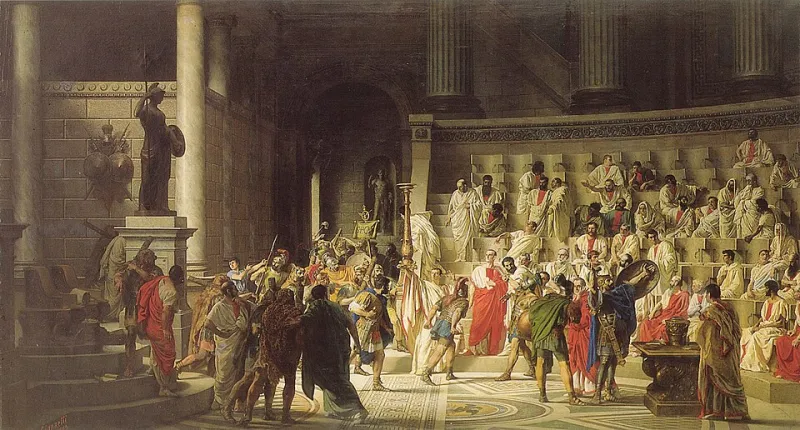
Roman dictators were subject to strict term limits. The office was designed for exactly six months, after which the dictator was required to resign. The system worked until it didn't, and when it stopped working, it stopped working because the individuals most capable of acquiring the resources necessary to hold power — the Sullas and Caesars — were precisely those most capable of making the formal limit irrelevant.
More broadly, mandatory rotation systems tend to produce a specific pathology: they remove experienced administrators at the moment of their maximum competence and replace them with individuals whose primary qualification is having optimized for the selection process rather than having governed well. The skill of getting the job and the skill of doing the job are always somewhat different. Succession systems that rotate rapidly tend to widen that gap.
The Lesson No Designer Has Absorbed
The historical record on succession design converges on a finding that is deeply inconvenient for anyone who believes the right institutional architecture can reliably produce good leadership.
Every system selects for the competence required to navigate that system. The competence required to navigate a succession system is not the same as the competence required to govern well — and the more elaborate and legible the succession system, the more it rewards optimization for its own criteria at the expense of the underlying qualities it was designed to proxy.
This does not mean that succession system design is irrelevant. Some systems fail faster and more catastrophically than others. Some failure modes are more recoverable than others. The choice of mechanism matters — just not in the way that institutional designers typically believe.
The useful question is not which system produces the best rulers. The historical record suggests no system does this reliably. The useful question is which system produces the most recoverable failures — and which creates, in its gaming, the least dangerous class of sophisticated rule-circumventors.
Five thousand years of evidence suggests that this is a question worth asking before the next generation of reformers proposes the mechanism that will finally get it right.