The Merit Illusion: How Every System Built to Reward Talent Ends Up Protecting Privilege

Photo: Yu Chu Chin, CC BY-SA 4.0, via Wikimedia Commons
Every generation discovers meritocracy as though it were a new idea. The argument is always the same: the current system rewards birth, connections, and inherited wealth rather than genuine ability; a properly designed selection process would identify and elevate the truly capable; the result would be better governance, more productive institutions, and a more legitimate social order.
The argument is not wrong. The problem is what happens next.
Across five thousand years of recorded administrative history, every major attempt to institutionalize merit-based selection has followed a recognizable trajectory. The system begins as a genuine reform mechanism, disrupting established hereditary networks. It produces a generation or two of relative openness. And then, with a consistency that should by now be unsurprising, it is captured by the very families it was designed to displace — who prove far more adaptable than the reformers anticipated.
The Five Stages
The life cycle of meritocratic institutions follows a pattern that is stable enough across cultures and centuries to suggest it reflects something structural about the interaction between selection systems and the families with resources to invest in gaming them.
Stage one is genuine disruption. The new selection mechanism — an examination, a certification requirement, a standardized credential — genuinely disadvantages those whose previous advantage was purely hereditary. Families that had relied on direct appointment or inheritance find themselves competing on unfamiliar terrain. Some lose. A cohort of genuinely talented individuals from outside the traditional elite enters the system.
Stage two is elite adaptation. The established families are not passive. They observe what the new system rewards and begin investing in it. Tutors, preparatory institutions, and coaching networks emerge to serve those with the resources to pay for them. The examination that initially disadvantaged the aristocracy becomes something the aristocracy studies for.
Stage three is credential inflation. As elite families master the new selection mechanism, the signal value of the credential begins to erode. Institutions respond by raising standards, adding requirements, or extending the credentialing process — all of which increase the cost of participation and therefore further advantage those with resources.
Stage four is hereditary capture. The meritocratic institution now functions primarily as a mechanism for converting economic and social capital into certified merit. Participation is nominally open. Outcomes are structurally predetermined. The families who dominate the credential are largely the families who dominated the system the credential was designed to replace, though they now hold certificates rather than titles.
Stage five is ideological consolidation. The credential becomes morally weighted. Those who hold it are not merely qualified; they are deserving. Those who do not hold it are not merely unqualified; their exclusion is legitimate, even natural. The meritocratic system, originally justified as a challenge to inherited privilege, becomes the primary mechanism through which privilege justifies itself.
China's Thousand-Year Examination
The Chinese imperial examination system, the keju, is the longest-running and most extensively documented case study available. Introduced in recognizable form during the Sui dynasty in the late sixth century AD and abolished only in 1905, it operated for roughly thirteen hundred years as the primary mechanism for staffing the imperial bureaucracy.
 Photo: Sui dynasty, via www.nationsonline.org
The keju was, in its original conception, genuinely disruptive. It offered, at least in theory, a path to administrative power for men of ability regardless of family background. Early Tang dynasty records show meaningful participation from families outside the established aristocracy.
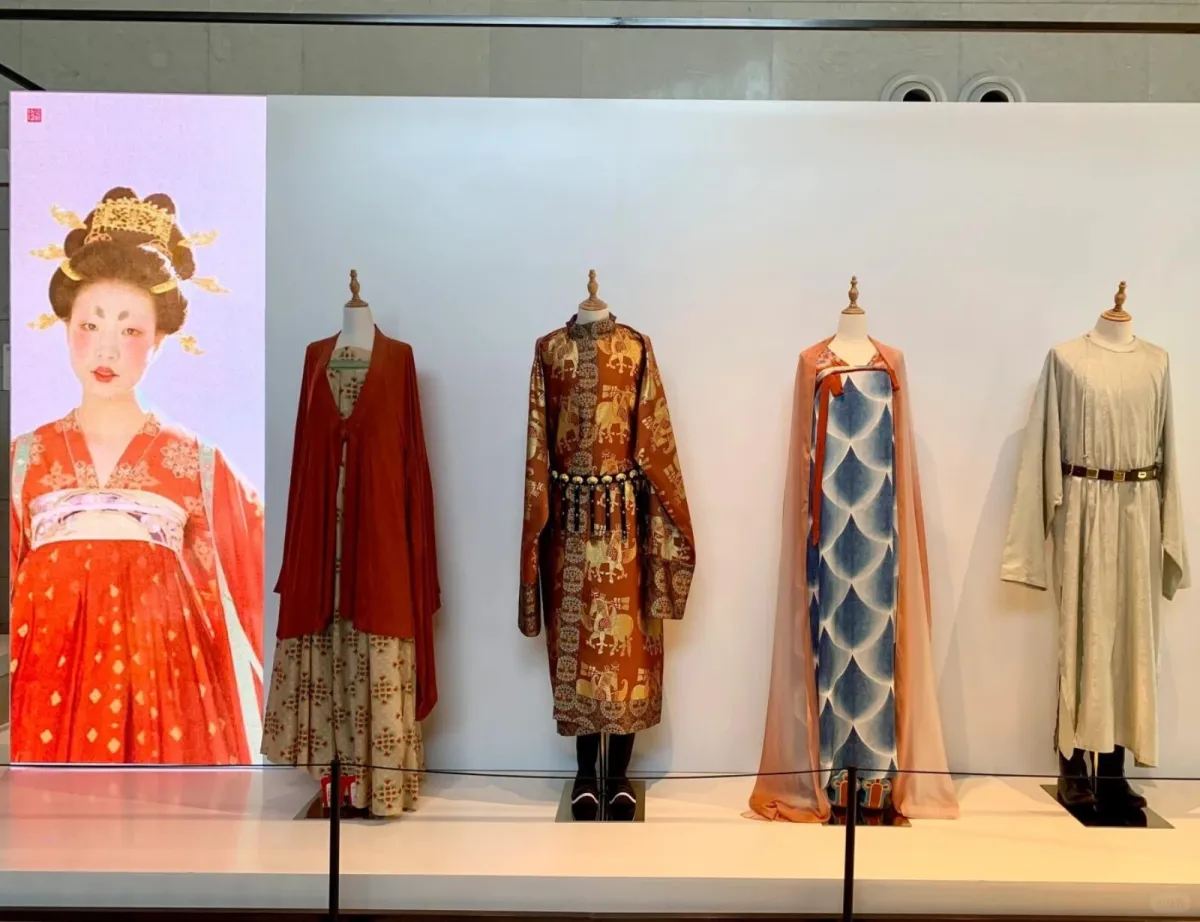 Photo: Tang dynasty, via www.thechinajourney.com
By the Song dynasty, the pattern of elite capture was well advanced. Wealthy families invested heavily in the elaborate preparation the examinations required — years of study under qualified tutors, access to extensive libraries, freedom from the economic necessity of productive labor. The examination continued to select for genuine intellectual accomplishment. It had simply become the case that genuine intellectual accomplishment of the required type was most reliably produced by sustained investment that only prosperous families could afford.
By the late imperial period, examination success had become substantially hereditary, not because the system was formally closed, but because the preparation it required was practically available only to those whose families had already succeeded within it.
Rome's Ladder and Its Rungs
The Roman cursus honorum — the sequential ladder of offices through which Roman men of the senatorial class were expected to progress — presents a different variant of the same pattern. It was not designed as an egalitarian reform; it was designed to regularize competition within an existing elite. But it illustrates the credential capture dynamic from a different angle.
 Photo: Roman cursus honorum, via image.slidesharecdn.com
As Rome expanded and the administrative demands on its governing class intensified, the cursus increasingly rewarded demonstrated competence in military and administrative roles. For a period, this created genuine social mobility: men of equestrian rather than senatorial rank, and eventually provincials from across the empire, could demonstrate the requisite competence and ascend.
The senatorial families' response was to invest in exactly the experiences the cursus rewarded — military service under the right commanders, administrative posts in the right provinces, relationships with the right patrons. The form of the meritocratic system was preserved while its function was gradually redirected toward certifying the fitness of those who had always been considered fit.
The Ivy Pipeline
American readers will recognize the contemporary iteration of this pattern without difficulty. The expansion of standardized testing in the mid-twentieth century was explicitly designed to challenge the hereditary grip of established WASP families on elite university admissions — and for a generation, it worked. The SAT genuinely disrupted the old-boy network's ability to simply place its sons in the appropriate institutions.
What followed was predictable in retrospect. Affluent families invested in test preparation. Admissions processes grew more complex, rewarding the kind of extracurricular portfolios that require both money and parental coordination to assemble. Elite universities became simultaneously more meritocratic in their stated criteria and more economically homogeneous in their actual outcomes. The credential — the degree from the selective institution — became the primary mechanism through which American professional-class families transmit advantage to their children while describing that transmission as earned.
This is not a conspiracy. It does not require bad faith from admissions officers or deliberate manipulation by wealthy families. It is the structural outcome of a selection system encountering a population with differential resources to invest in satisfying that system's criteria.
What This Tells Us About Human Psychology
The consistency of this pattern across cultures as different as Song dynasty China, Republican Rome, and twenty-first-century America suggests it is not a product of any particular cultural pathology. It reflects something more fundamental: the families with the most resources have the most to invest in whatever selection mechanism governs access to power, and investment in selection mechanisms tends to produce returns.
This does not mean meritocratic institutions are worthless. The disruption they produce in their early stages is real. The standards they establish, even when captured, tend to produce better-qualified elites than pure hereditary succession. The keju examination, even in its captured late-imperial form, selected for genuine literary and administrative competence.
But the historical record offers a clear-eyed corrective to the recurring fantasy that the right credential system will finally break the relationship between inherited advantage and institutional power. Every civilization that has tried has discovered the same thing: the families who can afford to master the maze will master the maze, and then they will teach their children where the walls are.
Five thousand years of data suggests the maze is not the solution. It is the next form of the problem.