The Price of Loyalty: How the Bill for Staying in Power Has Always Come Due

In the third century BC, a Mauryan administrator named Kautilya wrote what may be the oldest surviving manual of statecraft. The Arthashastra covers taxation, espionage, military strategy, and diplomacy with a clinical thoroughness that would not feel out of place in a modern political science department. One of its recurring preoccupations is the management of what Kautilya calls the "circle of kings" — the factions, allies, and subordinates whose loyalty must be continuously purchased, maintained, and renewed.
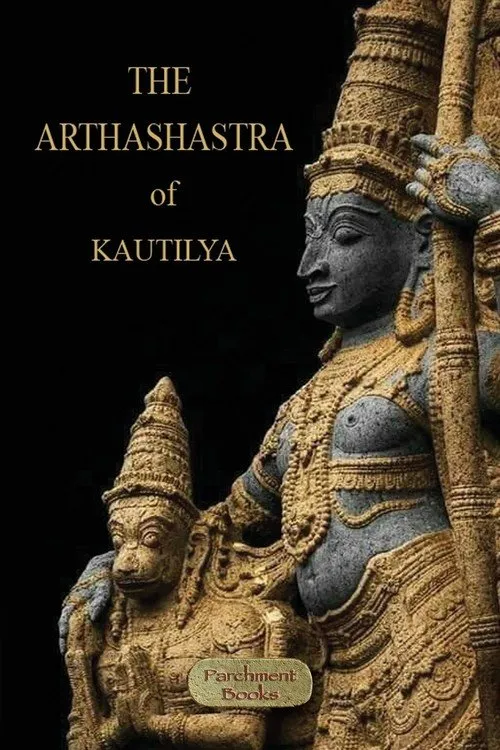 Photo: Kautilya, via ecsmedia.pl
Kautilya understood something that every political scientist since has rediscovered: power is not a static possession. It is a relationship, and like all relationships, it requires ongoing investment. The question is not whether you will pay. The question is whether you can afford to keep paying.
The Basic Arithmetic
The political scientist Bruce Bueno de Mesquita formalized this intuition into what he called "selectorate theory" — the idea that every ruler, from a tribal chief to a democratic president, depends on a coalition of supporters whose continued loyalty keeps them in power. The size and composition of that coalition varies. The fundamental dynamic does not: supporters must be compensated, and compensation that was sufficient yesterday tends to become insufficient tomorrow.
This is not cynicism. It is a description of how human psychology operates under conditions of political competition. Supporters have options. A general who commands a loyal army can, under the right circumstances, become a ruler himself. A senator whose faction controls enough votes can extract concessions that were unthinkable a decade earlier. A regional governor who controls tax collection has leverage. The ruler who fails to recognize that his supporters are perpetually reassessing their options is the ruler who gets replaced.
The result is a ratchet. Compensation packages tend to expand over time and almost never contract. Each new crisis requires a new round of payments. Each successful suppression of a rival creates new debts to the allies who helped suppress him. The treasury that looked adequate at the beginning of a reign rarely looks adequate at the end.
Rome's Object Lesson
The Roman donativum — the cash payment made to soldiers upon an emperor's accession — began as a gesture of generosity and became, within two generations, a structural obligation. By the third century AD, emperors were being made and unmade specifically on the basis of their willingness to offer competitive donatives. The Praetorian Guard, notoriously, auctioned the imperial office to the highest bidder in 193 AD after murdering the incumbent. Didius Julianus won the auction. He lasted sixty-six days before the legions on the frontier, who had made their own competing offers, marched on Rome.
The mechanism here is worth examining precisely. No individual emperor decided to create this system. Each emperor, facing the immediate problem of securing his position, made the rational choice to pay. The cumulative effect of individually rational decisions was a system that was collectively catastrophic — one in which the cost of loyalty had grown so large that it consumed the revenues that made the empire worth controlling in the first place.
This pattern appears so consistently across so many different civilizational contexts that it is difficult to attribute it to any particular cultural failure. It is a structural problem that emerges from the basic psychology of political competition.
The Medieval Variation
Medieval European feudalism is sometimes taught as though it were a coherent system of mutual obligation — lords protecting peasants, vassals serving lords, kings commanding vassals. In practice, it was a continuous negotiation over the price of loyalty conducted under the constant threat of betrayal. The Magna Carta, which Americans are taught to revere as a founding document of constitutional liberty, was in its original context a bill presented to King John by barons who had concluded that the cost of continued loyalty to the crown was higher than the cost of rebellion. They were, in the most straightforward sense, renegotiating their compensation.
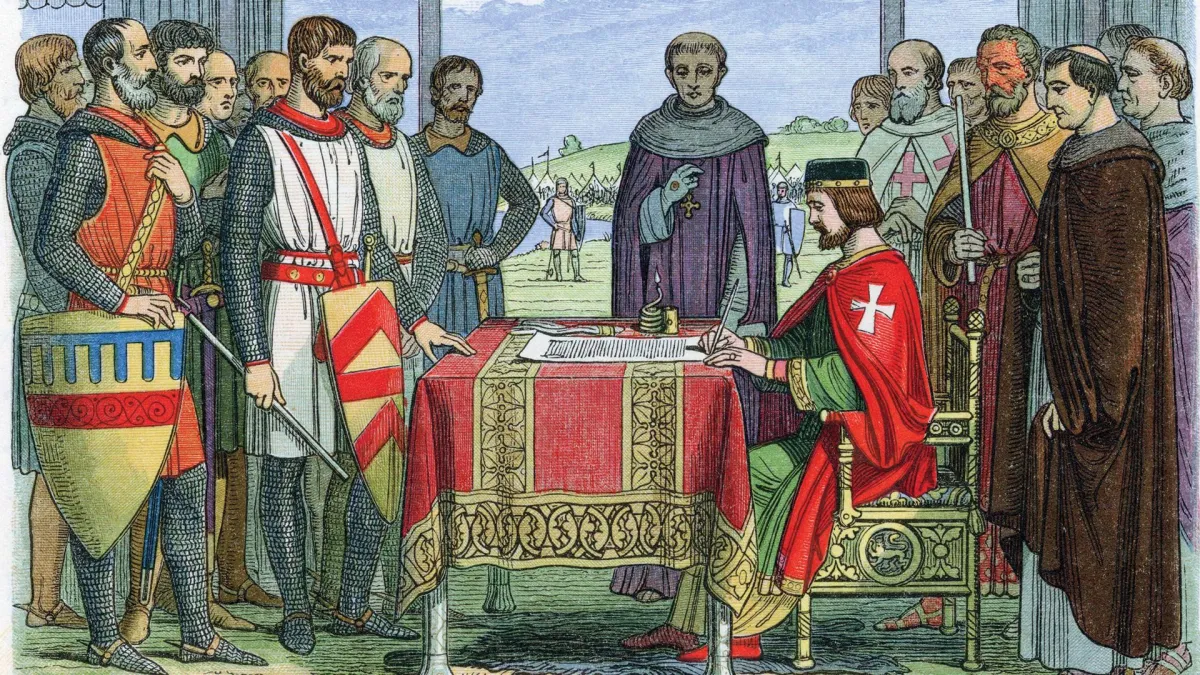 Photo: Magna Carta, via cdn.britannica.com
John's problem was not unique to him. The English crown was perpetually short of money because the English nobility was perpetually extracting concessions in exchange for military service, tax compliance, and political support. Each crisis — a war, a succession dispute, a harvest failure — required a new round of concessions. The cumulative weight of those concessions was the primary constraint on royal power throughout the medieval period.
The same dynamic played out in Tokugawa Japan, in the Abbasid Caliphate, in the Mughal Empire, and in every other complex political system for which we have adequate records. The details differ. The mechanism does not.
The Modern Form
Contemporary debates about patronage politics, government contracting, and the expansion of public spending are often framed as novel symptoms of democratic dysfunction or partisan excess. The historical context suggests a different framing. Every modern government is managing, in more or less sophisticated form, the same loyalty-maintenance problem that Kautilya described two thousand years ago.
The specific currencies have changed. Roman emperors paid in silver and grain distributions. Medieval kings paid in land grants and tax exemptions. Modern governments pay in contracts, regulatory favoritism, targeted spending programs, and appointments. The underlying logic — that political survival requires continuous investment in the coalition that keeps you in power — is identical.
What the historical record adds to this observation is a caution about trajectory. The loyalty bill tends to grow. It grows because supporters' expectations rise over time. It grows because each new entrant to the coalition demands compensation comparable to existing members. It grows because crises require emergency payments that become baseline expectations. And it grows because the political cost of cutting compensation almost always exceeds the fiscal cost of maintaining it — until the fiscal situation becomes so severe that the choice is no longer available.
The Uncomfortable Implication
The historical record does not offer a solution to this problem, because the problem does not have a solution in any straightforward sense. It has only management strategies of varying effectiveness, all of which eventually reach their limits.
What the record does suggest is that the fiscal crises that precede political collapses are rarely accidents. They are the accumulated weight of loyalty payments made over years and decades by rulers who understood, correctly, that the alternative to paying was losing power immediately. The long-term fiscal consequences were real but abstract. The short-term political consequences were immediate and concrete.
Human beings, under conditions of uncertainty and competitive pressure, reliably discount the future in favor of the present. This is not a character flaw. It is a feature of how human cognition operates under stress. Five thousand years of political history is, in significant part, a record of that feature's consequences.