Opinion: The Strongman Fantasy Is Not a Failure of Democracy — It Is a Feature of Human Nature

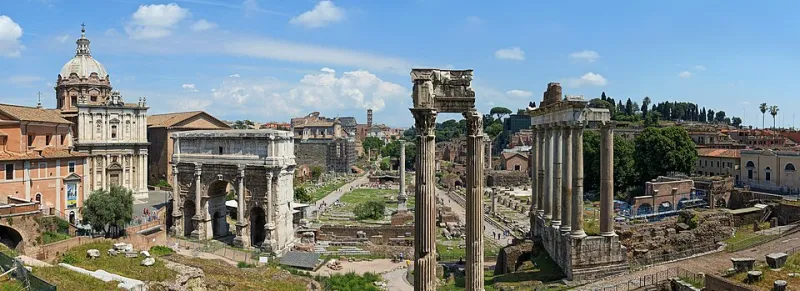
Photo: dmgice, CC BY 2.0, via Wikimedia Commons
The views expressed in this piece represent the editorial perspective of The Cliodynamist.
Every few years, a version of the same conversation begins in American political commentary. Institutional gridlock has reached some new threshold of visible dysfunction. Congress cannot pass legislation. Courts are issuing contradictory rulings. The executive branch is fighting itself. And into this atmosphere of performative paralysis steps the familiar demand: what this country needs is a leader who will actually do something.
The conversation is usually framed as a crisis of the present moment — a symptom of polarization, or social media, or the particular inadequacies of whoever currently occupies the relevant offices. The historical record suggests a different interpretation. The demand for the competent autocrat is not a modern development. It is not a product of any particular political dysfunction. It is among the most consistently documented impulses in five thousand years of political psychology, and it is dangerous precisely because it is so psychologically coherent.
The Permanent Appeal of Someone Who Will Just Fix It
The fantasy has a specific structure that recurs across cultures and centuries. Democratic or republican institutions are producing outcomes that feel chaotic, slow, or unjust. The mechanisms designed to aggregate competing interests — assemblies, councils, courts, elections — are visibly failing to produce resolution. And somewhere in the political landscape there exists a figure who presents themselves, or is presented by their supporters, as standing above the procedural mess: someone with the will, the competence, and the authority to simply act.
This figure promises what institutional politics structurally cannot deliver: speed, clarity, and the satisfaction of watching something actually happen. The appeal is not irrational. In genuine emergencies, centralized authority does produce faster decisions. The Roman dictatorship — a constitutionally limited emergency executive — was designed precisely because the Republic's founders understood that consensus-building institutions have real costs in real crises.
The problem is not the appeal. The problem is the consistent failure, across every culture and century for which we have records, to distinguish between the temporary emergency executive and the permanent consolidation of power that follows.
Athens Has Seen This Before
The Athenian democracy's relationship with its own strongman tradition is instructive precisely because the Athenians were not naive. They had invented ostracism — the practice of voting to exile any citizen who appeared to be accumulating dangerous personal influence — specifically because they understood the psychology of popular attachment to powerful individuals. They had watched Peisistratos seize the tyranny twice, the second time after being expelled for the first.
And yet the demand for decisive personal leadership recurred throughout the democratic period. Alcibiades, one of the most talented and destructive political figures in Athenian history, built his influence substantially on the popular conviction that his brilliance, properly unleashed, could deliver victories that the Assembly's cautious deliberations could not. He was probably right about his brilliance. The outcomes for Athens were catastrophic.
The Athenian case illustrates a dynamic that the historical record confirms repeatedly: the population demanding a strong leader is not wrong that institutional paralysis is real. They are wrong about the solution. The competent autocrat who fixes things without friction exists in the imagination. In practice, the removal of institutional friction also removes the mechanisms that correct errors, distribute power, and prevent the inevitable abuses that follow from concentrating authority in a single individual whose judgment is, like all human judgment, fallible.
The Roman Sequence
Rome offers the most extensively documented example of a republic's encounter with the strongman fantasy, and it is worth dwelling on because the sequence was not rapid. The Roman Republic did not fall because Romans were foolish or because they abandoned their values overnight. It fell across roughly a century of incremental normalization, during which each emergency justified a slightly larger grant of extraordinary authority to a slightly more indispensable individual.
Marius. Sulla. Pompey. Caesar. Each was, in their moment, the figure that a significant portion of the Roman political class genuinely believed could resolve the current crisis through the application of personal competence and will. Each was not entirely wrong about their own abilities. And each expansion of personal authority made the next expansion more thinkable, until the institutional architecture of the Republic had been hollowed out so thoroughly that Augustus could wear its forms while discarding its substance.
 Photo: Caesar, via img.freepik.com
The Romans who supported Caesar were not, in the main, cynics or opportunists. Many were sincere in their conviction that the Republic's procedural machinery had become an obstacle to necessary governance. They were right that the machinery was broken. They were catastrophically wrong about what replacing it with a man would produce.
Why the Fantasy Is Psychologically Durable
Understanding why this impulse persists despite its track record requires engaging with what experimental psychology and the historical record both confirm about human cognition under conditions of stress and uncertainty.
When institutions produce outcomes that feel chaotic or unjust, the psychological demand for a legible agent — a person who can be credited or blamed, who can be appealed to, who makes decisions with visible authority — intensifies. Institutional processes are cognitively unsatisfying precisely because they distribute responsibility across multiple actors and multiple steps. Nobody made this decision. The system produced this outcome. That explanation, while often accurate, is deeply unsatisfying to minds that evolved to identify agents and attribute causation to individuals.
The strongman fantasy is, at its core, a response to this cognitive discomfort. It offers a legible agent who will take responsibility for outcomes, who can be held accountable in the most direct sense — whose name is on the decision. What it cannot offer, and what its proponents consistently underestimate, is the cost of removing the distributed mechanisms that catch errors, incorporate competing information, and prevent the concentration of unchecked authority from producing the abuses that unchecked authority has always produced.
What Republican Institutions Were Actually Designed to Do
This is where the founders of republican institutions across history — from the Athenian democrats to the architects of the American Constitution — were doing something more sophisticated than their critics typically acknowledge. They were not designing systems to produce optimal outcomes. They were designing systems to survive the recurring human demand for a leader who would produce optimal outcomes unilaterally.
The separation of powers, the bicameral legislature, the independent judiciary — these are not features of the American system designed to make governance efficient. They are features designed to make governance frustratingly inefficient in ways that prevent any single actor from accumulating the authority necessary to eliminate the system itself. The framers had read their Polybius. They understood that the strongman fantasy was not an aberration but a permanent feature of political psychology, and they built accordingly.
The frustration that Americans express with institutional gridlock is, in a very real sense, the system working. Not working well. Not producing good outcomes. Working as designed — preventing the consolidation of authority by making consolidation procedurally difficult.
The Last to Know
The historical record is consistent on one final point: the populations that most enthusiastically demand a strong leader are reliably among the last to recognize what they have actually gotten. This is not because they are deceived, though deception is often involved. It is because the transition from decisive reformer to unchecked authority is gradual, and because each step along the way is accompanied by genuine accomplishments that make the costs of the next step seem acceptable.
The Romans who celebrated Caesar's crossing of the Rubicon were not celebrating the end of the Republic. They were celebrating what they understood as the resolution of an intolerable crisis. The resolution of the crisis and the end of the Republic turned out to be the same event. They discovered this later.
The demand for the strongman who will simply fix things is not going away. It has not gone away in five thousand years of recorded political life, and there is no reason to expect it to disappear now. The relevant question is not whether the demand will arise — it will — but whether the institutional architecture exists to frustrate it long enough for the fantasy to collide with reality before it does permanent damage.
History suggests that collision is the only cure. It also suggests the cure is frequently administered too late.