The Throne With No Heir: How Autocrats Engineer Their Own Succession Crises

On June 10, 323 BC, Alexander the Great died in Babylon without a functioning heir and without having named a successor. When his generals asked to whom he left his empire, the story goes that he replied: "To the strongest." What followed was forty years of war, fragmentation, and mass death across three continents. It was not an accident. It was a structural outcome.
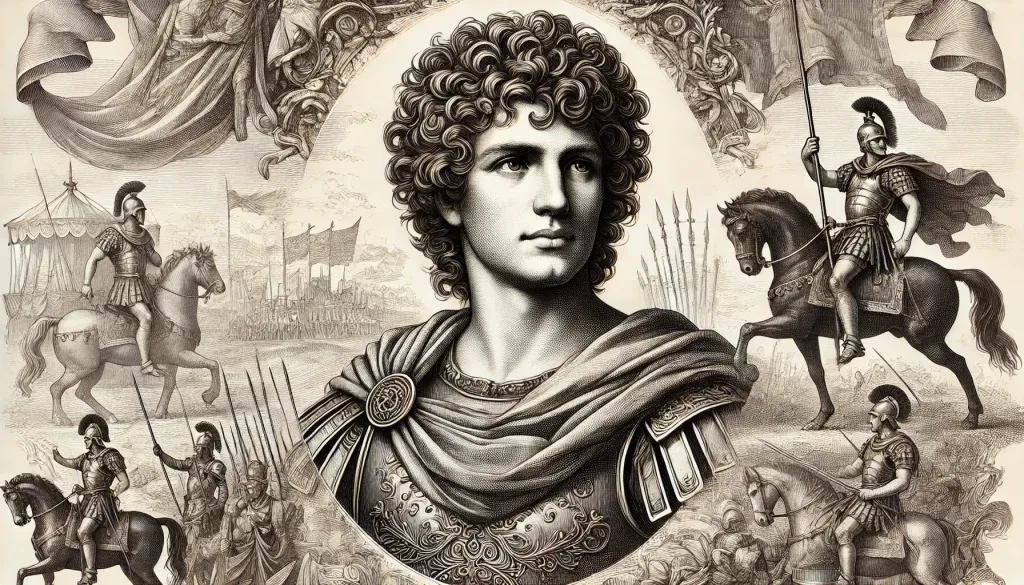 Photo: Alexander the Great, via hdclump.com
The same outcome has repeated itself with such regularity across five thousand years of recorded history that it no longer qualifies as tragedy. It qualifies as mechanism.
The Architecture of the Problem
Autocratic power is, by definition, personal power. Its source is not institutional — not a constitution, not a parliament, not a tradition of bureaucratic continuity — but the singular capacity of one individual to command loyalty, dispense resources, and credibly threaten violence. This is precisely what makes it formidable. A determined autocrat operating outside institutional constraints can move faster, punish more decisively, and demand more complete compliance than any committee-governed system.
But that same architecture contains its fatal contradiction. Institutions, for all their inefficiency, perform one function that personal authority cannot: they survive the death of any individual member. The Roman Senate outlasted hundreds of emperors. The Ottoman bureaucracy survived sultans who died in infancy. Institutions are succession mechanisms. Personal authority is not.
The autocrat, almost by occupational necessity, spends his tenure systematically dismantling the institutional structures that might constrain him. He purges independent military commanders, subordinates the judiciary, hollows out the legislature, and ensures that no rival center of gravity can form. He succeeds. And in succeeding, he destroys the only scaffolding that could support a peaceful transfer of power.
The Roman Demonstration
Augustus Caesar understood this problem better than almost any ruler in history — and still could not solve it. He spent the last two decades of his life trying to engineer a succession, cycling through heirs as they died or fell from favor, ultimately settling on the deeply reluctant Tiberius. The transition held, barely. But Augustus had spent forty years concentrating Roman governance in his own person, and the question of what the Principate actually was — a republic temporarily led by a first citizen, or a monarchy with decorative republican furniture — was never answered. That ambiguity would destabilize imperial succession for the next three centuries.
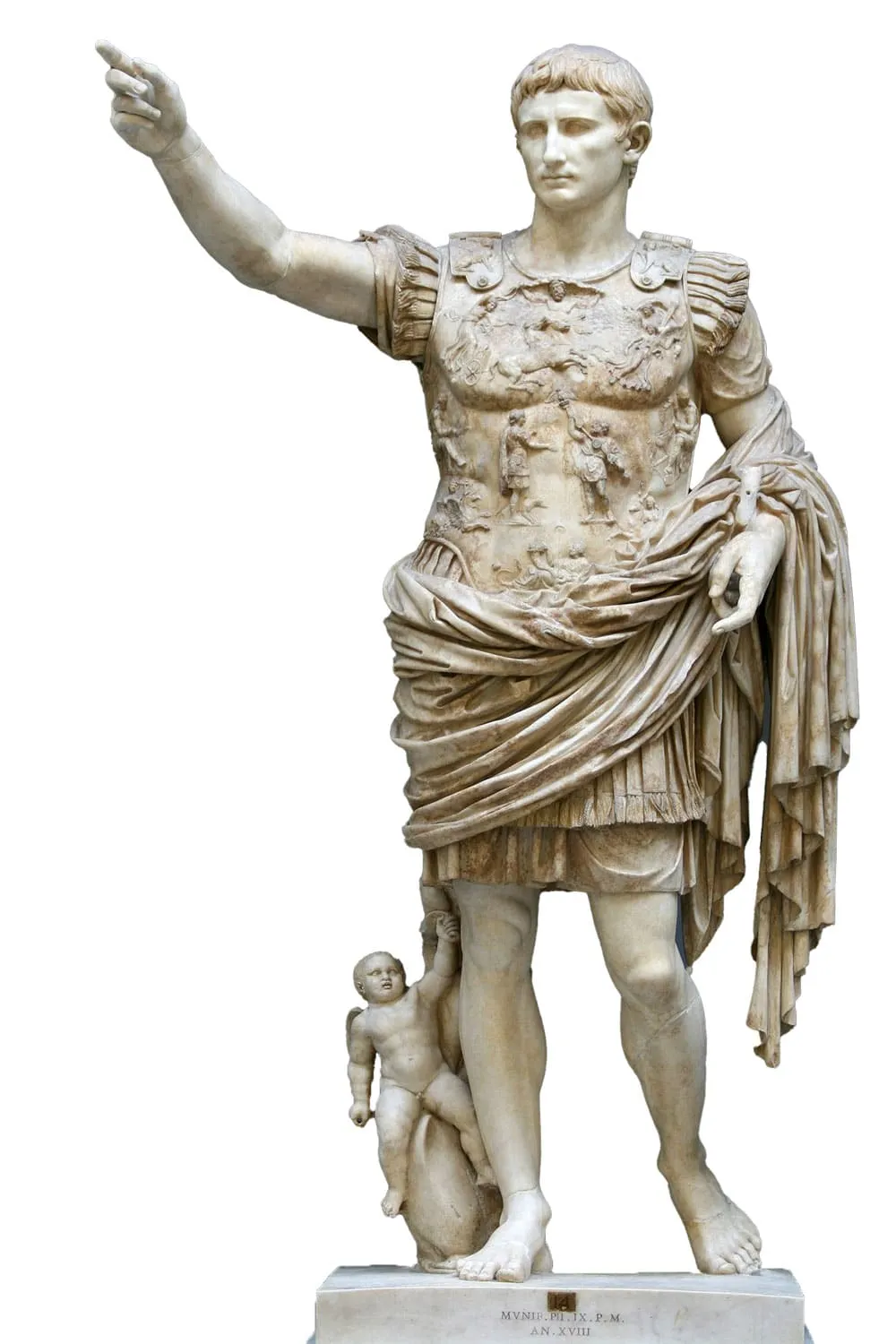 Photo: Augustus Caesar, via roman-empire.net
The pattern accelerated after Augustus. Between 235 and 284 AD, Rome cycled through roughly fifty emperors, most of whom were assassinated by the same military factions that had elevated them. The mechanism was always identical: a strong emperor suppressed all rivals, leaving no legitimate framework for succession; upon his death or murder, competing generals filled the vacuum; whichever general won became the new strong emperor; and the cycle reset. Human psychology has not changed. The same dynamic plays out in any system where authority is sufficiently personalized.
Stalin's Peculiar Contribution
Joseph Stalin may represent the most complete modern example of the phenomenon. By the time of his death in 1953, he had so thoroughly atomized the Soviet leadership structure — through purges, manufactured rivalries, and deliberate cultivation of mutual suspicion among his inner circle — that no one in the Politburo was confident enough in their own position to act decisively. Accounts from the period describe his closest lieutenants standing around his dying body for hours, afraid to summon doctors for fear of appearing to hasten his death, equally afraid to appear insufficiently concerned.
The years that followed were not a smooth transition. They were a compressed, relatively bloodless version of the same succession crisis that destroyed Alexander's empire — compressed because nuclear weapons had made open warfare among Soviet factions unthinkable, and relatively bloodless by Soviet standards, which is a low bar. Beria was arrested and shot within months. Khrushchev outmaneuvered Malenkov through a decade of internal struggle. The system that Stalin built was specifically designed to prevent any rival from accumulating enough independent authority to challenge him. It worked perfectly. It also made it nearly impossible for anyone to consolidate authority after him.
The Petrostate Variation
Contemporary observers sometimes treat the succession instability of modern petrostates as a function of cultural immaturity or institutional underdevelopment. The historical record suggests a more precise diagnosis. When a state's revenue derives primarily from a single extractable resource controlled by the central government, the incentive structure pushes almost automatically toward personalized authority. The ruler who controls the oil controls everything. Institutions that might constrain him are liabilities. Independent power centers are threats.
The result is predictable: capable technocrats are replaced by loyal incompetents, military commands are rotated to prevent any general from building a following, and the question of succession is perpetually deferred because raising it implies that the current ruler is mortal, which implies that his authority is contingent, which undermines the entire architecture. When the ruler eventually dies — as rulers do — the system has no answer.
This is not a Middle Eastern problem or an African problem or a Latin American problem. It is a five-thousand-year-old problem that emerges reliably whenever a particular configuration of incentives is present.
What the Pattern Reveals
The deeper lesson here is not about the pathologies of any particular culture or political tradition. It is about the relationship between human psychology and institutional design. Individuals — all individuals, not merely the power-hungry — respond to incentive structures. An autocrat who tolerates independent institutions is an autocrat who tolerates constraints on his power, which is an autocrat who is less secure. The rational response, from within that system, is to eliminate the constraints. The rational response produces the succession crisis.
This is why the historical record is so consistent. It is not that autocrats are uniquely foolish or uniquely shortsighted. Many of them were extraordinarily intelligent and politically sophisticated. Augustus was a genius. Stalin was a genius of a different and more terrifying variety. They could not solve the succession problem because the succession problem is not a puzzle with a solution. It is a structural consequence of the system they built.
The question worth asking, when watching any contemporary government consolidate authority around a single figure, is not whether this particular leader is wise enough to manage the transition. The question is whether any leader ever has been.