The Coalition's Fatal Math: Why Power Always Devours Its Own Base

The Price of Loyalty Compounds
Political coalitions face a mathematical certainty that historians have documented across five millennia: the cost of loyalty always increases faster than the capacity to fund it. This isn't a modern phenomenon or a failure of fiscal discipline—it's the predictable outcome of how political power actually operates at the psychological level.
Consider the Roman client system at its peak. Republican senators maintained power by distributing grain subsidies, public works contracts, and military commissions to their supporters. Each election cycle demanded greater expenditures to maintain the same level of loyalty, as competitors offered more generous terms and supporters' expectations ratcheted upward. By the late Republic, the cost of maintaining a political coalition had become so enormous that only military conquest could generate sufficient resources—which ultimately destroyed the very system it was meant to preserve.
The pattern repeats with mechanical precision across cultures and centuries because it reflects fundamental human psychology rather than specific institutional failures.
The Escalation Imperative
Coalition loyalty operates on what behavioral economists would recognize as a hedonic treadmill. Initial rewards create baseline expectations that become insufficient over time. A land grant that secured unwavering loyalty in year one becomes an expected entitlement in year five and inadequate compensation in year ten. Political leaders face a stark choice: increase rewards or lose supporters to competitors willing to pay more.
This dynamic explains why the Roman Empire's military expenses consumed an ever-growing share of imperial revenue. Legions that once fought for modest pay and the promise of land settlements eventually demanded larger bonuses, more frequent payments, and greater retirement benefits. Each concession became the new baseline for future negotiations. By the third century, emperors were debasing currency to meet military payroll demands—a clear signal that the loyalty tax had exceeded the empire's fiscal capacity.
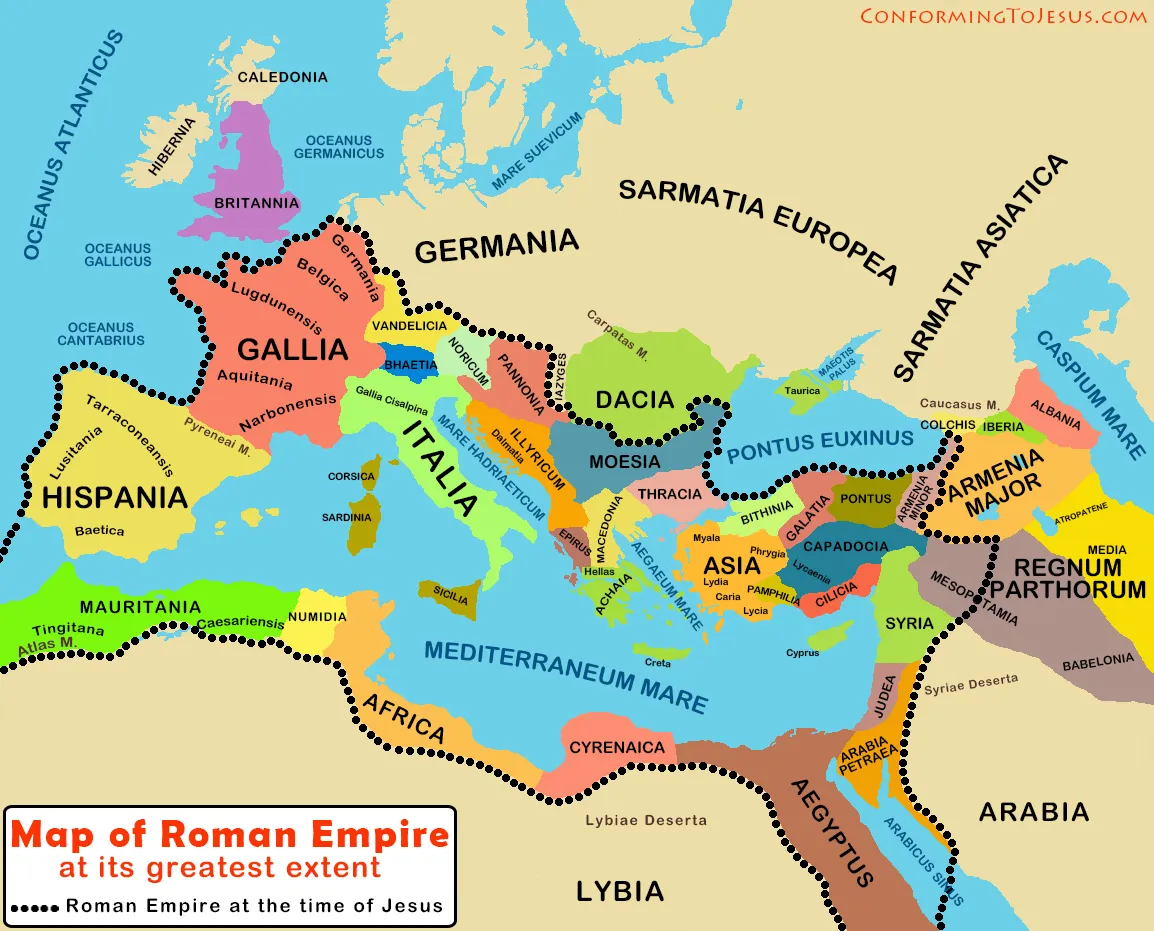 Photo: Roman Empire, via www.conformingtojesus.com
American political machines of the 19th century demonstrate the same progression. Tammany Hall began with modest patronage—a few city jobs for loyal ward captains, small contracts for friendly businesses. Within decades, the machine required massive infrastructure projects, inflated city payrolls, and elaborate systems of kickbacks to maintain coalition unity. The system became so expensive that it consumed resources faster than economic growth could replenish them, making reform inevitable once taxpayers could no longer bear the burden.
The Entitlement Ratchet
Modern democracies provide the clearest contemporary example of loyalty tax dynamics. Social Security, Medicare, defense spending, and agricultural subsidies all began as targeted benefits for specific constituencies. Over time, each program expanded its scope, increased its benefits, and developed powerful advocacy networks that resist any reduction in support.
The mathematics are inexorable. Programs that seemed affordable when serving limited populations become fiscal burdens when extended to broader groups. Benefits that appeared modest in nominal terms compound through cost-of-living adjustments and expanded coverage. Most crucially, political coalitions that depend on these expenditures cannot reduce them without risking electoral defeat.
This creates what economists call a "ratchet effect"—spending can increase easily but decreases only under extreme duress. The same psychological forces that make individuals resist losses more strongly than they value equivalent gains operate at the coalition level. Cutting benefits feels like theft to recipients, while maintaining them feels like basic fairness.
The Revenue Ceiling
While loyalty costs compound exponentially, revenue growth follows different mathematics. Taxation faces practical limits imposed by economic productivity and political tolerance. Throughout history, governments that pushed tax rates beyond roughly 25-30% of economic output triggered either economic collapse or political rebellion—often both.
The Roman Empire discovered this ceiling in the third century, when tax collection became so burdensome that farmers abandoned their land rather than pay imperial levies. Medieval European kingdoms faced similar constraints when excessive taxation prompted noble revolts or peasant uprisings. Modern democracies encounter the same limits through capital flight, tax avoidance, and electoral backlash against high-tax policies.
This creates a structural imbalance. Loyalty costs grow according to political logic—the need to maintain coalition unity drives spending upward regardless of fiscal constraints. Revenue growth follows economic logic—it depends on productivity, population growth, and political tolerance for taxation. When political demands exceed economic capacity, something must give.
The Spoils System's Lessons
American political history provides detailed documentation of how loyalty taxes destroy successful coalitions. The spoils system that dominated 19th-century politics created precisely this dynamic. Each party victory required rewarding supporters with government jobs, contracts, and other forms of patronage. As government grew larger and more complex, the number of available positions increased, raising supporter expectations and creating more expensive loyalty obligations.
The system worked effectively for decades because westward expansion and industrialization provided sufficient economic growth to fund increasing patronage costs. But by the 1870s, the mathematics had shifted. Government payrolls consumed growing shares of federal revenue while delivering diminishing returns in terms of actual governance. Corruption scandals and administrative incompetence made the system politically unsustainable, forcing the adoption of civil service reforms that destroyed the patronage-based coalition model.
The transition wasn't voluntary—it was forced by fiscal and political pressures that made the old system untenable. This pattern repeats whenever loyalty costs exceed sustainable levels.
Modern Manifestations
Contemporary American politics exhibits identical dynamics through different mechanisms. Both major parties maintain coalitions through targeted spending: tax breaks for businesses and high earners on the right, social programs and public sector employment on the left. Each election cycle requires additional commitments to maintain coalition unity, while fiscal constraints limit the resources available for new promises.
The result is a bipartisan conspiracy to defer costs through deficit spending and unfunded mandates. This temporarily escapes the loyalty tax trap by borrowing against future revenue, but it doesn't eliminate the underlying mathematics—it merely delays the reckoning.
Corporate coalitions face similar pressures. Companies maintain employee loyalty through benefits packages that grow more expensive over time: health insurance, retirement contributions, paid leave, training programs. Successful companies can sustain these costs during growth periods, but economic downturns reveal how loyalty taxes constrain operational flexibility.
The Historical Verdict
Five thousand years of political history demonstrate that no coalition has ever solved the loyalty tax problem permanently. The most successful political systems—the Roman Principate, the British parliamentary system, the American federal republic—survived by periodically restructuring their coalitions and resetting loyalty obligations through crisis, reform, or revolution.
The pattern suggests that loyalty taxes aren't a bug in political systems—they're a feature. They force periodic renewal that prevents coalitions from becoming completely ossified. The civilizations that endured longest were those that developed mechanisms for managed coalition restructuring before fiscal collapse forced chaotic transitions.
The mathematics remain unchanged: political loyalty costs more than any coalition can afford indefinitely. The only variable is whether societies manage this transition deliberately or let it manage them.