Opinion: The Founders Built a Polarization Machine—And That Was the Point
The Ahistorical Panic
Every election cycle brings the same breathless commentary about "unprecedented polarization" destroying American democracy. Cable news hosts wring their hands over partisan hatred. Op-ed writers invoke the Founding Fathers as naive idealists whose noble vision has been corrupted by modern political tribalism. Social media algorithms get blamed for tearing apart a civic fabric that was supposedly woven from mutual respect and reasoned disagreement.
This narrative is not just wrong—it is historically illiterate in a way that would embarrass a competent high school student. The men who wrote the Constitution were not starry-eyed optimists who believed in the better angels of human nature. They were hardened students of political failure who had read extensively about how every previous republic in history had collapsed into either tyranny or chaos, usually within a few generations.
The Founders did not fail to anticipate partisan hatred. They designed a system specifically engineered to survive it—and current American political dysfunction is not evidence that the system is broken, but proof that it is working exactly as intended.
The Classical Education Advantage
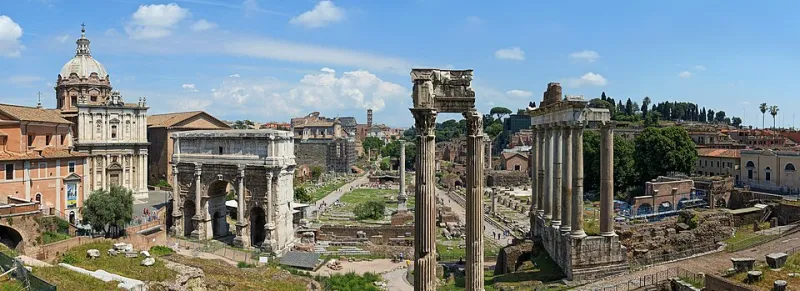
Modern Americans forget that the Founding generation received a classical education that was essentially a graduate seminar in political collapse. They read Thucydides on the Peloponnesian War, Polybius on the Roman Republic's decay, and Gibbon on the Empire's fall. They studied factional violence in Renaissance Italy and religious civil wars in France and Germany. Their libraries were filled with case studies in how republics die.
 Photo: Roman Republic, via www.thoughtco.com
James Madison's Federalist 10 is not a philosophical meditation on the nature of democracy—it is a technical manual for preventing the factional destruction that had killed every previous republic in recorded history. Madison understood that faction was not an unfortunate byproduct of free government but its inevitable consequence. Men would always divide into competing groups based on property, religion, region, and ideology. The question was not how to prevent faction but how to prevent any single faction from gaining enough power to destroy the system.
 Photo: James Madison, via historicbios.com
The solution was institutional friction: a complex system of checks and balances that would force competing factions to negotiate, compromise, and share power even when they despised each other. The separation of powers, federalism, bicameralism, and the Electoral College were not designed to promote efficiency or consensus—they were designed to make tyranny impossible by ensuring that no faction could ever control all the levers of government simultaneously.
The Roman Warning
The Founders' deepest fear was not gridlock but its opposite: a system so efficient that a determined faction could seize complete control and remake society according to its vision. They had read about the Roman Republic's final century, when competing populares and optimates destroyed five hundred years of republican government through escalating cycles of political violence.
The Roman system's fatal flaw was not excessive partisanship but insufficient institutional barriers to factional dominance. When Sulla marched on Rome in 88 BCE, when Caesar crossed the Rubicon in 49 BCE, when Augustus consolidated power after Actium in 31 BCE, they succeeded because Roman institutions provided no effective mechanism for forcing compromise between irreconcilable factions.
The American system was deliberately designed to prevent any American Sulla or Caesar from emerging. The complex web of institutional constraints means that even a president who controls both houses of Congress still faces the Supreme Court, state governments, and the federal bureaucracy. Even a party that wins a "wave" election still confronts midterm reversals, judicial review, and the constant pressure of the next electoral cycle.
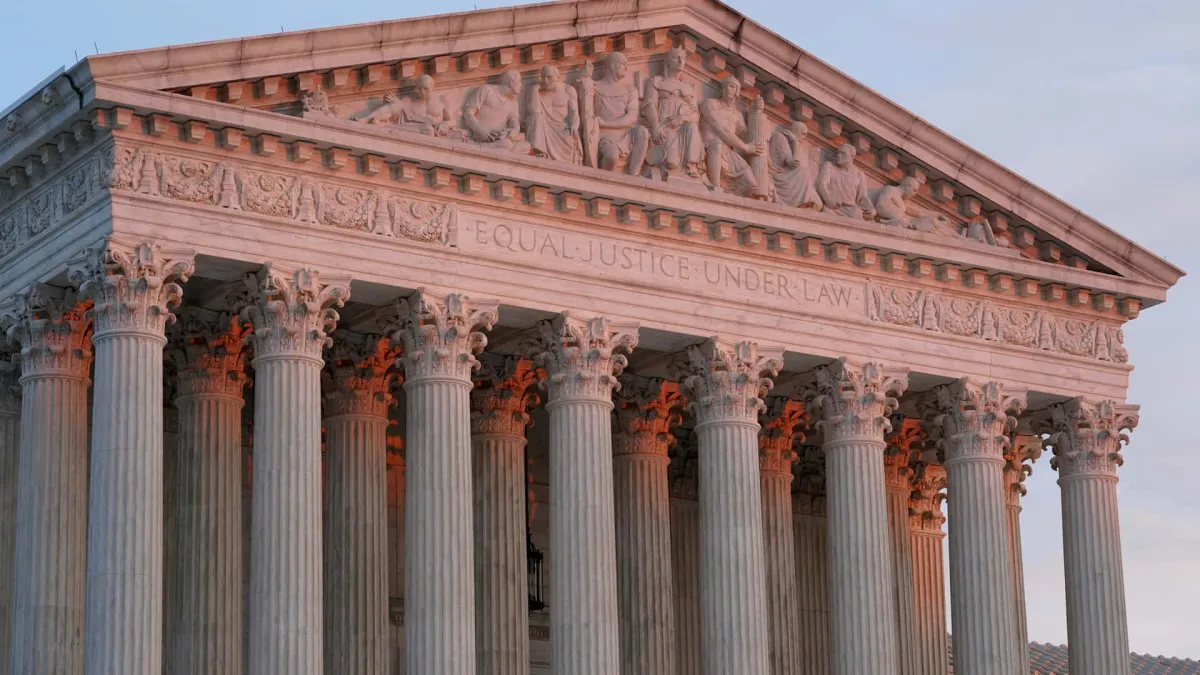 Photo: Supreme Court, via wallpapers.com
The Productivity of Paralysis
What modern commentators diagnose as dysfunction, the Founders would recognize as success. The current "crisis" of American governance—legislative gridlock, executive overreach, judicial activism, and state-federal conflict—represents the system operating exactly as designed. Different factions control different institutions, forcing them to negotiate rather than simply impose their will.
Consider the Obama presidency: a charismatic leader with strong Democratic majorities in both houses of Congress still found himself constrained by Republican governors, conservative federal judges, and the permanent bureaucracy. His signature achievement, the Affordable Care Act, required eighteen months of legislative combat and emerged as a compromise that satisfied no one completely—exactly the kind of messy, incremental reform that the Founders intended.
The Trump presidency provided the mirror image: a disruptive outsider with Republican control of Congress still faced constant resistance from Democratic state attorneys general, federal district judges, and career civil servants. His most ambitious initiatives died in committee, were blocked in court, or were sabotaged by his own administration.
This is not governmental failure—this is the system working as intended. The Founders created a machine designed to frustrate ambitious leaders and force incremental change through broad consensus rather than factional dominance.
The International Comparison
Americans who complain about polarization might consider the alternative. Parliamentary systems that prioritize efficiency over checks and balances regularly experience the kind of rapid, dramatic policy swings that the American system prevents. British politics swings from Thatcher to Blair to Cameron to Brexit with each election potentially reversing decades of previous policy.
France's Fifth Republic has survived multiple constitutional crises, mass strikes, and near-revolutionary moments that would be impossible in the American system. Germany's Weimar Republic collapsed into Nazism partly because its parliamentary structure provided no institutional barriers to factional takeover once the center parties lost their majorities.
The American system's "inefficiency" is actually its greatest strength. By making dramatic change difficult, it forces political movements to build broader coalitions, moderate their demands, and accept incremental progress rather than revolutionary transformation.
The Social Media Red Herring
Modern technology gets blamed for political polarization that actually predates the internet by centuries. The 1790s featured newspaper wars between Federalists and Republicans that make modern Twitter seem polite by comparison. The 1850s saw senators beating each other with canes on the Senate floor. The 1960s witnessed political assassinations, urban riots, and antiwar protests that shut down the Democratic National Convention.
Every generation of Americans has believed it was living through unprecedented political division because every generation forgets that political division is the normal state of democratic politics. The brief periods of apparent consensus—the 1950s, the immediate aftermath of 9/11—are historical aberrations that reflect external threats temporarily overriding normal factional competition.
The Constitutional Wisdom
The Founders understood something that modern Americans have forgotten: the goal of constitutional government is not to eliminate political conflict but to channel it through institutions that prevent violence while preserving liberty. The system they designed has survived a civil war, two world wars, the Great Depression, and the cultural revolutions of the 1960s precisely because it was built to accommodate rather than suppress factional competition.
Current complaints about polarization reveal a fundamental misunderstanding of both American history and constitutional design. The system is not broken—it is doing exactly what it was designed to do, which is to prevent any faction from gaining enough power to impose its vision on unwilling opponents.
Americans who want their faction to win completely and permanently are not defending democracy—they are advocating for the kind of majoritarian tyranny that the Founders spent their lives trying to prevent. The Constitution's primary achievement is not that it created efficient government, but that it created durable government that can survive even the kind of political hatred that destroyed every previous republic in human history.
The machine is working. The fact that it frustrates everyone equally is not a bug—it is the feature that has kept American democracy alive for more than two centuries while more "efficient" systems around the world have collapsed into tyranny or chaos. Perhaps it is time to stop complaining about polarization and start appreciating the institutional genius that allows us to hate each other without killing each other.