The Inheritance Paradox: Why Dynasties Always Fail Their Founders
The Founder's Delusion
Every dynasty begins with the same fundamental miscalculation. The founder, having built something from nothing through a unique combination of vision, timing, and ruthlessness, assumes these qualities can be institutionalized and passed down. Augustus Caesar spent decades crafting the perfect succession system for the Roman Empire, creating elaborate checks and balances to ensure his heir would wield power responsibly. Within a generation, Caligula was declaring himself a god and planning to make his horse a consul.
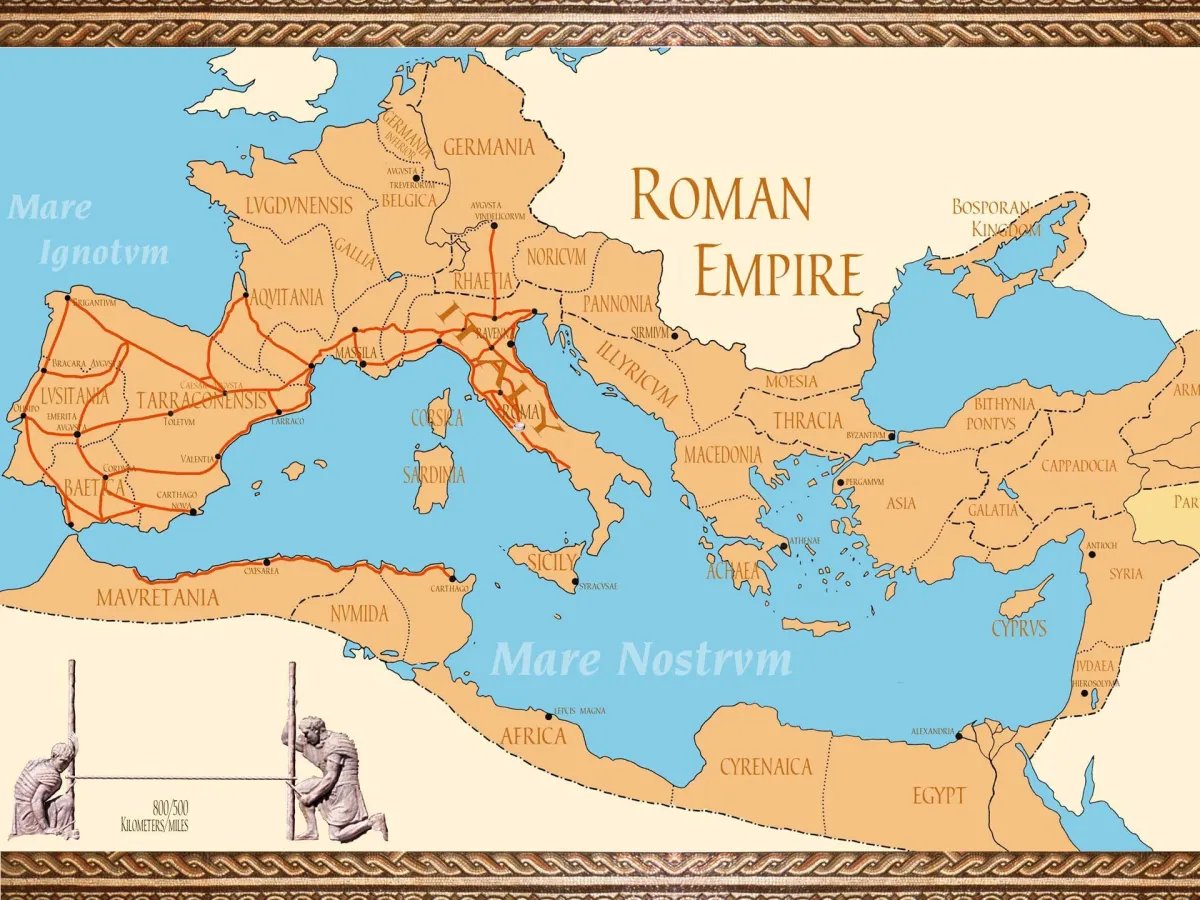 Photo: Roman Empire, via istanbulclues.com
 Photo: Augustus Caesar, via i.natgeofe.com
This pattern has repeated with mechanical precision across five thousand years of recorded history. The Ottomans developed fratricide as official policy—each new sultan would execute his brothers to prevent civil war. The Chinese mandated elaborate examinations and moral education for heirs. Medieval Europe invented primogeniture to avoid succession disputes. American founding fathers created term limits and electoral systems to prevent dynasties entirely.
None of it worked. Not because the systems were poorly designed, but because they solved the wrong problem.
The Mechanics of Transfer vs. The Psychology of Power
Succession systems focus obsessively on the mechanics of power transfer while ignoring the fundamental psychological reality: the qualities that create power cannot be inherited. Consider the data points across civilizations. The Roman Principate lasted roughly three centuries, but only four emperors out of dozens could be considered truly effective rulers comparable to Augustus. The Ottoman Empire endured six centuries, yet most historians agree the dynasty peaked with Suleiman the Magnificent in the 16th century—after that, it was managed decline punctuated by brief periods of competent leadership.
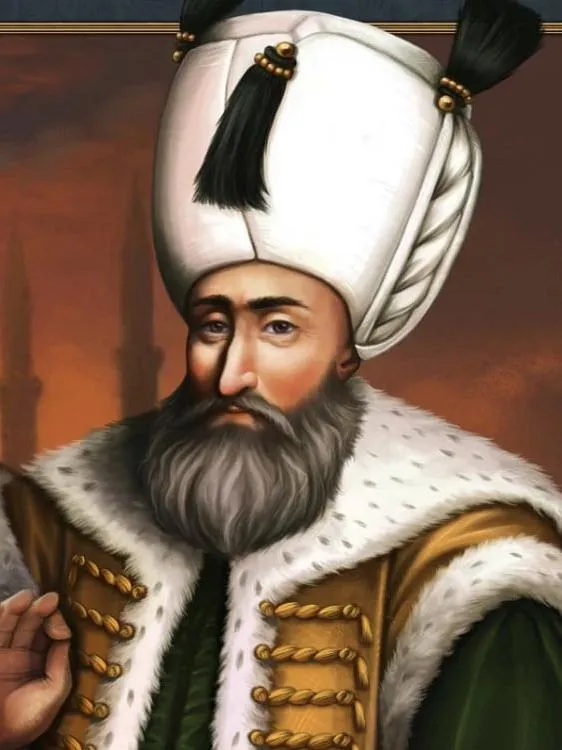 Photo: Suleiman the Magnificent, via images.deepai.org
Modern family businesses provide even starker evidence. Research by the Family Business Institute shows that only 30% of family businesses survive into the second generation, and merely 12% make it to the third generation. This isn't due to external market forces or poor succession planning—these businesses typically have access to the best legal and financial advice available. The failure rate stems from something deeper: the psychological and cultural gulf between builders and inheritors.
Founders operate in a world of radical uncertainty, making decisions with incomplete information while betting everything on their judgment. Successors inherit stable institutions with established processes, professional managers, and detailed procedures. The founder's world rewards improvisation and risk-taking; the successor's world rewards administration and risk management. These require fundamentally different psychological profiles.
The Roman Template
The most instructive case study remains Rome's century-long experiment with succession. Augustus understood that raw power grabs had destroyed the Republic, so he created a system that appeared to preserve republican institutions while concentrating authority in the Princeps. He adopted Tiberius, trained him in governance, and carefully managed the transition.
Tiberius proved competent but paranoid, spending his final years in self-imposed exile while executing perceived threats. His successor Caligula lasted four years before his own guards assassinated him. Claudius, thrust into power by the Praetorian Guard, proved surprisingly effective but was likely poisoned by his wife. Nero's reign descended into theatrical madness before ending in suicide.
The pattern wasn't random. Each successor inherited the institutional framework of imperial power without the personal qualities that made Augustus effective. They possessed the legal authority to rule but lacked the psychological foundation that enabled Augustus to create that authority in the first place. The system preserved the form of Augustan rule while losing its substance.
The American Exception That Proves the Rule
The American founders explicitly designed a system to prevent dynasties, yet the same psychological dynamics operate through different mechanisms. Instead of hereditary succession, American political dynasties emerge through name recognition, donor networks, and institutional connections. The Kennedys, Bushes, and Clintons represent multi-generational political families that demonstrate how democratic systems create their own version of inherited power.
More revealing is the pattern in American business dynasties. The Ford family maintained control of Ford Motor Company for over a century, but only Henry Ford I could be considered a transformational business leader. His descendants managed the company competently but never replicated his innovative vision. Similarly, the Walton family inherited Sam Walton's retail empire but operates as stewards of his creation rather than innovators in their own right.
This isn't a failure of character or intelligence—it's a predictable outcome of different environmental pressures. Founders face existential challenges that demand creativity and risk-taking. Successors face operational challenges that reward stability and incremental improvement.
The Succession Trap in Action
The deepest irony is that successful succession systems often accelerate institutional decline. By creating stable mechanisms for power transfer, they remove the environmental pressures that originally selected for effective leadership. The Roman Empire's adoption system produced competent administrators like Trajan and Marcus Aurelius, but it also ensured that power would never again flow to the kind of revolutionary figure who could adapt institutions to changing circumstances.
Modern corporations face the same trap. Professional management systems and board governance create predictable succession processes that favor consensus-building and risk aversion over the entrepreneurial vision that built the company. This explains why established companies rarely produce breakthrough innovations—their succession systems systematically filter out the psychological profiles that create breakthroughs.
The Historical Verdict
Five millennia of data reveal a consistent pattern: no succession system has ever successfully transmitted the essence of foundational leadership to subsequent generations. The most durable institutions—the Catholic Church, the British monarchy, certain universities—survive by explicitly abandoning the founder's vision in favor of institutional continuity. They preserve the form while accepting that the substance will inevitably change.
The succession trap isn't a problem to be solved but a fundamental tension in human organization. Every generation must choose between preserving the past and adapting to the future. History suggests that institutions that try to do both usually accomplish neither.