The Great Reset Fantasy: Why Every Civilization Promises to Erase Its Debts and Never Does

The Eternal Campaign Promise
In 594 BCE, Solon stood before the Athenian assembly and made a promise that would echo through twenty-six centuries of political rhetoric: he would cancel all debts, free the debt slaves, and restore the land to its rightful owners. The policy was called seisachtheia—literally "the shaking off of burdens"—and it established a template that every subsequent civilization would rediscover with clockwork regularity.
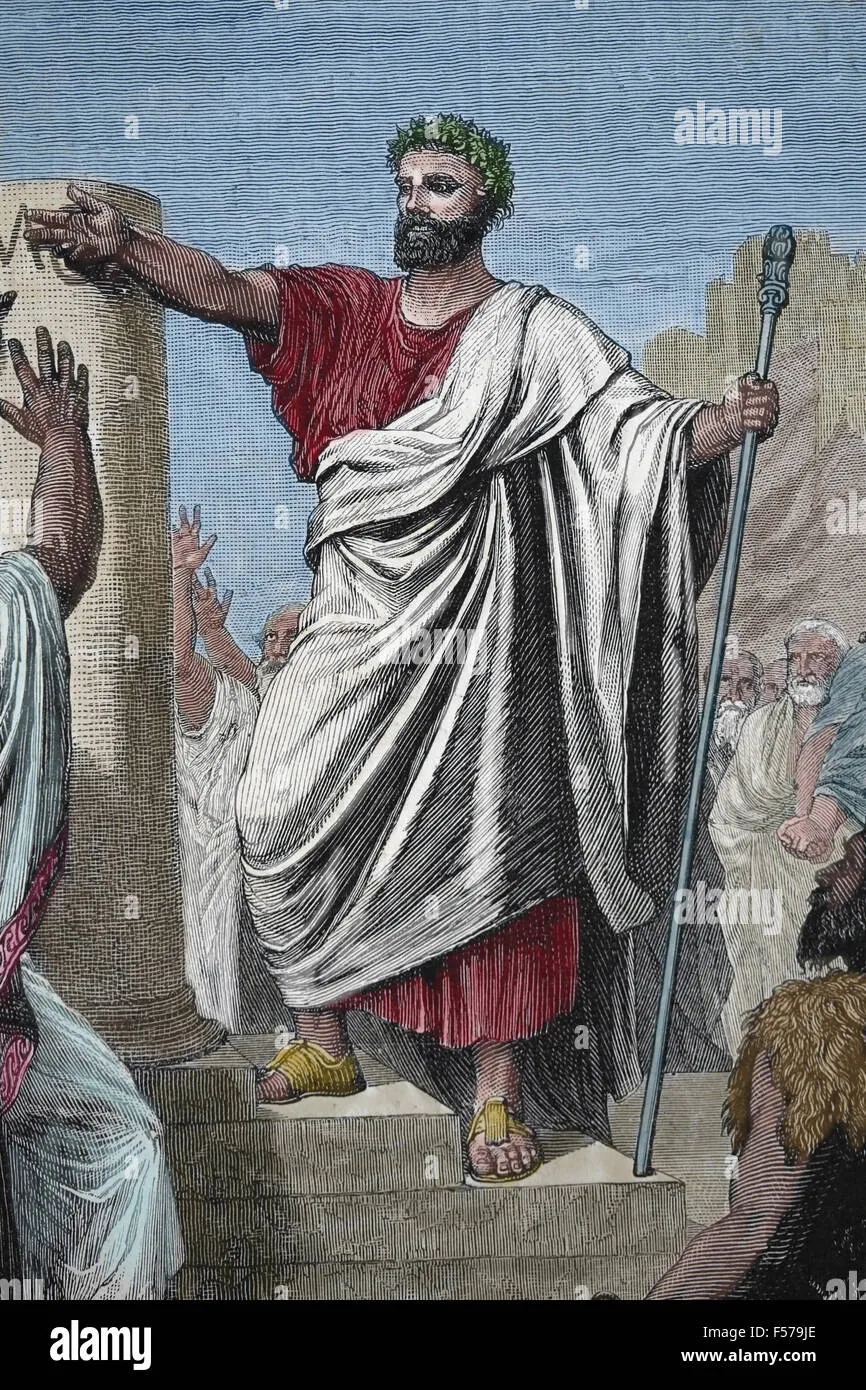 Photo: Solon, via c8.alamy.com
Today, American politicians promise student loan forgiveness, mortgage relief, and credit card debt cancellation with the same messianic fervor that Solon brought to ancient Athens. The language changes, the technology evolves, but the fundamental promise remains identical: we can reset the social contract, eliminate accumulated obligations, and restore economic justice through the simple expedient of declaring old debts void.
The pattern is so consistent across cultures and centuries that it suggests something deeper than mere political opportunism. The debt jubilee represents humanity's recurring fantasy that we can escape the consequences of our choices through collective amnesia—that society can declare bankruptcy without paying the price that bankruptcy always demands.
The Mathematics of Social Tension
Debt jubilees emerge when the gap between creditors and debtors becomes too wide for political stability. This is not an economic phenomenon but a social one. Debt is ultimately a relationship of power, and when that relationship becomes so unbalanced that it threatens the basic legitimacy of the system, something has to give.
The ancient world understood this clearly. Mesopotamian kings regularly proclaimed debt remissions not from generosity but from necessity. When farmers were enslaved for debt, they could not serve in the army. When craftsmen fled to escape creditors, cities lost their tax base. When merchants hoarded grain while families starved, revolution became inevitable.
Solon's reforms in Athens followed this logic precisely. The city-state was fracturing along class lines, with debt peonage creating a permanent underclass that threatened both military recruitment and social cohesion. The seisachtheia was not idealistic social engineering but hardheaded crisis management—a recognition that the existing debt structure had become incompatible with Athenian survival.
Why Jubilees Always Disappoint
The historical record reveals a consistent pattern: debt jubilees are politically irresistible and economically destructive. They promise to restore social balance but instead create new forms of instability that often prove worse than the original problem.
The core issue is moral hazard. When society regularly cancels debts, it destroys the incentive structure that makes lending possible in the first place. Creditors either stop lending or demand such high interest rates to compensate for jubilee risk that only the desperate will borrow. The result is not expanded access to credit but contracted access, with the poor—the supposed beneficiaries of debt forgiveness—finding themselves locked out of credit markets entirely.
Medieval Europe learned this lesson repeatedly. Papal debt forgiveness might provide temporary relief to over-leveraged nobles, but it made future borrowing impossible except at usurious rates. The Italian banking houses that dominated medieval finance developed increasingly sophisticated instruments to circumvent jubilee risk, creating complex financial structures that made debt cancellation technically impossible even when politically desirable.
The American Student Loan Experiment
Modern America's student loan crisis provides a perfect case study in jubilee psychology. The promise of loan forgiveness has become a standard feature of presidential campaigns, with each candidate offering increasingly generous forgiveness programs that never quite materialize in practice.
The pattern follows the ancient template exactly. Rising education costs create a debtor class that cannot service its obligations through normal economic activity. Political entrepreneurs recognize the electoral potential of debt forgiveness and make increasingly extravagant promises. The promises generate enthusiasm but prove impossible to implement without creating new problems that dwarf the original crisis.
The Obama administration's income-driven repayment programs exemplify this dynamic. Marketed as debt relief, these programs actually increased total debt burdens by extending repayment periods and capitalizing unpaid interest. Borrowers found themselves making payments for decades while watching their balances grow—a form of debt peonage that would have been familiar to Solon's Athens.
The Jubilee as Social Diagnostic
The most important insight from five millennia of debt jubilee history is that the jubilee impulse is not a policy proposal but a symptom. When societies begin seriously discussing debt cancellation, it signals that the productive economy and the financial economy have drifted so far apart that normal market mechanisms can no longer reconcile them.
This disconnect manifests in predictable ways: asset prices that bear no relationship to underlying productivity, debt levels that exceed any realistic capacity for repayment, and financial returns that dwarf returns to labor or capital investment. At this point, the society faces a choice between controlled reset (jubilee) or uncontrolled collapse (revolution, war, or systemic breakdown).
The Roman Republic faced this choice in the first century BCE. Debt crises had created a permanent class of dispossessed citizens who formed the backbone of populist movements led by figures like the Gracchi brothers, Marius, and ultimately Caesar. The Senate's refusal to address debt relief through legal channels led directly to the civil wars that destroyed the Republic and established the Empire.
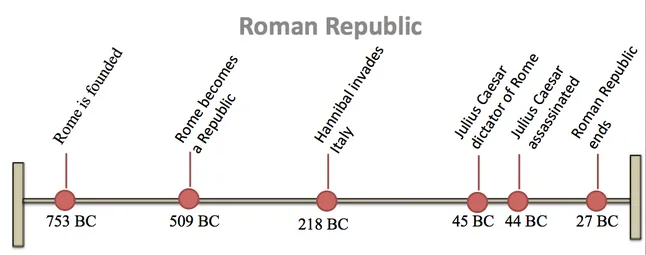 Photo: Roman Republic, via romeinaday.weebly.com
The Creditor's Eternal Return
The deeper historical pattern reveals why debt jubilees never solve the underlying problem: they treat symptoms while ignoring causes. Debt accumulation is not an accident but a feature of any economy that allows compound interest and private property. Without systematic changes to the institutional structure that creates debt concentration, jubilees simply reset the clock on an inevitable process.
This is why the same societies that proclaim debt jubilees find themselves facing identical crises a generation later. Athens after Solon, Rome after the Social Wars, medieval Europe after papal debt forgiveness—the pattern repeats because the underlying dynamics remain unchanged.
The Modern Impossibility
Today's global financial system has made traditional debt jubilees practically impossible even as it has made them politically inevitable. Modern debt is not held by local landlords or neighborhood moneylenders but by pension funds, insurance companies, and sovereign wealth funds representing millions of ordinary savers.
Canceling student debt means expropriating teachers' retirement funds. Forgiving mortgages means destroying bank deposits that belong to working families. The interconnectedness of modern finance means that debt jubilees cannot target "the rich" without devastating "the middle class"—a political impossibility in democratic societies.
Yet the underlying pressures that create jubilee movements continue to build. Rising inequality, stagnant wages, and asset price inflation generate the same social tensions that drove Solon's reforms twenty-six centuries ago. The difference is that modern societies lack the institutional flexibility to implement the controlled resets that allowed ancient civilizations to avoid complete collapse.
The result is a political system trapped between impossible promises and intractable realities—making jubilee rhetoric while building jubilee-proof financial structures, promising debt relief while engineering debt perpetuation. It is a contradiction that cannot last indefinitely, and history suggests that when it finally resolves, the resolution will be neither controlled nor comfortable.